 Armenian
 German
 Spanish
From the cool Nordic efficiency of Helsinki-Vantaa to the aurora-lit runways of Lapland, flying into Finland is an experience that begins long before you land.
There is a moment every seasoned traveller knows when an airport stops being a building and becomes a feeling. The particular quality of light through a terminal window. The precise temperature of the air as the gate doors open. The specific hum of a place that is, at once, familiar to millions and entirely its own. Finland's airports have that quality in abundance. They are not merely infrastructure. They are the first sentence of every story the country tells about itself.
Finland operates 20 airports under the management of Finavia, a state-owned company whose quiet motto, For Smooth Travelling, belies the remarkable ambition behind it. Stretching from the metropolitan south to the Arctic north, this network connects a vast and thinly populated country to itself and to the world, with a consistency of quality that is, by any European standard, quietly extraordinary.
Helsinki Vantaa Airport (HEL)
For most travellers arriving in Finland, the journey begins at Helsinki-Vantaa Airport. Named Best Airport in Northern Europe seven consecutive times, it earns that distinction not through scale but through character: calm, luminous terminals, biometric boarding, one of Scandinavia's finest airline lounges in the Finnair Platinum Wing, and transfer times that shame airports twice its size. It is the hub of Finnair and serves over 50 airlines connecting Europe, Asia, North America and the Middle East. For a deeper look at what makes Helsinki-Vantaa one of the continent's most intelligent airports, read our full guide.
Rovaniemi Airport (RVN)
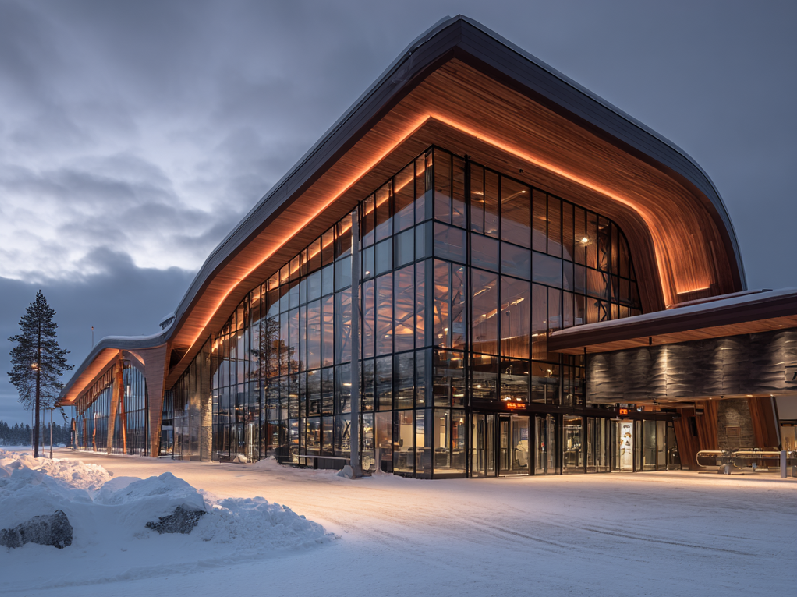
The gateway to Lapland and the Arctic, Rovaniemi is where winter travel becomes something closer to a pilgrimage. Direct flights now arrive from across Europe, the newly expanded terminal greets passengers with warm Nordic materials and atmosphere, and the wilderness begins the moment you step outside. Read the full Rovaniemi Airport guide.
Kittilä Airport (KTT)
Finland's ski airport is located minutes from the Levi and Ylläs resorts. Compact, purposeful, and sustainably operated at net-zero carbon, Kittilä handles the particular choreography of a ski season airport with quiet expertise: wide baggage reclaim, direct resort transfers, and a winter route network that reaches the major leisure markets of Europe. Read the full Kittilä Airport guide.
Ivalo Airport (IVL)
Finland's northernmost commercial runway, Ivalo, is the last threshold before true wilderness. The terminal is modest and the landscape outside it is not. Direct winter flights connect it to London and select European cities, placing the remote fell country of northern Lapland within reach of anyone willing to seek it. Read the full Ivalo Airport guide.
Oulu Airport (OUL)
Clean, efficient, and reliably connected to Helsinki, Oulu serves Finland's technology capital with the no-nonsense precision that the city deserves. A modernised terminal, solid business facilities, and growing European route development make it the natural entry point for professional travel to the north. Read the full Oulu Airport guide.
Tampere-Pirkkala Airport (TMP)
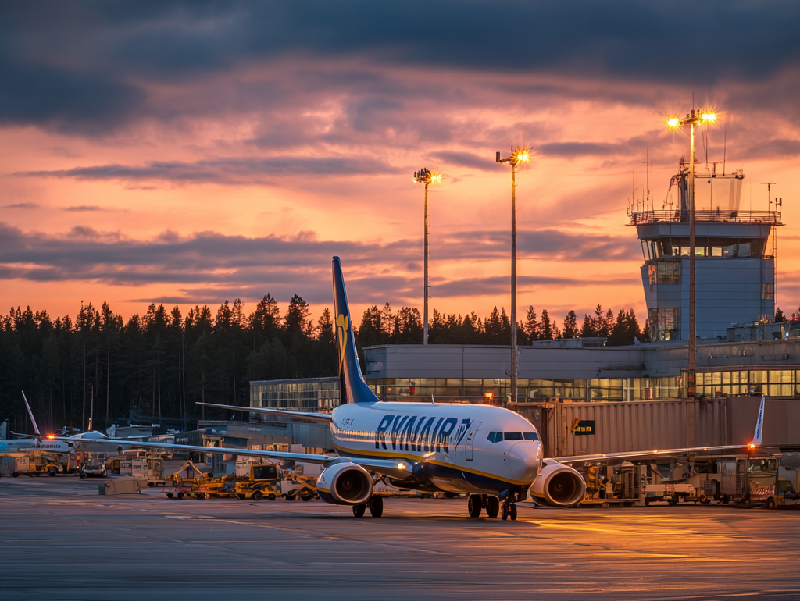
The airport that makes Finland affordable. A strong base of low-cost routes operated by Ryanair and Wizz Air connects Tampere directly to cities across the United Kingdom, Central Europe, and beyond, making it one of the most accessible entry points into the country for leisure travellers. Read the full Tampere Airport guide.
Turku Airport (TKU)
Small, calm, and quietly confident, Turku Airport serves Finland's oldest city and the extraordinary southwestern archipelago behind it. A mix of domestic connections and select international routes serves both the business community and the growing number of travellers discovering that this corner of Finland is as compelling as anywhere further north. Read the full Turku Airport guide.
Sustainability
It would be easy to dismiss sustainability credentials as airport marketing. Finland makes that dismissal difficult. Finavia now owns five of approximately twenty net-zero airports worldwide. Helsinki-Vantaa joined the Lapland airports at net-zero status in 2024, and the entire 20-airport network is targeted to reach the same benchmark by the end of 2025, an ambition with no precise parallel elsewhere in European aviation. Since 2018, every Finavia airport has run on emission-free electricity, and ground vehicle fleets operate on diesel derived from waste and residues. For the traveller for whom carbon footprint is a genuine factor in routing decisions, Finland's airports offer a measurable and verified advantage.
The Quiet Art of the Finnish Arrival
To arrive in Finland through its airports is to receive a particular kind of welcome. Not effusive. Not overwhelming. But considered efficient and quietly beautiful in a way that sets the tone for everything that follows. Helsinki tells you, from the first moment of the transfer corridor, that you are in a country that takes quality seriously without making a performance of it. Rovaniemi tells you something older: that you have come somewhere genuinely wild, somewhere the sky still does things that stop you in your tracks. And the smaller airports, Oulu, Tampere, Turku, Kittilä, Ivalo, each tell their own quieter version of the same truth: that Finland is a country of many arrivals, and every one of them is worth making.
Finland's airports are growing. They are becoming greener, more connected, and more confident in the story they tell the world. And for the traveller, whether arriving on business, chasing the Northern Lights, or simply following a hunch, they remain one of Europe's most underrated first impressions. The kind that stays with you long after the journey ends.
Ready to plan your journey? Book your flights, hotels, and experiences across Finland with Magelline!