 Armenian
 German
 Spanish


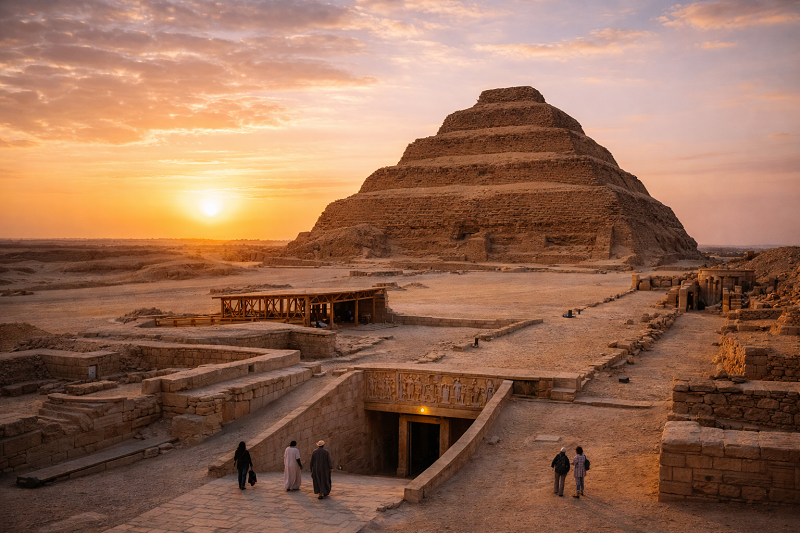
As the sun dips below the Saharan horizon, painting the limestone of Giza in hues of bruised violet and honey, one realises that in Cairo, time isn't a straight line — it's layers, spirals, and the quiet law of cause and effect.
Egypt’s identity is anchored in contrast. The fertile banks of the Nile carve a green lifeline through an otherwise arid expanse, creating a natural corridor where cities, temples, and traditions have flourished for thousands of years.
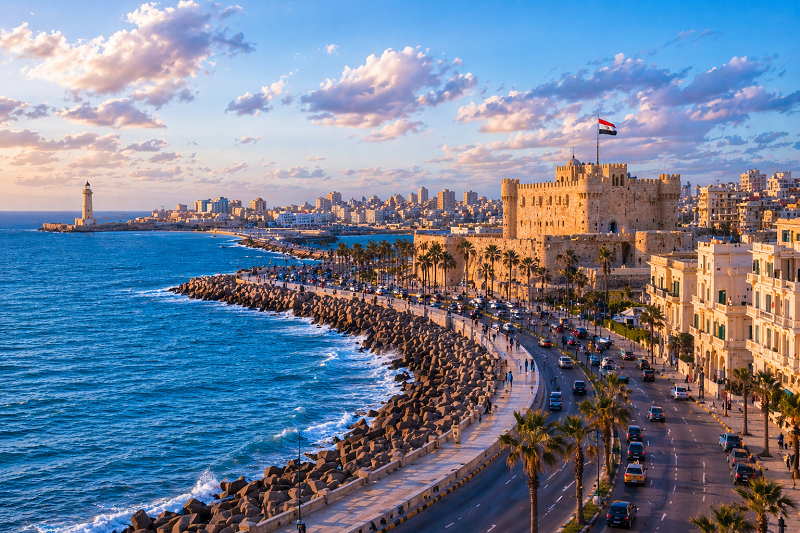
In the north, the Mediterranean coastline introduces a softer, coastal dimension, while the Red Sea to the east reveals crystal-clear waters and vibrant marine life — a world apart from the desert landscapes that dominate the interior. This diversity allows Egypt to feel expansive without ever losing its sense of coherence.
Cairo
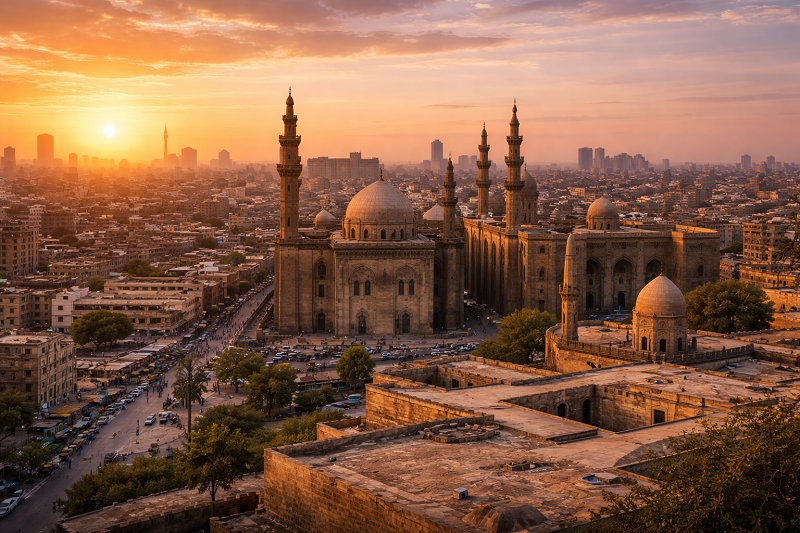
Cairo is not a city that reveals itself quietly. It is layered, energetic, and endlessly alive. Here, modern life unfolds alongside centuries-old architecture. The call to prayer echoes between historic mosques, while bustling markets such as Khan el-Khalili create an atmosphere of movement and texture.
Yet within this intensity, there are moments of stillness — a view across the Nile at sunset, or a quiet courtyard hidden behind ancient walls.
The Eternal Icons of Giza
At the edge of Cairo, the desert rises and with it, one of humanity’s most enduring achievements. The Pyramids of Giza stand not only as monuments but as symbols of ambition, precision, and permanence. Nearby, the Sphinx watches over the plateau, its presence as enigmatic as the civilisation that created it.
To stand here is to feel the scale of time in its purest form.
The Nile
The Nile is more than a river; it is the structure upon which Egypt is built. Travelling along its waters reveals a different rhythm. Palm-lined shores, quiet villages, and ancient temples appear as part of a continuous narrative that connects Upper and Lower Egypt.
Whether by traditional felucca or modern cruise, the journey along the Nile offers a perspective that is both tranquil and deeply historical.
Temples
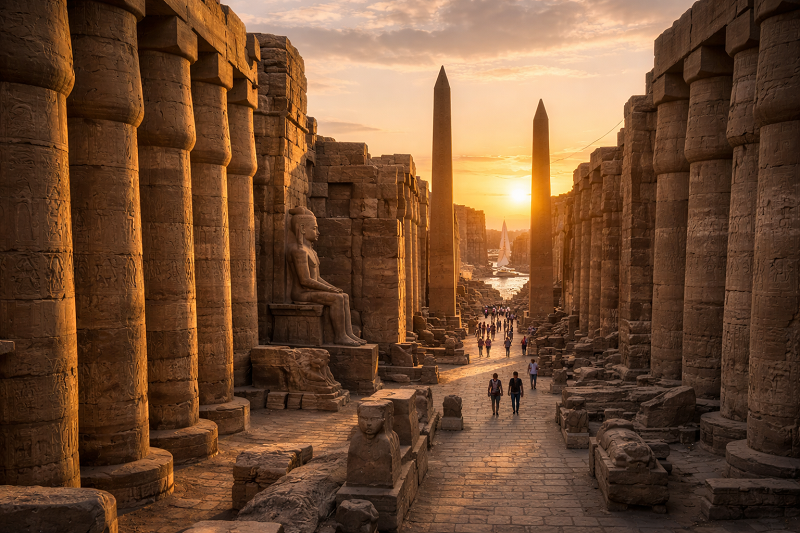
In Upper Egypt, the atmosphere shifts. Cities like Luxor and Aswan are defined by space, light, and silence. The temples of Karnak and Luxor reveal an architectural language built on scale and symmetry, while the Valley of the Kings holds the hidden legacy of pharaohs beneath the desert surface.
Further south, Abu Simbel emerges from the landscape with a sense of precision that feels almost unreal.
The Red Sea
To the east, Egypt transforms once again. The Red Sea coastline introduces a vibrant marine world, where coral reefs and clear waters create one of the region’s most striking natural environments.
Destinations such as Hurghada and Sharm el-Sheikh offer a balance between relaxation and exploration — a modern counterpart to the country’s ancient core.
Culture, Craft, and Everyday Life
Egypt’s identity is not defined by monuments alone. It lives in its markets, its cuisine, and its traditions. From the aromas of street food in Cairo to the craftsmanship found in local workshops, daily life reflects a culture shaped by continuity and adaptation.
Hospitality remains central — a quiet but constant presence that defines the experience of travel here.
The Magelline Perspective
Egypt is a destination where scale and intimacy coexist. It is vast, yet immediate. Ancient, yet alive.
For travellers, Egypt is not only about witnessing history: it is about moving through it, feeling its presence in landscapes, cities, and moments that unfold with quiet intensity. Here, the journey is not defined by distance, but by depth.