 Armenian
 German
 Spanish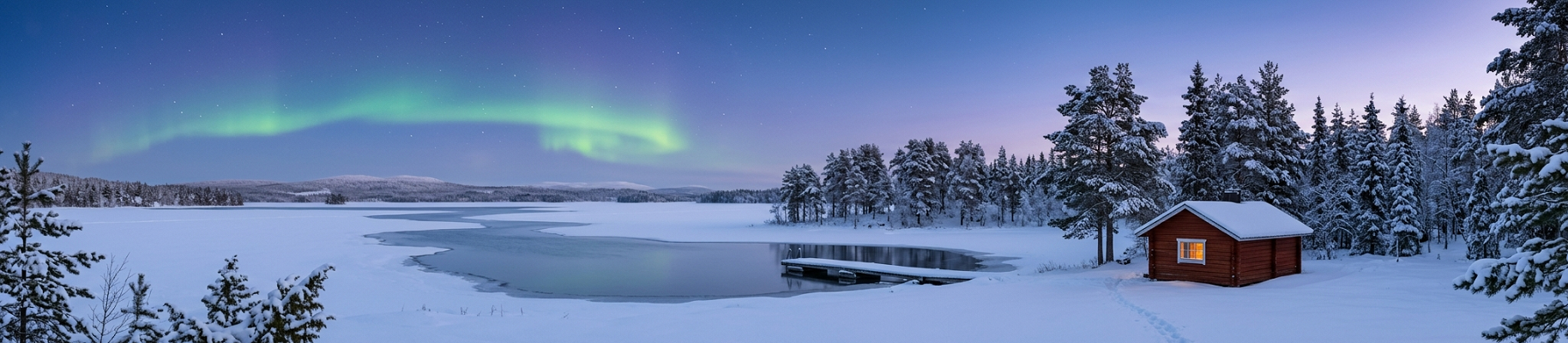

There is a moment that catches almost every traveller in Finland off guard, usually on the first evening, when they step outside expecting the world to continue at its usual pace and find instead that it has stopped entirely. Not stopped in the way of a power cut or a held breath, but stopped with a kind of settled, permanent conviction: the silence of a country that has never felt the need to fill itself with noise.
You stand there, by a lake perhaps, or at the edge of a forest that goes on for longer than you can reasonably imagine, and something in your chest begins, very slowly, to unknot. Finland does not welcome you. It simply allows you to be present and discover, against your expectations, that this is exactly what you needed.
Culture & People
The Finns have a word, sisu, that foreign journalists have been reaching for since at least the Winter War of 1939. It is translated, inadequately, as grit, resilience, or stubborn inner fortitude. But sisu is not bravado. It is quieter and more permanent than that: the particular quality that allows a person to continue, without complaint and without theatre, when continuing is hard.
Finnish social life is built around this same economy of expression. Silence between people is not awkward here; it is comfortable, even respectful. You will share a sauna with a stranger and exchange fewer than twelve words across two hours and leave with the unmistakable feeling that something genuine has passed between you. There is a local joke that a shy Finn stares at their own shoes; a confident Finn stares at yours. What it actually describes is a culture that takes words seriously enough not to waste them.
Beneath this reserve runs something warm and completely sincere. An invitation into a Finnish home is not a social formality, a considered act. The coffee will be strong and refilled without asking. The host will not perform hospitality; they will simply provide it, which turns out to be better.
Cities
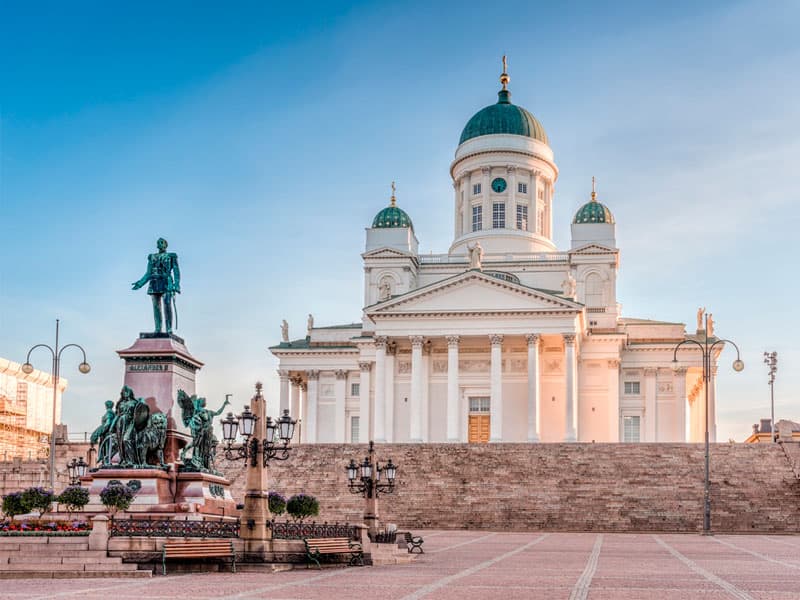
Helsinki arrives as a surprise to most visitors expecting Scandinavian severity. The capital is elegant, human in scale, and architecturally adventurous in ways that the guides don't quite prepare you for. The Senate Square stands as one of the most quietly majestic civic spaces in Northern Europe, its neoclassical symmetry opening towards the harbour like a formal introduction. Then Market Square offers something altogether different: stalls piled with cloudberries, smoked fish, and reindeer pelts, the sea shining just beyond, ferries coming and going with the efficiency of a system that has been working for a very long time.
Walk fifteen minutes in any direction and you find yourself in neighbourhoods that have been designed around the idea that daily life should be pleasant rather than merely functional. The Design District alone could occupy two days, its streets dense with studios, concept stores, and galleries that treat Finnish design not as a brand but as a living practice.
Tampere, further north and built between two lakes connected by a rushing rapids, has the honest, brick-and-water character of a city that made things and is not embarrassed about it. The old factory buildings along the Tammerkoski have been converted with intelligence and care into markets, restaurants, and cultural spaces, without erasing the memory of what happened inside them.
Rovaniemi, the capital of Lapland and the official home of Father Christmas, is the gateway to something the south can only approximate: the true Arctic. From here, you go into the wild, or you do not go far at all.
Cuisine
Finnish food is an honest negotiation between a northern landscape and the people who learned to live in it. It does not traffic in complication. It traffics in quality of ingredient, precision of technique, and a profound cultural preference for letting things taste like what they actually are.
The rye bread, ruisleipä, is the foundation of everything, dense and dark and faintly sour, eaten with butter of a quality that will rearrange your assumptions about butter. It arrives at every table without ceremony because it does not need ceremony. It is simply correct.
Salmon, cured as gravlax, smoked over alder, or made into a thick cream soup with potatoes and dill, appears in forms that accumulate into a kind of education. The forests contribute chanterelles and porcini in quantities that feel almost irresponsible; berries (lingonberries, bilberries, arctic cloudberries) grow wild enough that picking them is a legal right, open to everyone regardless of land ownership, a law called everyman's right that quietly encodes the Finnish relationship with nature.
Reindeer, prepared as a slow-cooked stew with mashed potatoes and lingonberry jam, is not a novelty. It is winter food, filling and fortifying, tasting of cold air and pine. The new wave of Helsinki restaurants has placed these same ingredients in conversation with contemporary Nordic technique, and the results, spare and precise and often breathtaking, have earned Finland a reputation in serious culinary circles that continues to grow.
Coffee, consumed in quantities that would alarm a cardiologist in a less hardy nation, is the social adhesive. Finns drink more coffee per capita than almost anyone on earth, and they drink it continuously, at all hours, as though it were not a stimulant but simply water that has become more interesting.
Seasons & Holidays
Finland does not offer a single experience. It offers four, each so distinct from the others that returning travellers sometimes describe it as four different countries occupying the same coordinates.
Winter is the season that arrives with the most drama. In the north, above the Arctic Circle, the sun disappears entirely for weeks: the kaamos, the polar night, and the landscape becomes a study in blue-grey light that shifts through shades no word has been assigned to yet. This is also when the aurora borealis performs, on clear nights and without schedule, across skies of absolute black. You cannot plan to see the northern lights; you can only place yourself somewhere dark and patient and hope.
The cold is real and requires respect. But it also produces things of singular beauty: frozen lakes you can walk across, forests so still under snow that each tree becomes a sculpture, ice fishing holes cut with purposeful routine and tended as social spaces.
Midsummer, Juhannus, is the great counterpoint. The sun barely sets; at the height of June in the south, darkness lasts perhaps four hours, and in the north not at all. The entire country migrates to its summer cottages, to the shores of lakes too numerous to count (Finland contains 188,000 of them), and conducts a slow, week-long ritual of sauna and swimming and bonfires lit at the water's edge. Cities empty. Shops close. The Finns return to the land with the unsentimental practicality of people who know where they came from.
Independence Day, the sixth of December, is observed with characteristic restraint: candles placed in windows across the country, a presidential reception broadcast live, families gathered around televisions. It is quiet and sincere and does not require spectacle to carry weight.
Nature
The Finnish landscape is not trying to be dramatic. It achieves drama anyway, through scale and repetition and the particular quality of Nordic light, which in summer becomes a kind of permanent golden hour and in winter a blue twilight that makes the ordinary look consecrated.
The national parks, all 41 of them, offer access to wilderness at a level of preservation that suggests the Finns have made a deliberate collective choice about what to protect and have then protected it. The forests are real forests: vast, unmanaged, home to brown bears and wolverines and wolves that most visitors will not see but feel relieved to know are present.
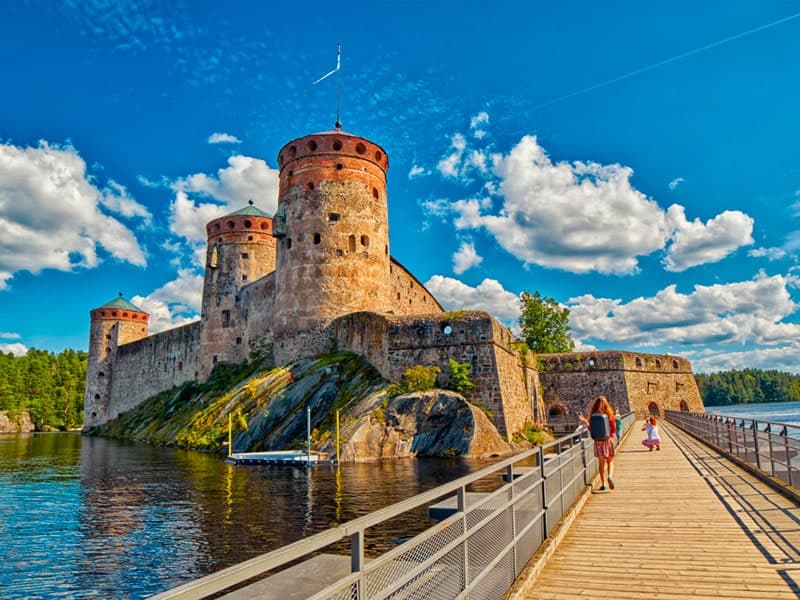
The Lake District, Lakeland, in the south-east, is where the landscape becomes almost abstract: water and land interlocking in patterns that make the map look like something spilt and left to settle.
Before You Go
Embrace the sauna. It is not an amenity. It is a cultural institution that predates the country's Christianity. Accept every invitation, observe the local courtesies, and stay longer than you think you need to. The conversation that is impossible elsewhere becomes possible there.
Dress for the season, not the photograph. Finland rewards those who come prepared. In winter, layers are not optional. In summer, bring something for rain and something for warmth, even in June.
Learn two words. Kiitos (thank you) and tervetuloa (welcome) will mark you as someone who has made an effort. Finns notice this without saying so.
Go north. Helsinki is magnificent, but Lapland is the chapter that stays with you. Even a single night under the Arctic sky recalibrates something.
Follow the quiet. The best Finland has to offer is not in the itinerary. It is in the half-hour you spend sitting at the edge of a lake, watching the light change on water so still it might be glass, thinking nothing in particular.
✦ ✦ ✦
Magelline Perspective
Finland will not ask anything of you except your attention. Give it that, unhurriedly, and you will return carrying a particular kind of stillness that turns out, later, to be the rarest souvenir of all.