 Armenian
 German
 Spanish
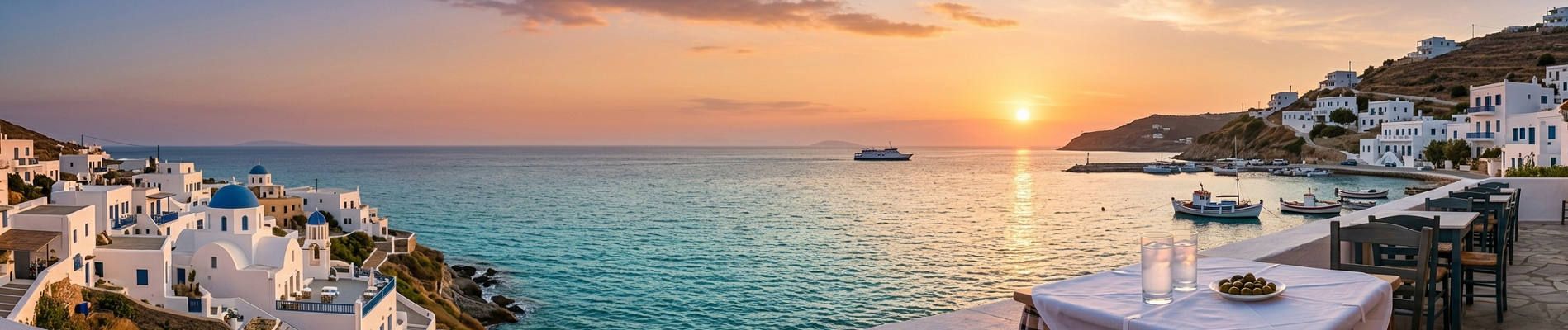
There is a moment that happens to almost every traveller in Greece, usually on the second or third day, when the urgency they carried across an ocean or a border begins to dissolve. It happens without warning. You are sitting, perhaps, at a table that has been set close to the sea, a carafe of something cold at your elbow, the afternoon light turning the water into hammered silver, and you understand, not intellectually but physically, that you have arrived somewhere that does not need to prove itself to you.
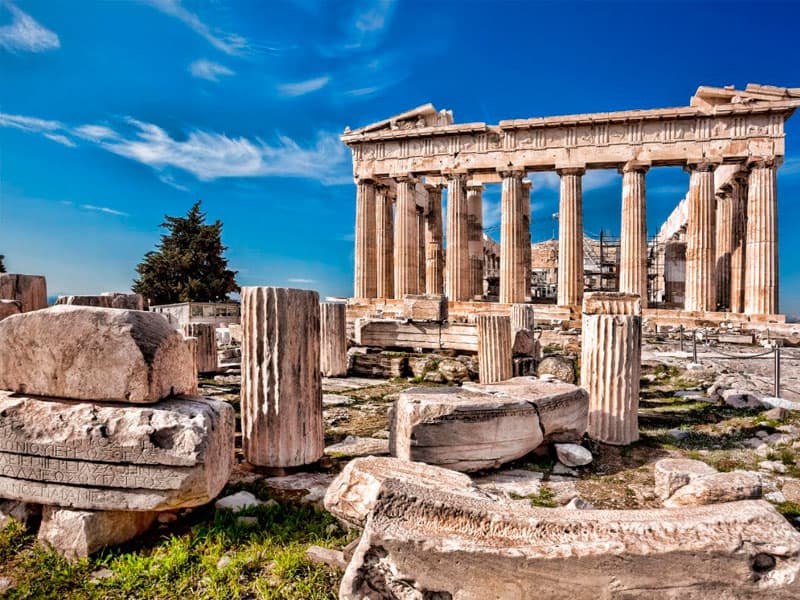
Greece is old enough to be patient. It has seen empires come through and leave their columns behind. It will wait while you catch up.
Culture & Lifestyle
The Greeks have a word, filotimo, that resists clean translation. It lives somewhere in the territory between honour, duty, generosity, and an almost irrational sense of pride in doing the right thing by one's community. You cannot spend a week here without feeling it press against you from every direction: the café owner who will not hear of you paying before you have finished, the stranger who abandons his own errand to walk you six blocks to the place you were looking for, the farmer who hands you oranges from his grove as though this is the most natural transaction in the world.
Greek life is orchestrated around human contact in ways that most of the Western world has quietly abandoned. The midday break is still honoured in smaller towns and islands: shutters close, streets empty, and an almost sacred two-hour stillness descends. Then, as the light softens towards evening, comes the volta: the leisurely promenade that draws entire families out of their houses to walk, to be seen, to stop and talk at length with everyone they encounter. This is not nostalgia. This is infrastructure, the daily maintenance of a social fabric that keeps a community coherent.
Music, too, moves differently here. Rembetika, the blues-soaked sound born from displacement and longing, still drifts from basement tavernas in Athens and Thessaloniki. You can hear it after midnight, played by musicians who close their eyes when the melody becomes something they cannot explain. Greece remembers its sorrows loudly and dances anyway, which may be the most honest philosophy on offer anywhere.
Food & Wine
Greek food is not cuisine in the formal sense; it is hospitality made edible. It arrives in stages that were never meant to end, ordered without ceremony, often without a menu, because the fish came in this morning and the tomatoes were cut an hour ago and the cook knows better than you do what should happen next.
The olive oil, poured over everything with a generosity that will alarm you the first time and devastate you when you leave, is often produced within walking distance of the table. Greece is one of the world's great olive oil nations, its liquid gold ranging from grassy and peppery in Crete to mellow and golden in the Peloponnese. You will taste the difference, and then you will taste the difference from what you had been calling olive oil at home, and you will not speak of it for a while.
A meal in Greece follows its own logic. It begins with mezedes: small plates of taramasalata, feta drizzled with honey and thyme, grilled halloumi, dolmades folded with the patience of people who have been doing this for centuries. Then octopus, dried in the sun and charred over charcoal. Then perhaps a whole fish, roasted simply with lemon and herbs, because simplicity is a form of confidence. Bread arrives without asking and disappears without record.
The wine, drunk young and cold and often from unmarked bottles filled from the barrel, is not trying to impress the sommelier. Native varietals, including Assyrtiko from the volcanic soils of Santorini, Xinomavro from the north, and Malagousia for those who enjoy floral complexity, are building a serious international reputation, though the Greeks themselves have known this for centuries. Order the house wine without shame. Stay for another carafe. The evening has not yet decided what it will become.
People & Hospitality
Travellers arrive expecting beauty and leave astonished by the people. This is not an accident. Greek hospitality, xenia, is one of the oldest duties in the culture, a code rooted in the understanding that a stranger is a guest, that a guest is sacred, and that how you treat the person passing through your door is how you will be judged by forces larger than yourself.
This does not translate into formal service or rehearsed warmth. It translates into something more disarming: genuine curiosity. Greeks will ask where you are from, what your family is like, whether you are married, what you think of their country, with a directness that can feel almost intrusive until you realise it is, in fact, a form of respect. You are being treated as someone worth knowing.
Spend enough time in a single village and you will find that invitations materialise. Someone's grandmother will insist on pouring you coffee. The man fixing his boat will explain, at length and with evident pride, how his grandfather built it. Children will practise their English with you and then report back to their parents, who will appear to hear your verdict. You are not a tourist in these moments. You are a briefly adopted member of something larger.
Nature & Landscape
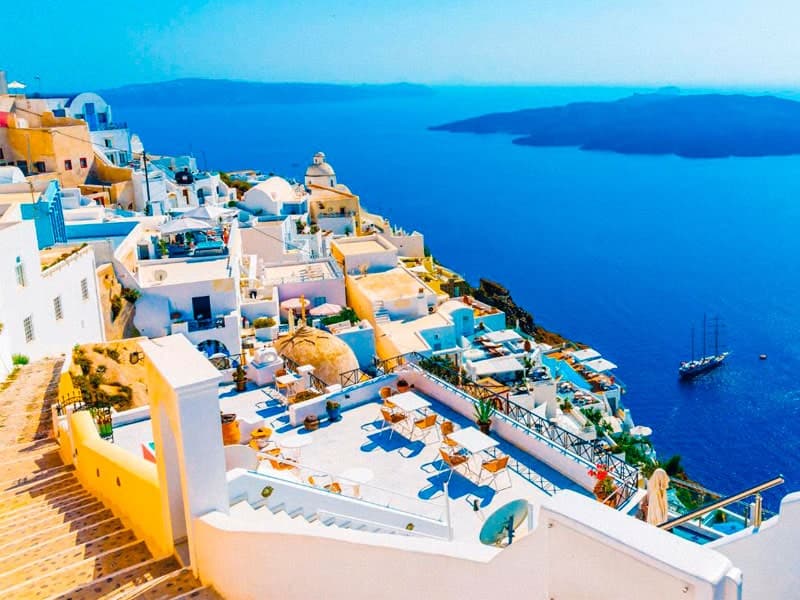
Greece refuses to be summarised. Most visitors arrive with a picture in their minds: white walls, blue domes, the sea. They are quietly surprised to discover that this is perhaps the smallest chapter of the country's geography. There are deep gorges in Crete where the walls narrow to a knife's width and the light falls in theatrical beams. There are forests in the north, near the borders with Macedonia and Bulgaria, where bears still move through the trees and mountain villages have not changed their essential character in three hundred years. There are wetlands in Evros, on the edge of the Turkish border, where migrating birds stop in their millions and the air vibrates with wings.
And then there is the light. Anyone who has spent serious time here will tell you about the light as though it were a separate country worth visiting on its own. It is not simply brightness; Greece sits at a latitude where the sun moves at an angle that strips the atmosphere's haze and renders every object in a clarity that feels implausible. Shadows are deep and precisely cut. The sea holds colour the way coloured glass holds colour: not as a surface but as something that goes all the way through. Painters have been chasing this light for two centuries, and painters keep arriving, and none of them entirely catches it.
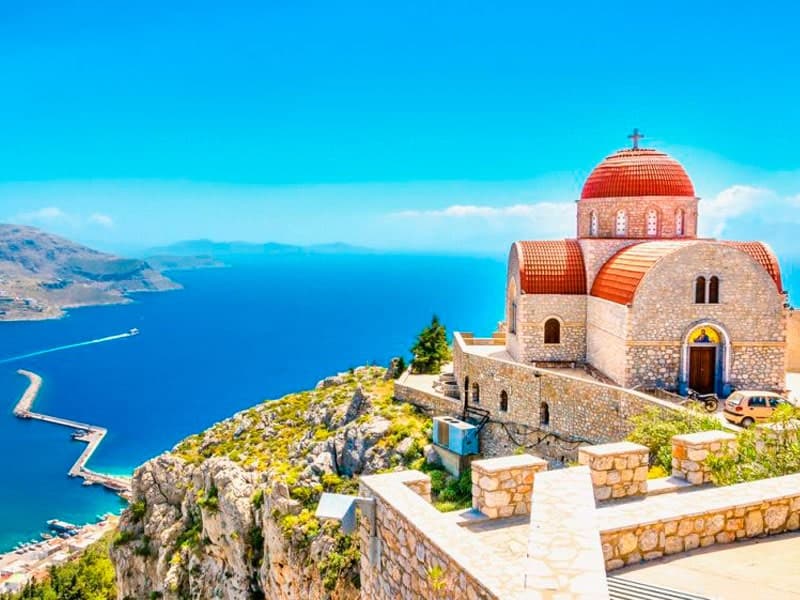
The country's 6,000 islands, of which some 230 are inhabited, produce not one but dozens of distinct micro-worlds. The volcanic drama of the Cyclades gives way to the green, forested hills of the Ionian islands in the west, softer and more Venetian in character. The Dodecanese, close to the Turkish coast, carry a different cultural sediment entirely. Each island is an argument in the best sense: a case made quietly but with conviction for a particular way that land and sea and human settlement can arrange themselves.
Before You Go
Greece rewards preparation of a particular kind: not the kind that builds a colour-coded itinerary, but the kind that leaves room for the afternoon to take over. The traveller who has done a little research and kept a lot of space will always come home richer than the one who has optimised every hour.
Practical Notes
- Timing is everything. May and early June offer the light and warmth without the compression of August. September and October are the quiet secret: the sea still warm, the crowds thinning, the light turning amber and long. July and August are magnificent, but popular islands become genuinely difficult, and ferry queues acquire their own ecosystem.
- Learn three or four words of Greek. Efcharistó (thank you) and kalimera (good morning) will open doors that your guidebook cannot. Greeks are quietly moved when a foreigner has made this small effort. It costs you an afternoon of practice and earns you something that money does not buy.
- Eat where the Greeks eat. The taverna with the handwritten menu and three tables outside is always more interesting than the one with photographs. If the fish is priced by the kilo, ask to see it before ordering; this is expected, not rude. And always eat late: kitchens warm up after 9pm and the best conversations begin after 10.
- Leave the itinerary some slack. Ferries operate on their own understanding of time. Island buses run when they run. A delay that initially frustrates will, in retrospect, have been the afternoon you spent talking to someone remarkable in a port café. Build in slack and call it strategy.
- Go further than you planned. The famous destinations are famous for reasons worth honouring. But the island you chose because it had the one remaining ferry connection, the village your host mentioned almost as an afterthought: these are where Greece hides its best material. Follow the tangent. The tangent is often the point.
✦ ✦ ✦
Magelline Perspective
Greece does not ask you to arrive. It asks you, eventually, to leave, carrying something back that you will spend years trying to name.