 Armenian
 German
 Spanish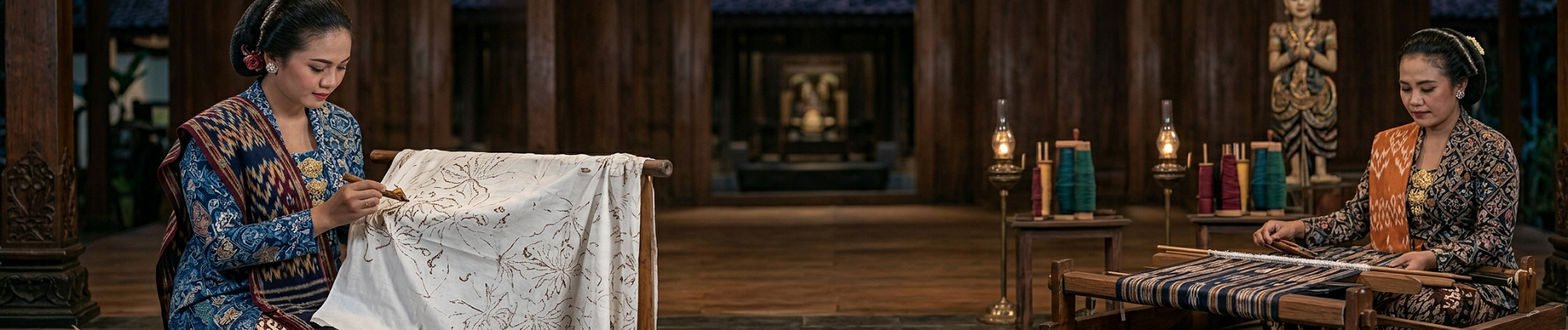

Seventeen thousand islands scatter across the equator like something thrown rather than placed, each one carrying its own gods, its own language, its own rhythm of the day. Step off a plane in Jakarta and you are in one country. Step off a boat in Flores or a ferry in the Moluccas and you are, in every way that matters, somewhere else entirely. Indonesia does not ask to be understood as a whole. It asks to be entered one island at a time.
Cities
Jakarta moves at full speed, a sprawling capital of glass towers, street food stalls, and traffic that somehow finds its own logic. Yogyakarta feels entirely different, a city of palaces, batik workshops, and quiet courtyards where Javanese tradition still shapes daily life. Bali's Denpasar and the towns around Ubud have become the island's cultural heart, where rice terraces meet temple ceremonies and a steady stream of travelers searching for something slower. Further east, Makassar opens a window onto a more maritime Indonesia, a port city built on centuries of trade between islands and continents.
Culture
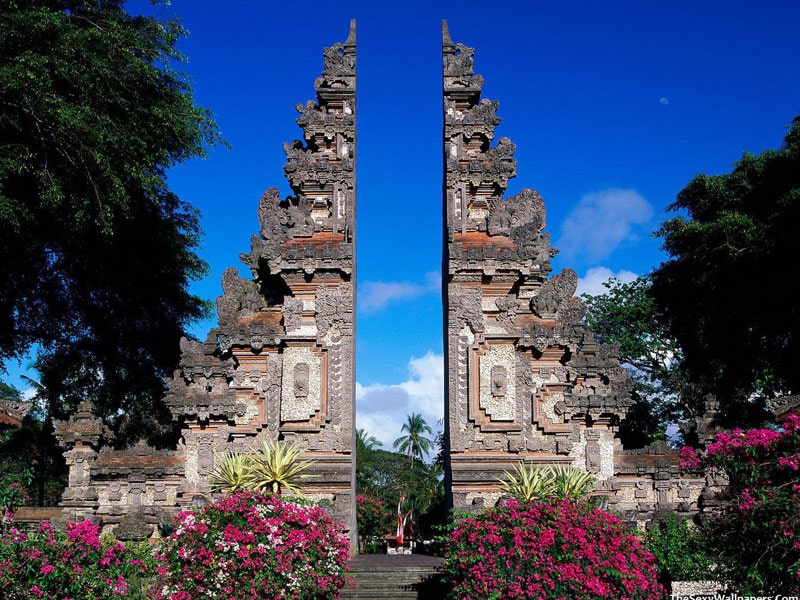
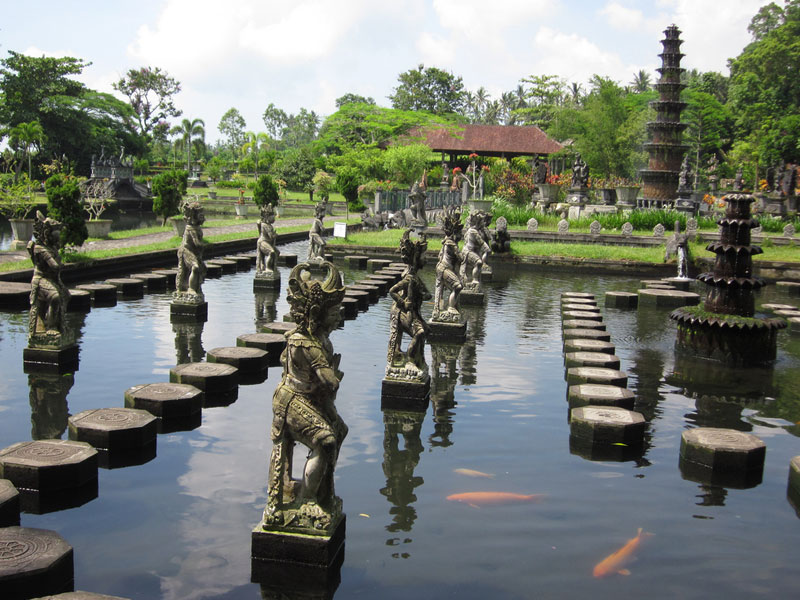
Indonesian culture resists easy summary because it was never built from a single source. Javanese court traditions, Balinese Hindu ritual, Islamic practice across Sumatra and beyond, and the customs of hundreds of smaller ethnic groups all coexist within one nation. Gamelan music, shadow puppet theatre, and batik textiles carry centuries of craftsmanship, while temple ceremonies in Bali still follow a calendar older than the modern state itself. What unites this diversity is a shared instinct for hospitality and a deep respect for community over individual pursuit.
People
Indonesians are often described by visitors as remarkably welcoming, and that reputation is well earned. Family and community sit at the centre of daily life, and a smile or a small gesture of courtesy is rarely left unreturned. English is widely spoken in tourist areas, though a few words of Bahasa Indonesia, the country's unifying language across its many ethnic groups, tend to open doors that would otherwise stay closed.
Cuisine
Indonesian food carries the imprint of its geography and its history of trade. Rice forms the foundation of nearly every meal, accompanied by dishes shaped by centuries of spice routes: nasi goreng, satay, rendang, and gado gado each reflect a different region's character. Sambal, the fiery chilli condiment found at nearly every table, varies from island to island, sometimes by village. Street food culture is vibrant and central to daily life, with warungs serving some of the country's most memorable meals at a fraction of restaurant prices.
Holidays & Festivals
Indonesia's calendar reflects its religious diversity. Eid al Fitr, marking the end of Ramadan, brings the country to its largest annual migration as millions travel home to celebrate with family. Nyepi, the Balinese day of silence, transforms the island into near total stillness once a year, with streets empty and even the airport closed for twenty-four hours. Independence Day on the seventeenth of August fills towns and villages with flag-raising ceremonies and playful competitions. Hindu, Muslim, Christian, and Buddhist celebrations all find their place across the archipelago, often within the same town.
Travel Tips
Distances in Indonesia are larger than they appear on a map, and inter-island travel usually requires flights rather than roads. Dress modestly when visiting temples and mosques, and carry a sarong for sites that require one. Bargaining is expected in markets, though fixed prices apply in malls and most restaurants. The dry season from April to October offers the most reliable weather for island hopping, while the wet season brings dramatic afternoon storms that pass quickly. Patience travels well here, schedules shift, and the unhurried pace is part of the experience rather than an obstacle to it.
In Magelline's view, Indonesia does not reveal itself easily. It asks for time, for a willingness to move slowly between islands rather than rush through a checklist. Those who give it that time find something rare, a country where ancient ritual and daily life are still the same thing, where a temple offering placed each morning carries as much meaning as it did centuries ago. To travel through Indonesia is to understand that some places are not meant to be seen quickly. They are meant to be felt.
There is also a quieter reason Magelline feels drawn to these islands. Our name carries the legacy of Ferdinand Magellan, and it was in the Moluccas, in what is now eastern Indonesia, that his crew finally reached the Spice Islands that had been the true destination of the entire voyage all along. Magellan's full story, and how it shaped a brand built around exploration, is told in our guidebook.