 Armenian
 German
 Spanish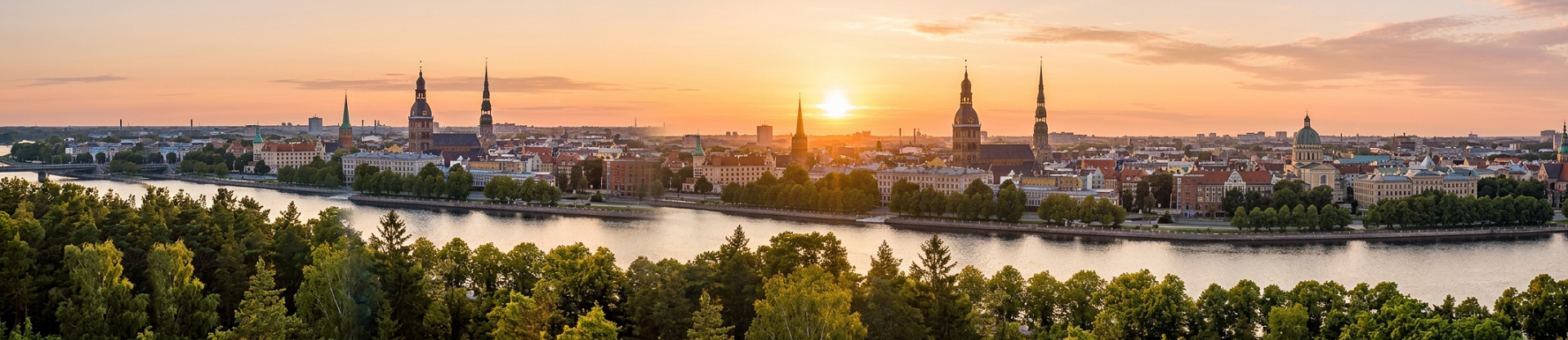
There is a moment, somewhere on a Latvian beach in the late light of June, when you realise you have not heard another voice in an hour. Only wind in the pines, the slow work of the Baltic against white sand, and behind you a forest that goes on for days. Latvia waits for you to slow down to its speed, and then, quietly, it lets you in.
You will find it in Northern Europe, the middle Baltic state, with Estonia to the north, Lithuania to the south, Russia and Belarus to the east, and nearly five hundred kilometres of coast. Half the country is forest. The summers are mild and briefly endless, the June evenings so long they feel borrowed, and the winters arrive with a snow that makes everything quieter than you thought a country could be.
Language
Listen closely and you are hearing something rare. Latvian is one of only two Baltic languages still spoken on earth; its survival through centuries of foreign rule was carried like a quiet inheritance. You can travel easily with English, especially in Riga, and Russian is widely understood, but say paldies for thank you, labdien for good day, and watch a reserved face soften. The effort is always noticed.
Cities
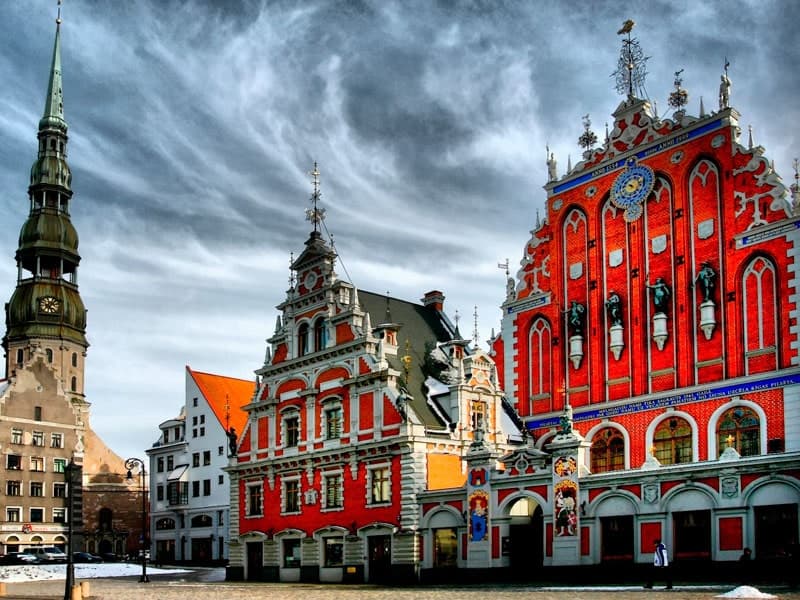
In Riga, you feel the country's pulse: medieval lanes opening onto elegant boulevards, spires above, café tables below. Half an hour away, Jūrmala smells of pine and sea, a town of wooden villas where people have come to breathe for two centuries. In the wooded Gauja valley, Cēsis and Sigulda are small towns with long memories, places where history feels overheard rather than displayed. On the western coast, Liepāja calls itself the city where the wind is born, and the wind agrees. And in the far southeast, Daugavpils speaks a different Latvian, more Slavic in accent and rhythm.
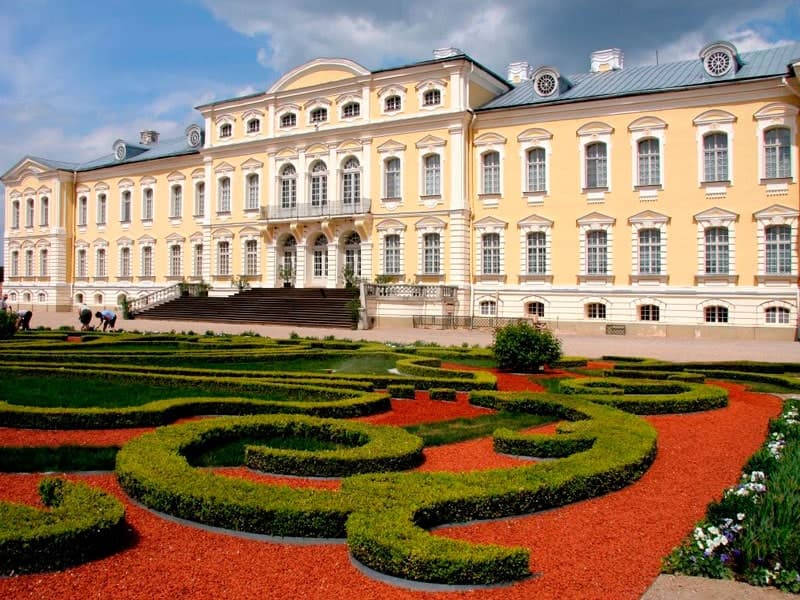
To explore Latvia's most celebrated landmarks in detail, visit the Latvia sights page.
Culture & History
Everyone came here: crusaders, Hanseatic merchants, Swedish kings, Russian tsars, Soviet planners. Each left a layer, and the Latvians outlasted them all by singing. Over a million folk verses, the dainas, were passed down mouth to mouth, one of the great oral literatures of Europe. Every five years, the Song and Dance Celebration gathers tens of thousands of voices, and you understand this is not a festival but a survival strategy. When independence returned in 1991, it came through what the world now calls the Singing Revolution. Here, song is what a nation sounds like when it refuses to disappear.
People
You may find Latvians reserved at first. Stay a while, and you will see it differently: the reserve is a form of respect, a reluctance to impose. Beneath it runs a devotion to nature so deep it shapes the calendar: in autumn, whole families vanish into the forest with baskets, because mushroom picking here is close to a sacrament. Many keep a countryside cottage where the real living happens. Earn a Latvian's trust, and the quiet gives way to dry humour and a loyalty that lasts.
Cuisine
The table tells you where you are. Dark rye bread, dense and faintly sweet, is treated with something near reverence. Smoked fish from the coast, wild mushrooms and berries from the forest, grey peas with bacon on a cold night, caraway-flecked Jāņi cheese in midsummer. This is food that follows the seasons because it always has. In Riga, a new generation of chefs is taking these same ingredients and quietly proving they were never simple at all.
Public Holidays & Festivals
If you can choose your moment, choose Jāņi. On the twenty-third and twenty-fourth of June, the country empties into the countryside, bonfires rise, beer and cheese circulate, and the songs continue until a sunrise that barely follows the sunset. On Independence Day, the eighteenth of November, candlelight fills the early dark. And Latvians will tell you, with justified satisfaction, that the decorated Christmas tree was born in Riga in 1510.
Travel Tips
Latvia is compact, and Riga makes a natural base, but give yourself at least one journey beyond it; the country reveals itself outside the capital. Come in June or July for the longest days, bring patience for weather that changes its mind often, and do not mistake quietness for coldness. Tip around ten per cent in restaurants. And take the forest seriously: the trails, bogs, and beaches are the country's true monuments, and most of them are free.
In Magelline's view, Latvia rewards travelers who have learned that loudness is not the same as depth. It asks for a slower attention: light on wet cobblestones, the smell of rye bread, a song carried across a midsummer field. Come quietly. Latvia will meet you there.