
 Armenian
 German
 Spanish

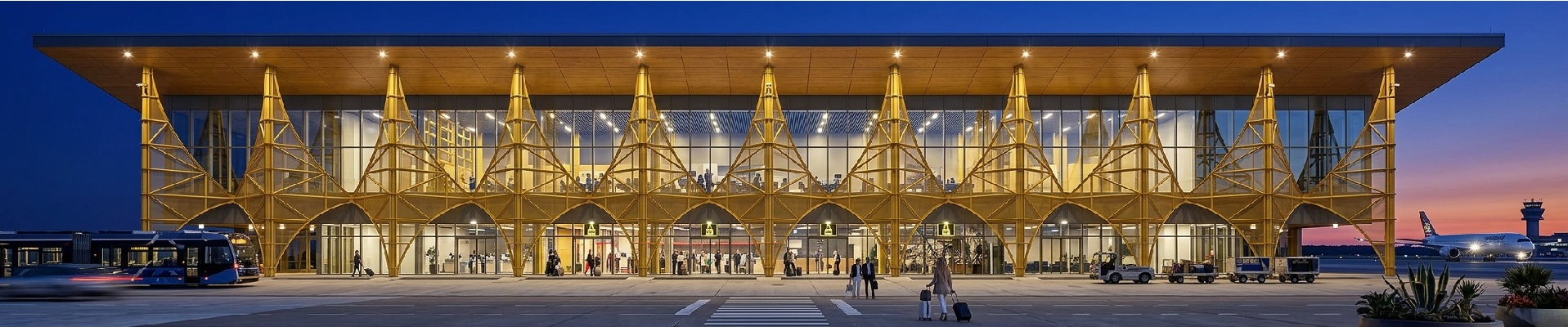
Romania has rapidly transformed into one of Eastern Europe's most active travel markets. Driven by growing trade, a surge in regional tourism, and official integration into the Schengen area for air travel, the country's aviation sector is growing at a record pace. Modern terminals, expanded runways, and better regional links have turned local airports into major engines for economic growth.
Bucharest Henri Coanda International (OTP)
As the main international gateway to the country, Bucharest Henri Coanda handles more than 60 per cent of Romania's overall passenger traffic. Located in Otopeni, this large facility links the capital to major cities across Western Europe, the Middle East, and beyond. Ongoing upgrades to the terminal, better transport links, and continuous infrastructure improvements keep Otopeni at the centre of regional travel, serving as a hub for both commercial airlines and charter flights.
Cluj Avram Iancu International (CLJ)
As the largest airport in Transylvania, Cluj Avram Iancu has become Romania's second busiest travel hub. Located right in the middle of the country's thriving tech scene, Cluj links western Transylvania with major business centres across Europe. Recent terminal expansions and runway upgrades allow the airport to handle high daily traffic from both major European carriers and budget airlines.
Iasi International (IAS)
Iasi International is the primary airport for eastern Romania, serving the historic Moldavia region along with neighbouring Moldova. Thanks to significant recent investments, including a brand new passenger terminal, Iasi has experienced massive growth in traveler numbers. It plays a key role in connecting eastern Romania with major job markets and holiday spots across Western Europe.
Timisoara Traian Vuia International (TSR)
Located near the western borders with Hungary and Serbia, Timisoara Traian Vuia serves as a key entry point for the industrial heartland of western Romania. The airport recently completed a major upgrade, adding brand-new terminals specifically for international departures and arrivals. The airport offers crucial direct routes for international business travelers, corporate investors, and regional tourists.
Sibiu International (SBZ)
Tucked away in central Transylvania, Sibiu International provides easy access to one of the most popular cultural and historic regions in the country. Known for its strong flight links to German-speaking countries, Sibiu supports both local industrial hubs and year-round tourism in the nearby Southern Carpathian mountains.
Brasov Ghimbav International (GHV)
As Romania's newest airport, Brasov Ghimbav represents a major milestone for local infrastructure. Situated right next to the country's top mountain resorts, the airport significantly cuts travel time for international tourists heading straight to the heart of Transylvania.
TAROM and the Airline Network
Working alongside this growing airport network is TAROM, Romania's historic national airline. Operating mainly out of Bucharest Henri Coanda, TAROM keeps the capital connected to major regional cities like Cluj, Iasi, and Timisoara. As a long-standing member of the SkyTeam alliance, TAROM offers essential scheduled flights that link regional airports to major global destinations.
Travel Tips
- Fly into regional airports instead of Bucharest whenever possible. You can save hours of driving by booking direct flights to cities like Cluj, Iasi, or Timisoara.
- Fly directly into Brasov if you are visiting castles or head to the Carpathian Mountains, as this saves a lot of road travel time.
- Use national carrier TAROM for fast, simple domestic flights between the capital and smaller regional hubs.
Magelline's View
At Magelline, we see Romania as one of the most accessible and fast-growing travel destinations in Eastern Europe. The country's decentralised system of regional airports allows modern travelers to bypass busy hubs, linking tech centres, historic towns, and mountain getaways directly to international air routes.