 Armenian
 German
 Spanish
Trinidad and Tobago sits at the southern edge of the Caribbean, closer to the coast of South America than to any other island chain, and its aviation network reflects that position as a meeting point between the region and the wider Americas. Though the republic is compact, its two international airports carry an outsized role, linking the Caribbean with North America, South America, and a growing set of seasonal routes to Europe.
Two islands, two temperaments, two gateways. Trinidad is the commercial heart of the republic, energetic and industrious, alive with carnival colour, while Tobago is its gentler counterpart, green, unhurried, and edged with quiet beaches. The country's airports mirror that contrast, and between them runs one of the most travelled short flights in the region, the air bridge that links the two islands and turns a single arrival into one seamless journey across both.
Modern terminals, efficient processing, and straightforward ground transport shape the experience on arrival. There is no passenger rail on either island, so onward travel is made by road: metered taxis, private transfers, and car rental counters sit beside the terminals, while clearly signposted highways carry travellers toward Port of Spain, Scarborough, and the coast.
The country's principal gateways are:
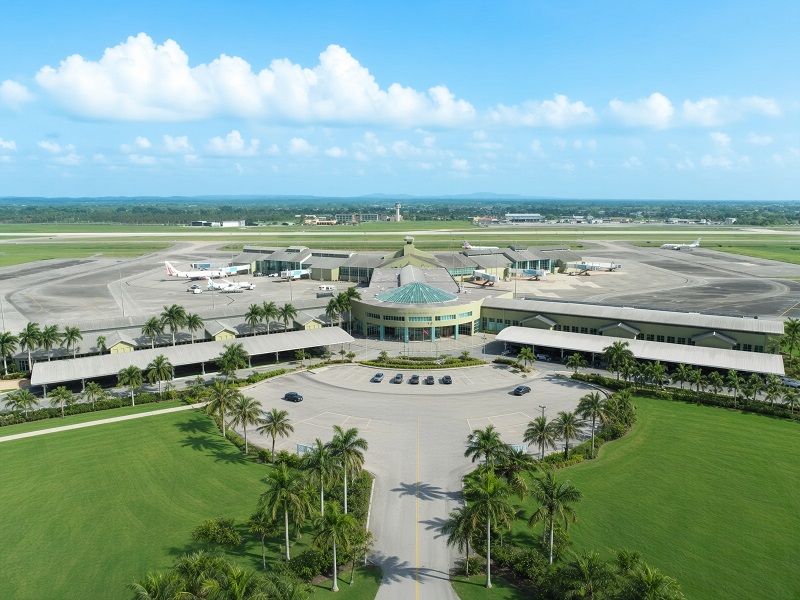
Piarco International Airport (POS): The main international gateway, set inland from the capital, Port of Spain, on the island of Trinidad. A modern terminal, a broad route network, and its role as the base of the national carrier make Piarco the busiest air hub in the southern Caribbean, welcoming long-haul arrivals alongside dense regional traffic.
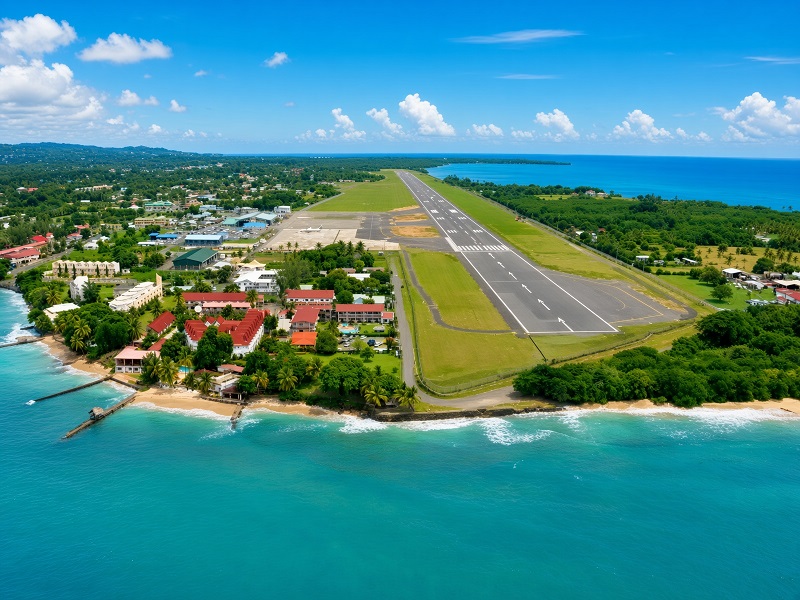
ANR Robinson International Airport (TAB): Tobago's gateway, near Crown Point on the island's southwestern tip, within easy reach of Scarborough and some of the finest beaches in the Caribbean. Compact and relaxed, it handles regional connections and seasonal European charters, and forms the Tobago end of the air bridge.
For a smooth departure, arriving about three hours before an international flight leaves gives comfortable time to check in, clear immigration, and pass security, while two hours is usually ample for the regional air bridge. Both airports offer cool, comfortable terminals, duty-free shopping, dining, ATMs, and car rental, and both are small enough to cross without stress. Travellers hopping between the islands should keep hand luggage light and confirm the firmly enforced baggage limits on the air bridge before flying.
In Magelline's view, aviation in Trinidad and Tobago is defined less by scale than by character. One airport hums with the commerce and celebration of Trinidad, the other opens straight onto the ease of Tobago, and together they turn a single trip into two very different invitations. For the traveller, the promise is simple: a modern, welcoming gateway to the southernmost corner of the Caribbean, with the sea rarely far from view.