 Armenian
 German
 Spanish
Denmark is a nation stitched from islands and one broad peninsula, a country where the sea presses close on every side and the land lies low beneath a wide northern sky. For a place of its modest size, it moves an enormous share of the world through its air, sitting as it does at the hinge between continental Europe and the Nordic countries. To fly into Denmark is to arrive somewhere calm, orderly, and quietly confident, a threshold to Scandinavia that feels welcoming from the first breath of cool Baltic air.
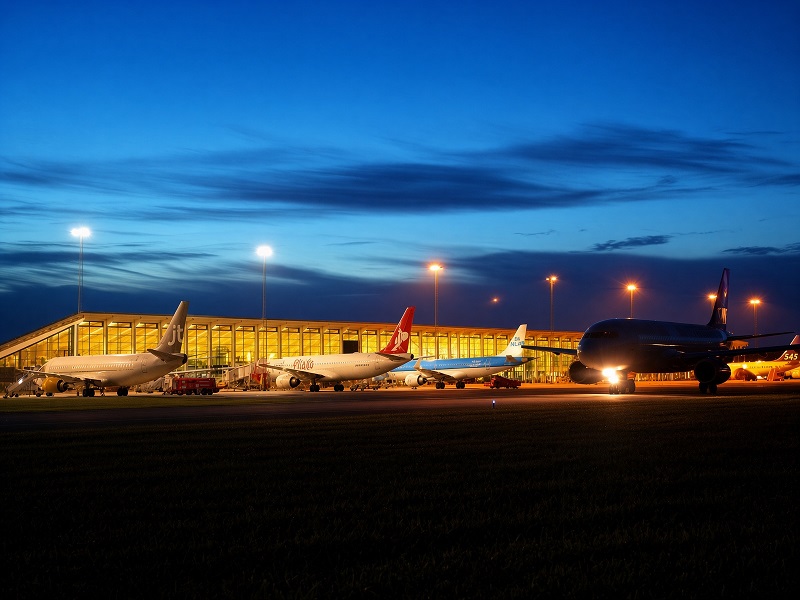
Its airports carry the character of the geography that shapes them. Some open onto the capital and its bridges. Others sit among the heathland and fjords of Jutland, or far out on a Baltic island where the light turns golden in the evening. Each has its own reason for being, and together they form a network that is easy to move through and pleasant to pass a few hours in.
Copenhagen Airport (CPH)
Copenhagen Airport is the great gateway of the Nordic region, the busiest and most connected in all of Scandinavia. Set on the island of Amager, a short glide from the city centre and joined by rail to Sweden across the Øresund, it is a place of clean lines, blond wood, and effortless flow. Travellers move through spaces that feel closer to a design museum than a terminal, and the whole experience carries that particular Danish talent for making the practical feel graceful.
Billund Airport (BLL)
In the heart of Jutland stands Billund, the country's second airport and the improbable neighbour of a small town that gave the world its most famous brick. It is the gateway to the Danish mainland, to the lake country and the long North Sea beaches, and it welcomes as many families bound for LEGOLAND as it does travellers headed inland on business. Compact and friendly, it is an airport with a sense of play written into its very address.
Aalborg Airport (AAL)
Far to the north, where Jutland narrows towards the meeting of two seas, Aalborg serves the bright, industrious cities of the region. It is the northern doorway to Denmark, close enough to town that arrival feels immediate, and it opens onto a landscape of shifting dunes, vast skies, and the peculiar clear light that has drawn painters to this coast for generations.
Aarhus Airport (AAR)
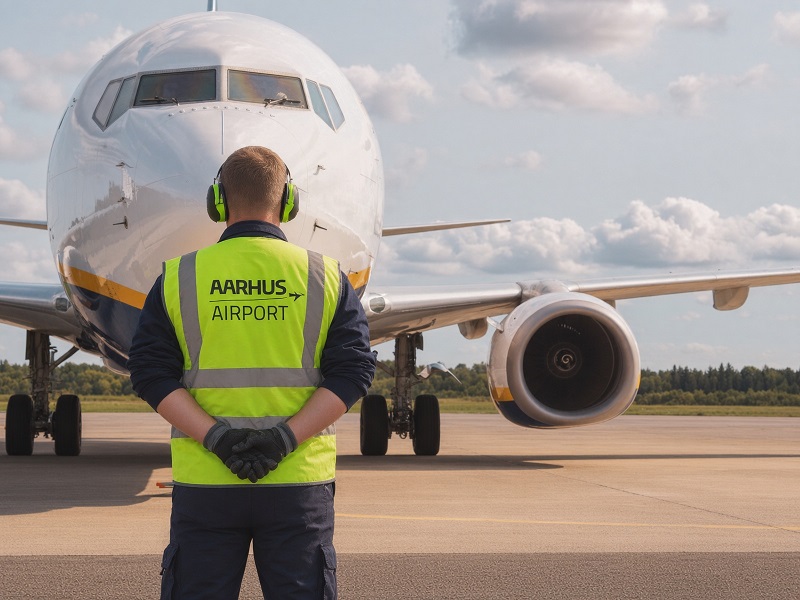
Aarhus, the country's spirited second city, is reached through an airport set a little way out among the fields and coastline of eastern Jutland. The journey in rewards you with a place that hums with student energy and salt air, a compact and cultured city that has quietly become one of the most engaging destinations in the north.
Bornholm Airport (RNN)
Out in the Baltic, closer to Sweden and the Continent than to the rest of Denmark, the island of Bornholm keeps its own small airport just beyond the harbour town of Rønne. To land here is to arrive somewhere that feels like a secret, an island of round churches, smokehouses, and cliffs where the sun lingers late into a long summer evening.
Magellan Perspective
Thanks to modern Danish airports, getting to Denmark has become quite easy. From the elegant bustle of Copenhagen to the family-friendly welcome of Billund, the northern character of Aalborg, the cultural energy of Aarhus, and the island charm of Bornholm, each gateway offers a different first impression of Denmark.
Yet wherever you land, the Danish experience has a familiar rhythm: calm, efficient, welcoming, and never far from the sea. Beyond the runways lie historic cities, windswept coastlines, quiet islands, colourful harbours, and landscapes shaped by centuries of life between land and water.
For passengers arriving at these airports are the first chapter of a journey through a country where modern life and timeless landscapes exist side by side, a place of open skies, gentle coastlines, thoughtful design, and the unmistakable Nordic sense of simplicity.