 Armenian
 German
 Spanish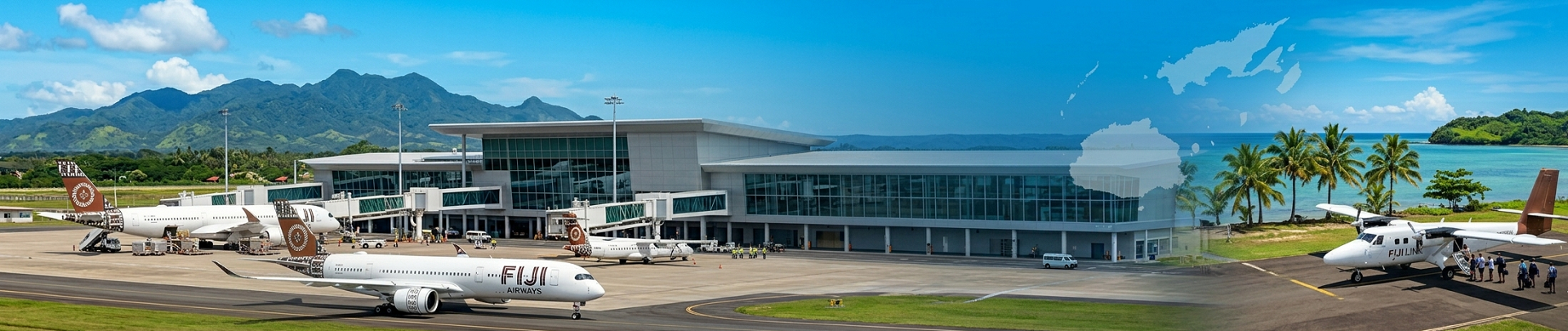
Getting to Fiji has never been part of the inconvenience. The archipelago sits at a natural crossroads of the South Pacific, positioned almost exactly equidistant between North America and Australia, which makes Nadi International Airport (NAN) one of the most logically placed aviation hubs in the entire Pacific region.
Fiji's air network does two things at once: it connects the archipelago to the world, and it connects the archipelago to itself. Without its airports, the outer islands remain unreachable. The domestic network is not a convenience. It is the foundation on which the country's tourism economy and daily island life both rest.
Network
Fiji Airports operates or manages fifteen airports across the country. At the top sits Nadi International Airport (NAN), the country's primary international gateway and one of the busiest airports in the South Pacific. Below it, Nausori International Airport (SUV) near the capital Suva serves as the secondary hub, primarily handling domestic traffic and regional connections. Thirteen outer island airports then complete the network, linking places like Taveuni (TVU), Savusavu (SVU), Labasa (LBS), Kadavu (KDV), and the Yasawa island chain to the rest of the country.
Each of these outer airstrips is more than a piece of infrastructure. For the communities they serve, they are the link to hospitals, schools, markets, and the rest of Fiji.
Infrastructure & Development
Fiji's aviation sector is undergoing the most significant expansion in its history. Fiji Airports has outlined a master plan covering the period from 2024 to 2048, backed by a government commitment of over two billion Fijian dollars in aviation infrastructure investment over the coming decade.
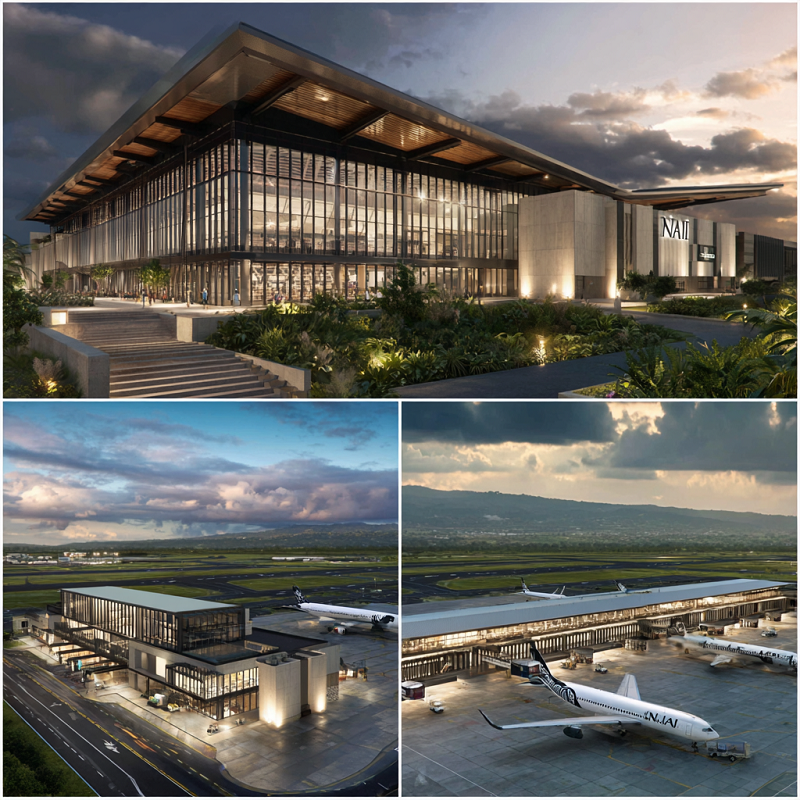
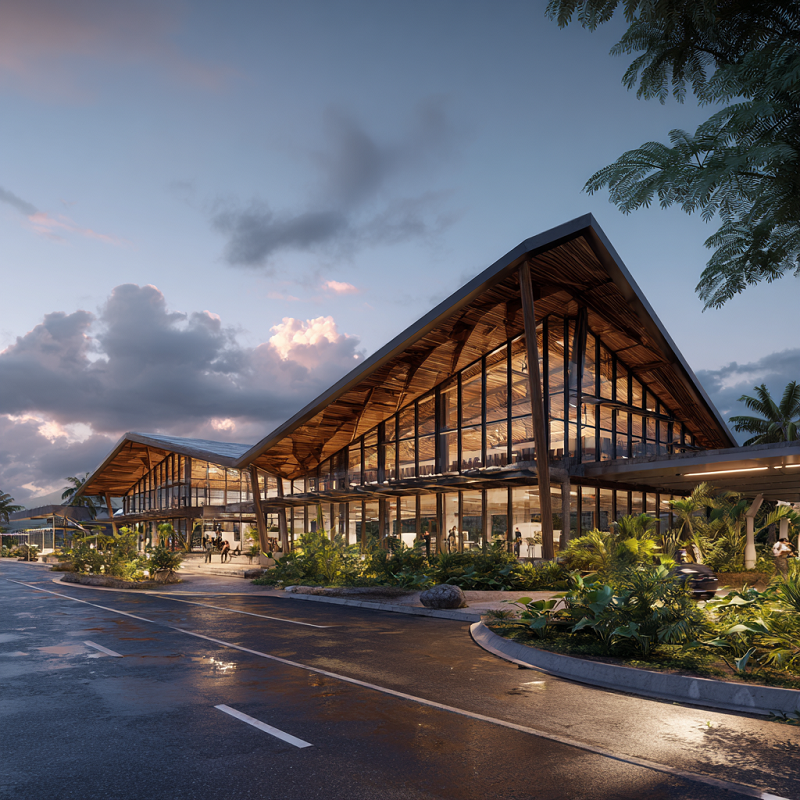
At Nadi, eighteen projects are currently in the pipeline. New passenger boarding aerobridges are already entering service, replacing decades-old equipment and improving turnaround efficiency for wide-body aircraft. A new state-of-the-art domestic terminal is planned, alongside new gates, expanded car parking, a transit hotel, and upgraded retail and commercial facilities. The architectural consultancy COX Architecture, which has worked on Singapore Changi, New Delhi Terminal 3, and Sydney Airport, is developing the landside masterplan for both Nadi and Nausori.
At Nausori, construction began in April 2026 on a FJD 64 million upgrade that includes a full runway strengthening to accommodate Boeing 737 and Airbus A320 aircraft, and the construction of an entirely new passenger terminal. The airport, which handles around 400,000 passengers annually, is being repositioned as a modern second international gateway for the country.
Further north, upgrades at Savusavu and Labasa airports are underway as part of the Na Vualiku Tourism Development Program, supported by the World Bank. These improvements are designed to open Vanua Levu and Taveuni to greater domestic and regional traffic, reflecting the country's ambition to spread the benefits of tourism beyond the established corridors.
Airlines
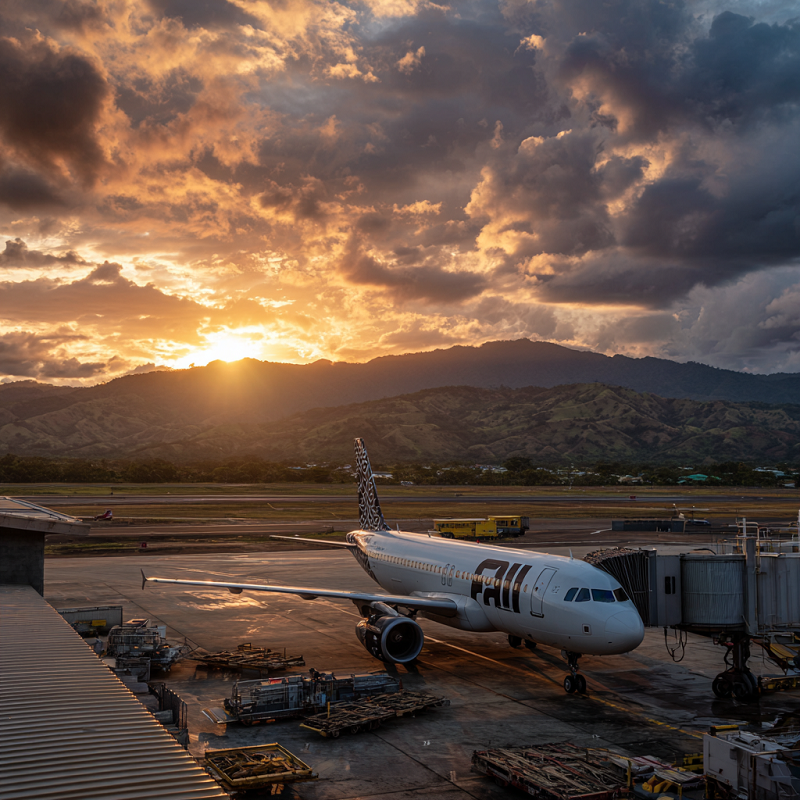
Fiji Airways (FJ) is the national carrier and the backbone of the country's international connectivity. Operating from its Nadi hub, it serves routes across Australia, New Zealand, the United States, Canada, Japan, Singapore, Hong Kong, and multiple Pacific island nations. In 2025, the airline recorded a 47 per cent increase in seat capacity year on year, reflecting both the recovery of Pacific tourism and a deliberate expansion strategy into previously underserved routes.
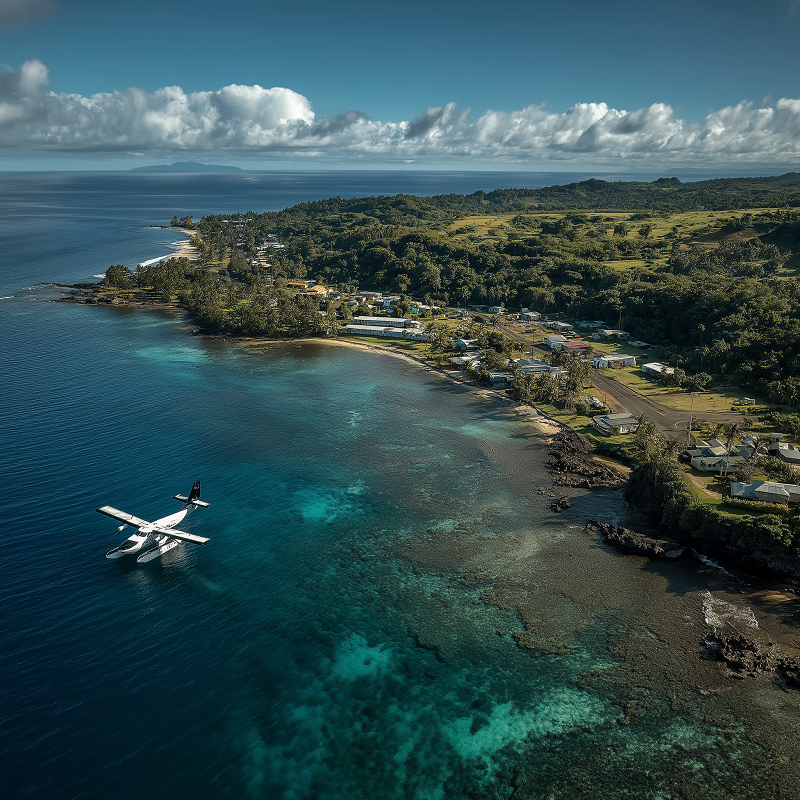
Fiji Link, the domestic subsidiary of Fiji Airways, operates the turboprop network connecting Nadi and Nausori with the outer islands. It is the lifeline of the archipelago's internal connectivity.
Internationally, Fiji is also served by Air New Zealand, Qantas, Virgin Australia, Korean Air, and Nauru Airlines, which operates regional Pacific routes through Nausori. Nadi's geographic position, sitting close to the midpoint between Los Angeles and Sydney, continues to attract carriers seeking efficient transpacific transit options.
Practical Information
For international arrivals at Nadi, it is recommended to allow at least two to three hours before departure during peak travel periods, which broadly correspond to the southern hemisphere summer and the northern hemisphere winter holiday season. The airport operates around the clock. English is the working language throughout, and signage is clear and traveller-friendly.
Domestic connections from Nadi to the outer islands are frequent but weather-dependent, particularly in the wet season. Travellers connecting onwards to the Yasawas, Taveuni, or Kadavu should allow flexibility in their schedules. The reward for that flexibility is, invariably, worth it.
Below are the principal airports of Fiji, each serving as a gateway to a distinct part of the archipelago:
Nadi International Airport (NAN): Fiji's primary international hub, connecting the archipelago to Australia, New Zealand, North America, Asia, and the Pacific.
Nausori International Airport (SUV): The gateway to the capital Suva and central Fiji, currently undergoing a major upgrade to become a modern second international gateway.
Taveuni Airport (TVU): The entry point to the Garden Island and the Rainbow Reef, one of the world's great diving destinations.
Savusavu Airport (SVU): The gateway to Vanua Levu's most charming harbour town, serving a growing number of regional and domestic routes.
Labasa Airport (LBS): The northern Vanua Levu hub, connecting the island's sugar-producing heartland to the wider network.
Kadavu Airport (KDV): The remote gateway to the Great Astrolabe Reef and one of Fiji's least-visited major islands.
In Magelline's view, Fiji's airports are not simply the beginning and the end of a journey. At Nadi, you arrive in warm air, a garland of flowers, and the immediate sense that the pace of life has already shifted. At an outer island airstrip, you step off a small propeller aircraft onto a strip of tarmac surrounded by ocean and forest, and the rest of the world seems very far away indeed. That distance, in Fiji, is always a gift.