 Armenian
 German
 Spanish

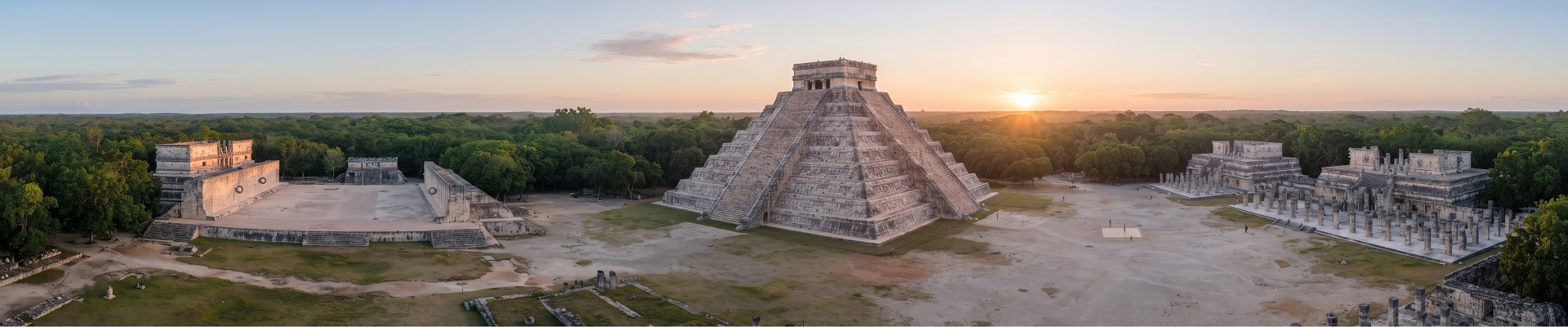

Mexico never demands that you choose between the past and the present; it simply stacks them. A colonial cathedral rises from the tiered stone of a pyramid built long before the Spanish arrived; a metro excavation in the capital exposes the silent foundations of an Aztec temple; and in a Oaxacan kitchen, a woman grinds maize on a volcanic metate exactly as her ancestors did millennia ago, while her grandson records it on his phone. Few nations wear their history quite so openly, keeping every layer visible and actively in service.
It is this continuity that stays with you long after the tan has faded. Visitors often arrive chasing beaches, ruins, or tacos from a street stall, only to leave with the surreal sensation of having traversed several centuries in a single afternoon. Stretching across close to two million square kilometres and home to upwards of 130 million people, Mexico calls for a wide lens.
Landscape
Start in the north and the land is dry and enormous. The Sierra Madre mountains fold into canyons deeper than the Grand Canyon itself. Further south the highlands lift you into thin, clear air, where snowcapped volcanoes such as Popocatépetl and Pico de Orizaba watch over farmland and pine forest. Each winter, millions of monarch butterflies fly here from Canada and settle in the fir forests of Michoacán, covering the trees so densely that the branches bend under their weight.
Then the country splits into two coasts with two different temperaments. The Pacific side is wild and restless, with long surf beaches, the desert peninsula of Baja California and the Sea of Cortez, where grey whales come to give birth in sheltered lagoons. The Caribbean side is calm and turquoise, with the Mesoamerican Reef, the second largest barrier reef on Earth, running just offshore. Inland, the Yucatán Peninsula is flat limestone, and beneath it lies a hidden world of cenotes, freshwater sinkholes where sunlight falls through the rock into water of startling clarity. The ancient Maya believed these pools were doorways to the underworld. Swimming in one, you start to understand why.
Cities
Mexico City is where the layering becomes almost overwhelming. The capital sits at 2,240 metres on the bed of a drained lake, on the very spot where the Aztecs built Tenochtitlan. Its historic centre stands directly on top of their ruins. Few cities anywhere hold as many museums.
Beyond the capital, each city has its own colour. Oaxaca is the country's culinary heart, famous for its moles and its craft markets. Guanajuato climbs a narrow ravine in a cascade of painted houses. Puebla shimmers with Talavera tiles painted by hand, and San Miguel de Allende has drawn artists and writers for generations. In the Yucatán, Mérida keeps a slow, elegant rhythm, while Guadalajara gave the world both mariachi and tequila.
Around them lie the great ancient sites: Teotihuacan with its Pyramid of the Sun, Chichén Itzá and Palenque among the Maya, Tulum perched above the Caribbean. Each of these ancient cities and landmarks could fill a journey of its own.
Hospitality
In Mexico, hospitality begins at the table. Mexican cuisine was the first national cuisine recognised by UNESCO as part of humanity's intangible heritage. Corn, chilli, cacao, beans and squash came from this land, and Mexican cooks have been refining them for millennia. A single mole can contain more than thirty ingredients and take days to prepare. Yet some of the best food you will taste comes from a street stall at midnight, where tacos al pastor are sliced straight from the spit.
People here like to say "mi casa es su casa", my house is your house, and they tend to mean it. Life in Mexico moves to the rhythm of the fiesta, from village saints' days to the Day of the Dead in early November. Families build altars with marigolds, candles and the favourite foods of those who have passed, and cemeteries fill with music and conversation through the night. It is a celebration of memory, warm and joyful, and deeply Mexican.
Magelline Perspective
Mexico works best when you resist the urge to see everything. Choose a region and let it unfold slowly: the capital and its highland towns, Oaxaca and its markets, or the Yucatán with its cenotes and Maya cities. The dry season, roughly from November to April, brings the most comfortable weather across most of the country.
Whatever you choose, stay curious about what lies underneath. In Mexico there is always another layer, beneath the church, beneath the street, beneath the surface of the water. That is the real invitation of this country.


