 Armenian
 German
 Spanish
Mexico is built on two levels. The capital and the old colonial cities sit on a high plateau ringed by volcanoes. Below them, two long coastlines run out toward the Caribbean and the Pacific. Most trips move between these levels, and the airport you land at decides which Mexico you meet first.
Flying here is a normal way to get around. Distances are long and mountain roads are slow, so a domestic flight is often the sensible choice. Aeroméxico is the national carrier and a SkyTeam member. Volaris and Viva Aerobus cover the domestic map with budget fares and fly to many cities in the United States.
Two airports carry most of the weight. Mexico City is the main network hub. Cancún handles most of the country's beach traffic and has more foreign arrivals than any other Mexican gateway.
Mexico City Benito Juárez (MEX)
The airport sits inside the city, and on approach, planes drop low over flat roofs and water tanks. It lies more than two kilometres above sea level, and the thin air shows in long takeoff runs. There are two terminals. Aeroméxico runs its hub from Terminal 2, and the Aerotrén links the two buildings for connecting passengers. Lufthansa, Air France, KLM, Iberia and British Airways fly in from Europe. The terminals are busy and a little worn, but they work. Metro Line 5 stops beside Terminal 1, and Metrobús Line 4 serves both terminals.
Felipe Ángeles (NLU)
The capital's second airport stands on a former air base north of the city. It mostly serves domestic routes and budget carriers. The Tren Felipe Ángeles now runs from Buenavista station straight into the airport, which makes it much easier to use than it once was. Check which airport your ticket names before you book a hotel.
Cancún (CUN)
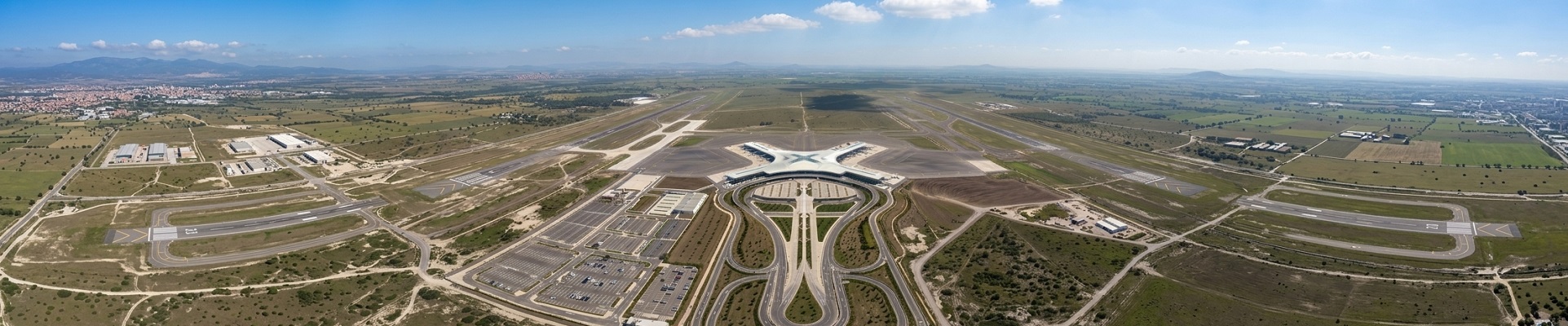
The land here is flat limestone scrub and the sea is a bright turquoise. Cancún has several terminals, and most flights from the United States and Europe use Terminals 3 and 4. Condor flies in from Frankfurt and Edelweiss from Zurich. Arrivals pass through a hall full of transfer and timeshare sellers. Walk straight through to the exit, where prebooked drivers wait. ADO buses run to downtown Cancún, Playa del Carmen and Tulum. A Tren Maya station near the airport opens the inland route toward Valladolid and Mérida.
Tulum (TQO)
Tulum's airport was cut out of low jungle south of the town. It puts travellers much closer to Tulum, Bacalar and the quiet southern coast. Flights come mostly from the United States, Canada and Mexico City, and the schedule is thinner than Cancún's. If your dates are flexible, it can spare you a long drive south.
The Pacific: Los Cabos (SJD) & Puerto Vallarta (PVR)
Los Cabos sits where desert meets sea at the tip of Baja California. Cactus grows right up to the runway edge. Most flights come from the United States and Canada, so travellers from Europe usually connect through a US hub or Mexico City. The arrival hall has the same crowd of sellers as Cancún.
Puerto Vallarta lies on Banderas Bay with green mountains close behind it. The airport is a short ride from the old town and the hotel strip.
Guadalajara, Oaxaca and Mérida
Guadalajara is the country's second city and a major Volaris base, with flights across Mexico and to the United States. It is also the natural door to tequila country. Oaxaca's small airport sits in a valley under bare hills and connects mainly with Mexico City. Mérida is the gentle way into the Yucatán, with colonial streets, haciendas and cenotes within easy reach.
Entry Requirements
Entry requirements for Mexico vary by nationality. Citizens of the European Union, the United Kingdom, the United States, and Canada enter without a visa. Citizens of Russia and Ukraine arriving by air must obtain an electronic authorisation online before departure, while Brazilian citizens must secure an electronic visa prior to travel. Additionally, many travelers who normally require a visa may enter using a valid, multiple-entry visa from the United States, Canada, the United Kingdom, Japan, or the Schengen area. Upon arrival, the immigration officer determines and stamps your permitted length of stay, and you should always verify this before leaving the desk. Because regulations change periodically, you must confirm current requirements with a Mexican consulate or the National Migration Institute before travelling.
Magelline Perspective
For a first trip built around the capital, the pyramids and the colonial towns, fly into Mexico City Benito Juárez. Check whether a budget fare actually lands at Felipe Ángeles. For the Caribbean coast, Cancún has the widest choice of flights from Europe. Tulum is the better landing if you are staying south of Playa del Carmen and can find a convenient connection. For whales, desert and big Pacific sunsets, choose Los Cabos. For mountains running down to the water, choose Puerto Vallarta. Travellers who want food, markets and craft can fly into Oaxaca through Mexico City. The Maya world opens from Mérida. A domestic flight between the plateau and the coast usually takes less time than the road and gives you both halves of the country.
