 Armenian
 German
 Spanish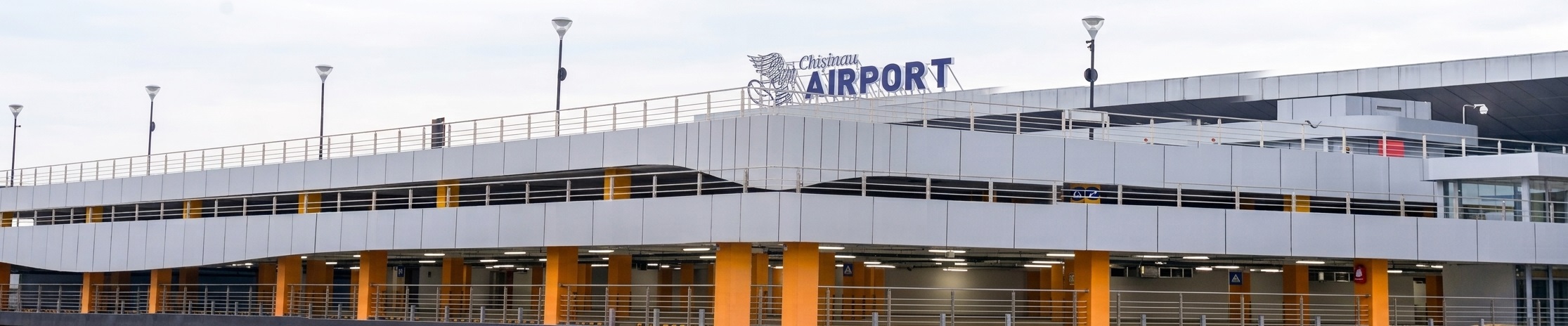
Moldova has one real door. Almost every traveler who arrives by air lands at Chisinau Eugen Doga International Airport. Wine lovers bound for the cellars of Cricova come this way, and so do Moldovan families flying home from work in Italy and Germany. The country has a few other airfields. None of them has scheduled passenger flights, and the one at Tiraspol sits across the Dniester in Transnistria, closed to civil traffic.
Since Ukraine closed its skies, Chisinau has also served travelers from next door. For much of southern and western Ukraine it is the nearest working airport, and Ukrainians make up a large part of the crowd at the gates. Many of them reach it by overnight train or bus.
By regional standards, Chisinau is small. Bucharest Otopeni and the Istanbul airports are much larger hubs, and most long journeys from Moldova connect through one of them.
Chisinau Eugen Doga International Airport (RMO)
The airport is named after Eugen Doga, the Moldovan composer whose waltzes are known across the former Soviet world. It lies southeast of the capital. The single terminal is compact and fills up fast when several low-cost flights leave in the same hour.
Wizz Air has the largest network here, with routes to Italy, Germany, Romania and many other EU countries where Moldovans live and work. Two local airlines are based at Chisinau. FlyOne flies to Europe, Yerevan and Dubai. HiSky connects the city with Istanbul, Tel Aviv and several European cities. SkyUp is a Ukrainian airline that moved much of its flying here after the war began. Its routes go to Spain, Greece, France and Germany.
Pegasus and Turkish Airlines fly to Istanbul, TAROM to Bucharest and El Al to Tel Aviv. In summer, charter flights leave for Antalya and the Greek islands. Air Moldova, the former national airline, no longer flies. Chisinau has no direct flights to North America or East Asia, so travelers connect in Istanbul or at a large Western European airport.
Marculesti & North
Marculesti is a former military airfield in Floresti district. It now belongs to the company that runs Chisinau airport, and the plan is to use it for cargo and summer charters. It has no scheduled passenger service yet. The civil airport at Balti lost its certificate long ago. Travelers heading to northern Moldova or the fortress at Soroca land in Chisinau and continue by road.
Getting Into City
Trolleybus 30 goes from the terminal to the city centre and stops near the statue of Stephen the Great. Minibus 165 comes more often, runs a little faster and ends on Ismail Street. Drivers on both take cash in lei, and a large suitcase may need its own ticket. Taxis wait outside arrivals. Late at night, a ride-hailing app or a hotel transfer saves you from bargaining. Car hire desks are in the arrivals hall.
The airport may soon have a rail connection. Moldovan Railways is rebuilding Revaca station close to the terminal, and Ukrainian Railways has already run the Kyiv train there, with a free shuttle bus for the last stretch.
Before You Fly
Citizens of the EU, the UK, the US, Canada, Japan and Australia can stay in Moldova without a visa for up to 90 days in any 180 days. Armenians, Georgians and citizens of most CIS countries also enter visa-free. A valid Schengen, UK, US or Canadian visa or residence permit lets many other travelers in as well. Everyone else needs a Moldovan eVisa, which is issued online. Transnistria has its own checkpoints, so check the rules before you go there.
Magelline Perspective
If you are going to Chisinau, the wineries or the cave monastery at Orheiul Vechi, fly straight to RMO. From Western and Central Europe, Wizz Air usually offers the widest choice. From the Caucasus and the Gulf, FlyOne is worth a look. From farther away, the easiest connection is in Istanbul. Ukrainian travelers can use Chisinau as their home airport for now and get there by train. The terminal is small and gets busy at peak hours. The city center is a short ride away.
