 Armenian
 German
 Spanish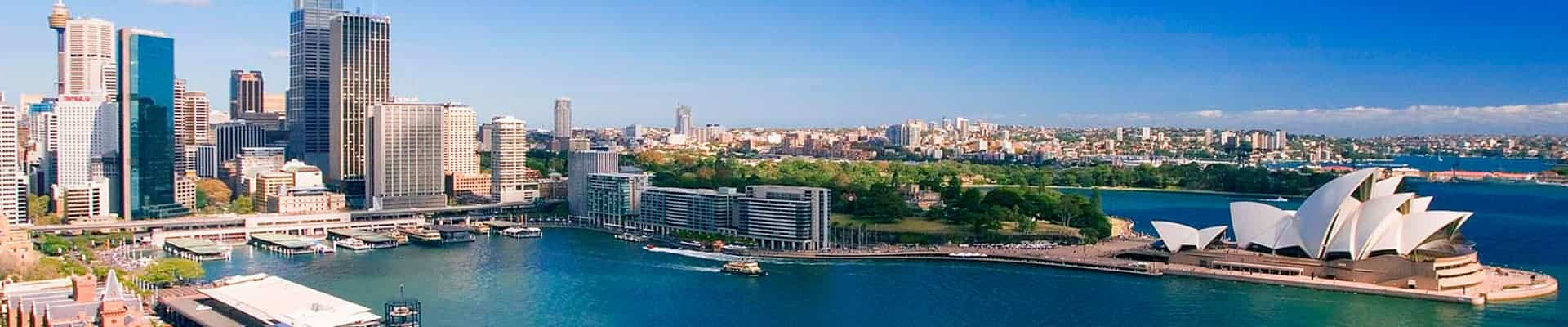
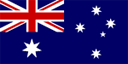
Australia, officially the Commonwealth of Australia, is a vast and diverse nation in the Southern Hemisphere: occupying the world’s smallest continent, the island of Tasmania, and numerous smaller islands across the Indian and Pacific Oceans.
It is the sixth-largest country on Earth by total area, yet its population is concentrated mainly along the eastern coast, where the cities of Sydney, Melbourne, and Brisbane pulse with life.
Separated by just a few kilometres from Papua New Guinea to the north, Australia stands as both an island and a continent, a rare geographical unity. English is the official language, shaped into its own distinctive accent and vocabulary known as “Strine.”
Australia’s dollar (AUD) was the first polymer currency in the world, reflecting the country’s innovation in both economy and design.
When Sydney and Melbourne could not agree on which city should be the capital, Canberra was purpose-built between them: a symbol of balance and compromise.
Today, Australia ranks among the most developed nations: a top-tier economy with a high Human Development Index, advanced healthcare and education, and strong democratic traditions.
Its climate ranges from tropical in the north to temperate in the south, with deserts covering nearly three-quarters of the continent. The Great Dividing Range stretches along the east, crowned by Mount Kosciuszko (2,228 m).
Although it has no active volcanoes or glaciers, the land remains full of natural extremes, shaped by oceanic currents such as El Niño and the Indian Ocean Dipole.
Australia’s population of over 27 million reflects a rich blend of cultures from the continent’s First Peoples to generations of immigrants from Britain, Ireland, Asia, and beyond.
In the Magelline view, Australia is more than a travel destination: it’s a world apart, where distance becomes part of identity.