 Armenian
 German
 Spanish
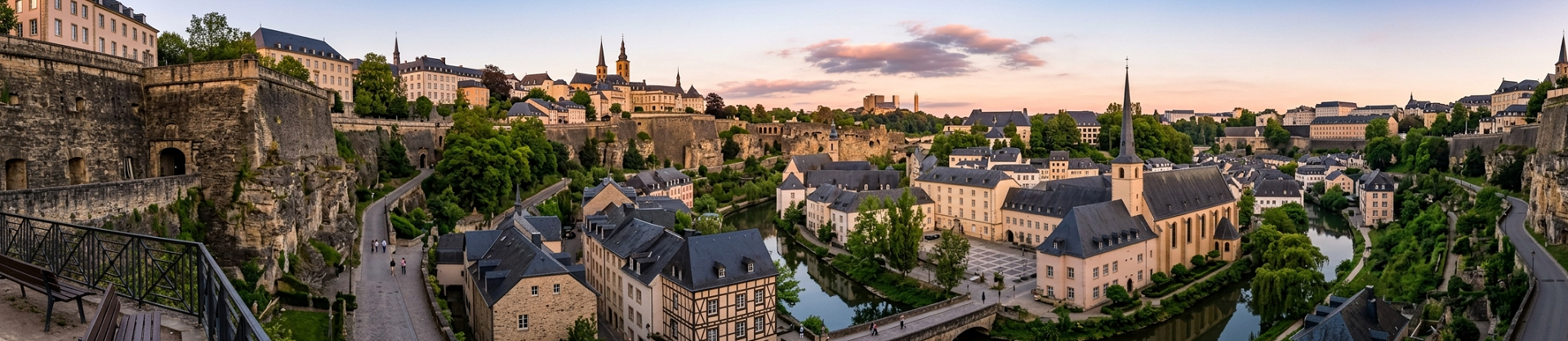
Most travellers cross Luxembourg without noticing. Two hours on the motorway between France and Germany, a name on a road sign, gone. This is the country's oldest trick, and its best-kept advantage: the ones who stop discover a capital carved into a river gorge, a countryside of castles and sandstone forests, and a nation that speaks four languages before lunch. The Grand Duchy uses its smallness the way a jeweller uses a setting. Nothing is wasted, everything is close, and the whole country can be read in a long weekend without ever feeling that you have skimmed it.
Culture & People
Luxembourgers live between languages the way other nations live between seasons. Luxembourgish at home, French in the shops and on official paper, German in the newspapers, English in the office towers of the Kirchberg plateau. This is not confusion. It is a national habit of translation, practised for centuries at the crossroads of larger neighbours, and it produces people who are quietly cosmopolitan without ever making a performance of it.
The national motto, Mir wëlle bleiwe wat mir sinn, means we want to remain what we are. For a country that has been fortified, occupied, traded, and guaranteed by treaty more times than most, the phrase carries real weight. Independence here was not inherited. It was kept, patiently, and the pride in that keeping is visible everywhere from the Grand Ducal Palace to the smallest village commune.
Cities
Luxembourg is the only capital in the world that is a UNESCO World Heritage Site in its entirety of old quarters and fortifications. The city is built on two levels: the upper town of boulevards, banks, and the royal palace, and the Grund below, a river district of stone bridges, terraces, and evening light that seems designed for slow dinners. The Bock casemates, a network of tunnels carved into the cliff over centuries of military engineering, run beneath it all and can be walked today.
Esch-sur-Alzette, in the south, is the country's second city and its industrial memory. The blast furnaces of Belval have been kept, lit red at night, and a university now operates in their shadow. It is one of Europe's more convincing conversations between past and future.
Cuisine
Luxembourg eats at the meeting point of French finesse and German generosity. Judd mat Gaardebounen, smoked pork collar with broad beans, is the national dish and tastes like a country that spent centuries working hard in cold weather. The Moselle valley on the eastern border produces crisp whites, Riesling and Auxerrois above all, and Crémant de Luxembourg holds its own against sparkling wines with far louder reputations. The vineyards can be cycled in an afternoon, tasting room to tasting room, with the river always in view.
Gromperekichelcher, crisp potato fritters eaten hot from market stalls, are the street food of choice, especially when the Christmas markets open and the whole upper town smells of them.
Seasons & Nature
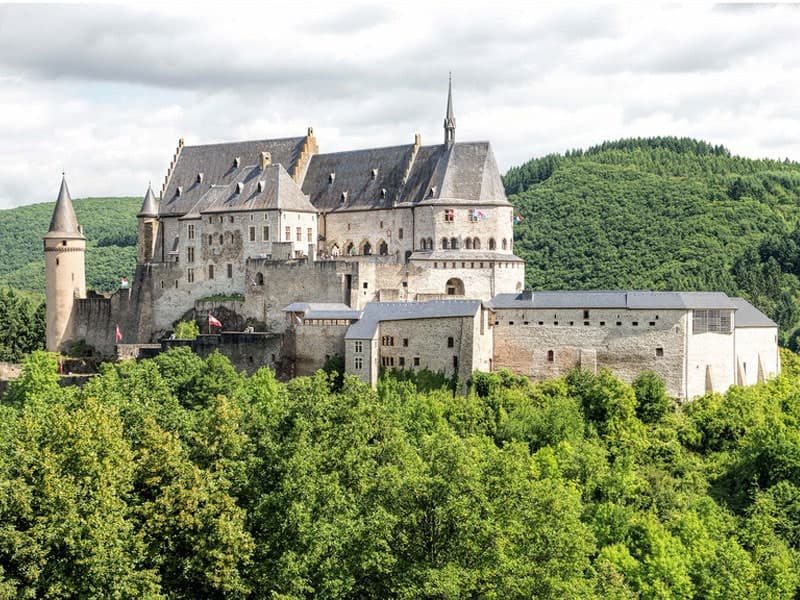
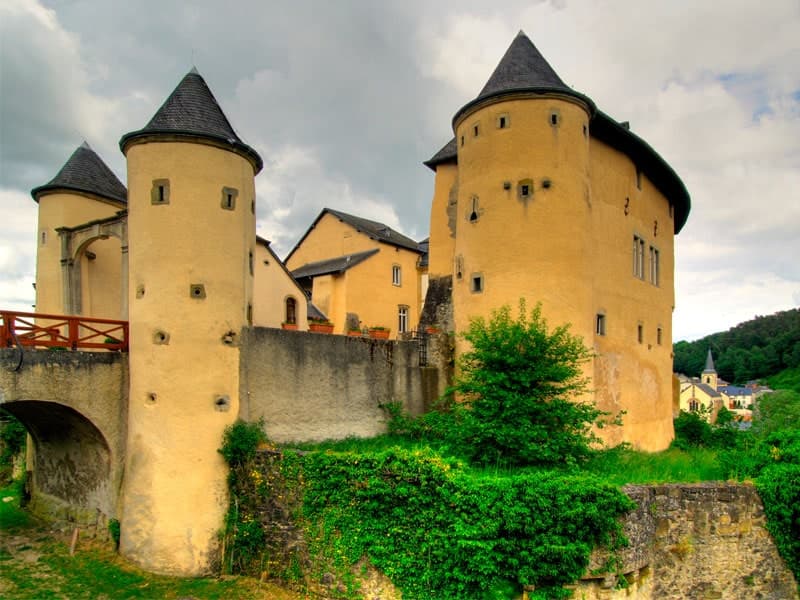
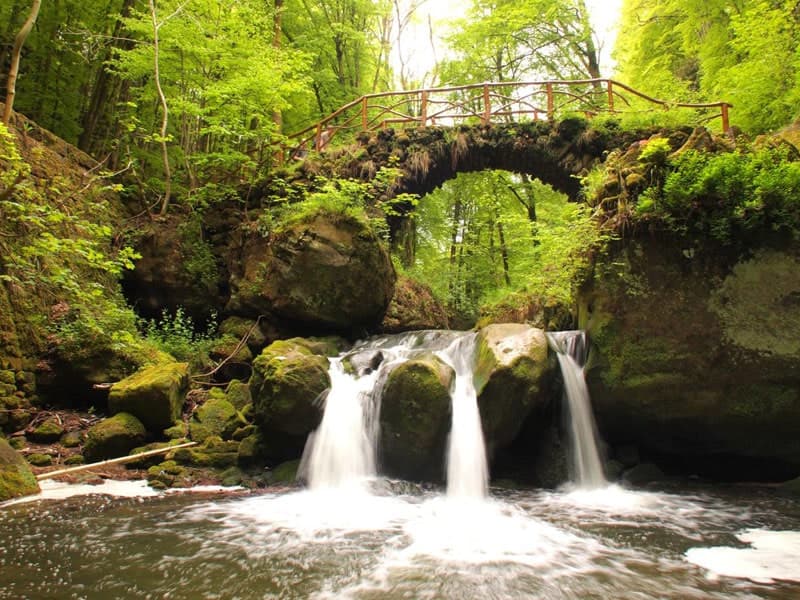
A third of the country is forest. The Mullerthal, called Luxembourg's Little Switzerland, is a region of sandstone gorges, mossed rock formations, and trails that thread through crevices barely wider than a walker's shoulders. The Éislek highlands in the north hold castle after castle, Vianden above all, restored to a completeness that makes the medieval period feel less remote than it should.
Spring and autumn are the walking seasons, when the beech forests turn, and the trails are quiet. Summer brings open-air festivals and the wine villages at their liveliest. Winter compresses the country into candlelight, mulled wine, and the pleasure of a capital that empties of commuters and belongs, briefly, to those who stayed.
Before You Go
- All public transport in Luxembourg is free. Trains, trams, and buses across the entire country cost nothing, the first nation in the world to do so. Use them.
- Base yourself in the capital but do not stay there. Vianden, Echternach, and the Moselle are all within an hour.
- Walk the Chemin de la Corniche in the capital at dusk. It has been called the most beautiful balcony in Europe, and the description holds.
- Learn the word moien. It means hello; it works at any hour, and Luxembourgers warm noticeably to visitors who use it.
✦ ✦ ✦
Magelline Perspective
Europe keeps its treaties, its banks, and its headlines in Luxembourg. It keeps something quieter there too: proof that a small country, patient enough, can remain exactly what it is. Go and see what that looks like.