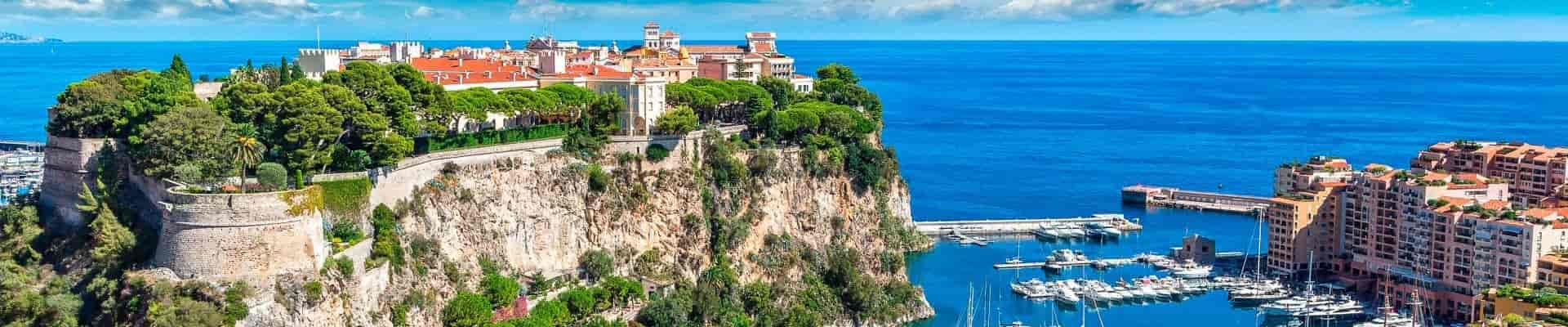
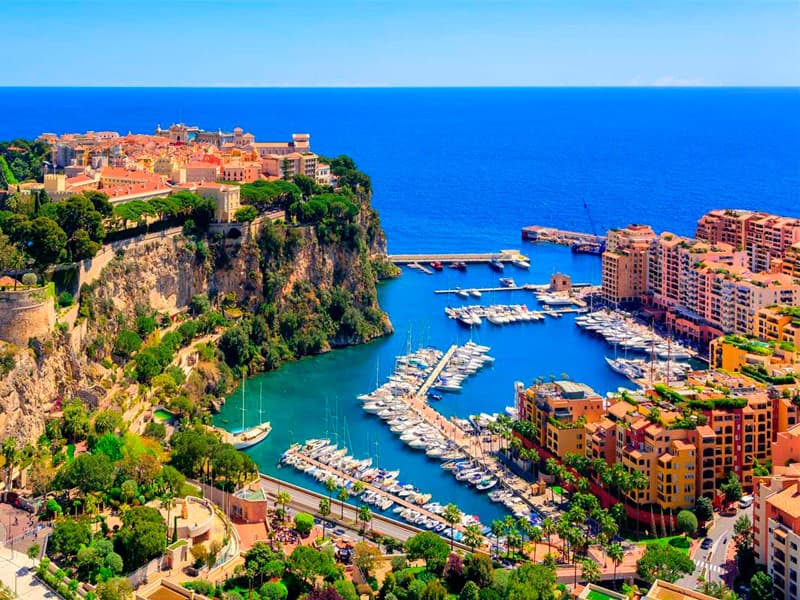
Monaco is a tiny, wealthy sovereign principality on the French Riviera, bordered by France and the Mediterranean Sea, with the Italian border just 15 km to the east. Covering just 0.8 square miles, it is the second smallest independent state in the world, smaller than many single farms. Famous for luxury, yachts, and the Formula 1 Grand Prix, it has spent a century and a half refusing to accept its geographic limits.
Where there was no flat land, it built upward; where there was no shore, it poured new districts into the sea. What you walk through is not a country that was merely found, but one that was decided. The scale takes a moment to register: lifts carry you between stacked streets, gardens are folded into ledges, and a single hillside holds more life than seems possible. Nothing has been left to chance, because there was never any spare ground to lose.
Landscape
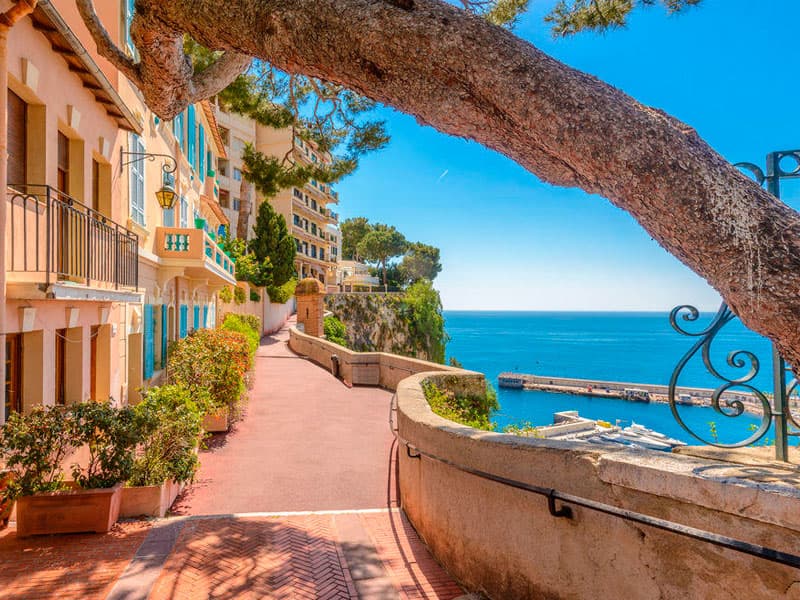
For all that it has been engineered, Monaco remains a Mediterranean place, warm and green and close to the water. The winters are mild, the light generous, and subtropical plants climb every wall and terrace that will hold them. What the principality does not have is countryside. There are no fields, no open land, no way to wander out of the city and into something wilder. Hemmed in on every side, it lives its whole life at close quarters, packed more densely than almost anywhere on earth. To stand at its edge and look back is to see a place with no margins at all, every slope and ledge accounted for, the sea beginning exactly where the buildings end.
The City
Monaco is a single city that behaves like several. High on its rock sits the old quarter, a tight weave of lanes and shuttered façades that has kept watch over the coast for centuries. Below it the port holds its ranks of masts and the slow traffic of boats. Beyond that the ground lifts again toward the districts that fill after dark. For one week each year the ordinary streets between them are fenced into a racing circuit, and the whole country becomes a spectacle before handing its roads quietly back. To cross Monaco on foot is to pass through all of these moods in the space of an hour. You can read more about each of these places in our companion guide to Monaco Sights.
Hospitality
The surprise of Monaco is how domestic it feels once the glamour thins. This is a country largely made of arrivals. Most of the people here came from somewhere else and chose to stay, so that a few streets can hold a dozen languages and as many kitchens, and the head of state is, in the plainest sense, a neighbour. Mornings still turn on the market and the café terrace. Lunch is unhurried and dinner longer still. French runs through the day, with Italian and English close behind and the old Monégasque tongue surviving underneath them all. For all its reputation, Monaco keeps the intimacy of a small town that happens to stand on a very large stage.
Magelline Perspective
It would be easy to see Monaco only as a showcase, a place of engines and yachts and money on display. Look again and something more interesting appears, a country conjured almost entirely out of will and yet fully and warmly lived in. Its lesson is a quiet one. Given little to begin with, and enough imagination to work with, a place can turn its limits into the very thing that makes it singular. Walk the stairways rather than take the lift, watch the light move across the harbour, and you feel it, a whole nation making the most of every metre it owns.Monégasque tongue surviving underneath them all. For all its reputation, Monaco keeps the intimacy of a small town that happens to stand on a very large stage.

Armenian
German
Spanish