 Armenian
 German
 Spanish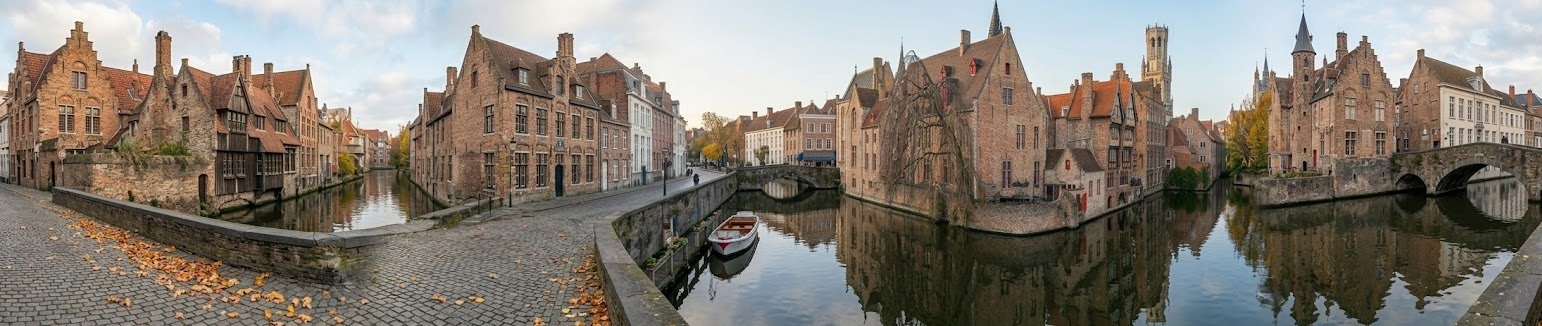
Across Belgium, historic squares, canal-lined towns, and architectural landmarks reveal the country’s rich heritage. Gothic towers overlook lively marketplaces, medieval castles stand above quiet rivers, and modern icons add a contemporary dimension to Belgium’s historic cities. Travelers encounter sights that reflect the country’s layered past — from Gothic architecture and Renaissance art to innovative modern design.
Exploring Belgium’s landmarks means discovering a country where every city preserves its own chapter of European history.
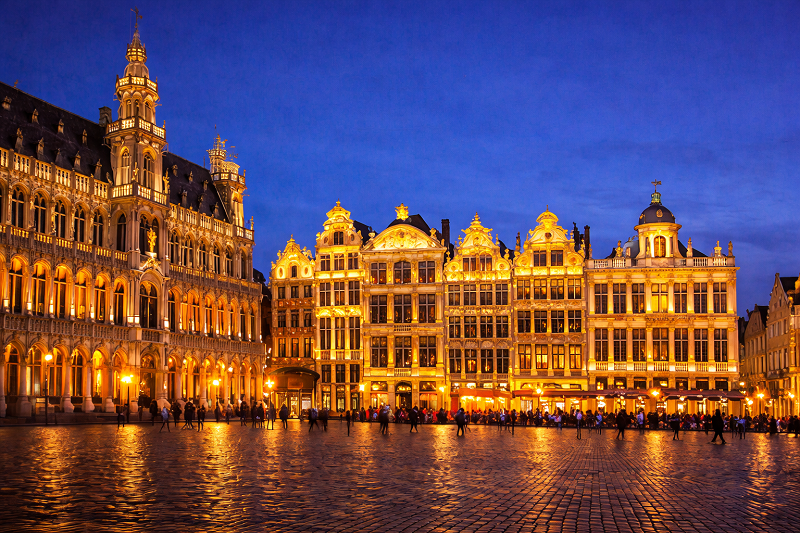
Grand Place
At the heart of Brussels lies one of Europe’s most magnificent squares: the Grand Place. Surrounded by ornate guild houses, the Gothic Town Hall, and the King’s House, the square reflects the wealth and artistic ambition of the city during the 17th century. When illuminated at night, the golden façades create an atmosphere that feels almost theatrical. The Grand Place is widely regarded as one of the most beautiful urban squares in the world and is recognised as a UNESCO World Heritage Site.
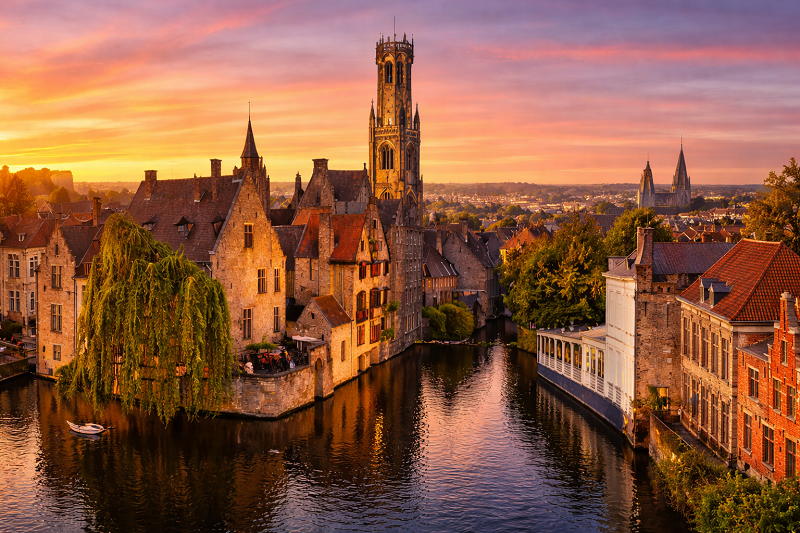
Bruges Canals
The historic centre of Bruges is often called the “Venice of the North.” Narrow canals weave through a medieval cityscape of brick houses, church towers, and stone bridges. Horse-drawn carriages pass through cobbled streets, and reflections shimmer across the water.
Bruges preserves one of Europe’s most complete medieval urban landscapes, making it one of Belgium’s most enchanting destinations.
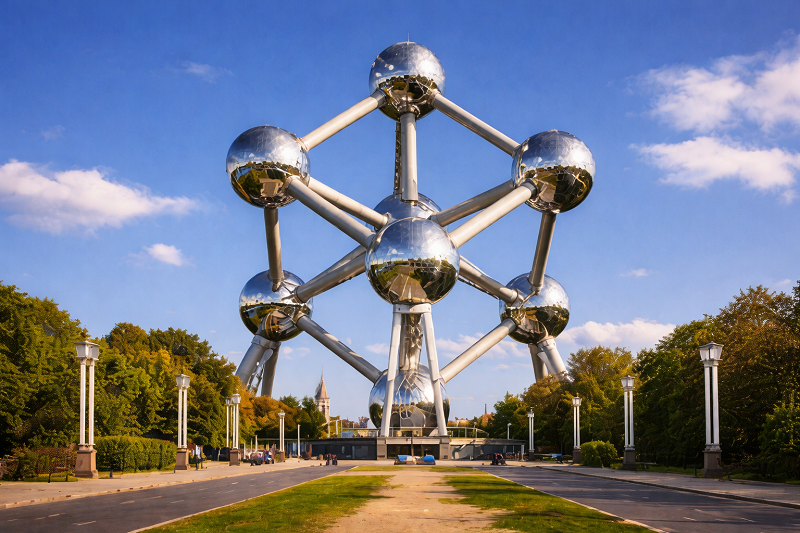
The Atomium
One of Belgium’s most unusual landmarks stands in northern Brussels: the Atomium. Constructed for the Expo 58, the structure represents an iron crystal magnified billions of times. Nine giant steel spheres connected by tubes form a futuristic monument that has become one of the city’s most recognisable symbols.
Today, visitors can explore exhibitions inside the spheres and enjoy panoramic views of Brussels from the upper level.
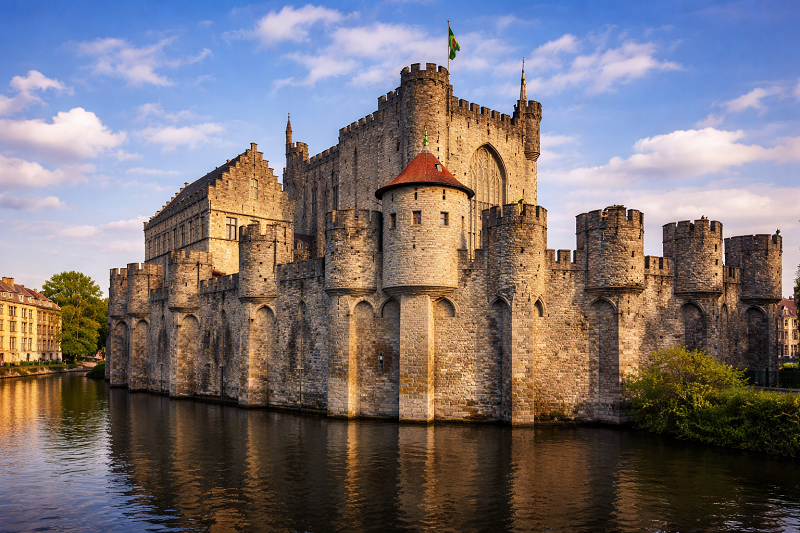
Gravensteen Castle
In the historic center of Ghent stands Gravensteen, a medieval fortress built in the 12th century. With its high stone walls, defensive towers, and imposing gates, the castle once served as the residence of the Counts of Flanders. Today it offers visitors a vivid glimpse into medieval life and the turbulent history of the region.
From the top of the fortress walls, panoramic views reveal Ghent’s historic skyline.
The Belfries of Belgium
Throughout Belgium’s historic towns rise tall belfry towers, symbols of civic pride and medieval independence. Cities such as Bruges, Ghent, and Antwerp each feature impressive towers that once served as watchtowers, bell towers, and centres of local administration.
Together, the Belfries of Belgium and northern France form another remarkable UNESCO World Heritage Site celebrating the civic traditions of medieval Europe.
The Cathedral of Our Lady
In the historic city of Antwerp stands the towering Cathedral of Our Lady, one of the most significant Gothic churches in Europe. Inside the cathedral, visitors can admire masterpieces by the Flemish Baroque painter Peter Paul Rubens, whose dramatic works helped shape European art during the 17th century.
The cathedral’s soaring spire dominates Antwerp’s skyline and remains one of Belgium’s most important religious and artistic monuments.
A Country Rich in Landmarks
From medieval canals to futuristic monuments, Belgium offers an extraordinary concentration of historic sights within a relatively small country. Travelers can explore Gothic cathedrals, Renaissance guild houses, castles, and cultural landmarks often within a single day’s journey.
In Magelline’s eyes, Belgium reveals itself through its architecture — each tower, square, and canal reflecting centuries of European heritage.