 Armenian
 German
 Spanish
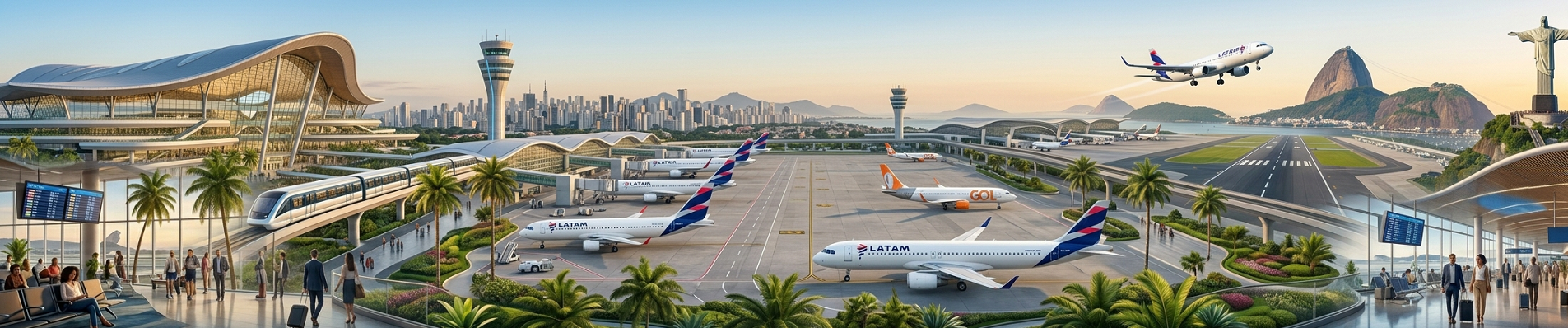
Brazil’s International Front Doors
Most international journeys begin in the "Golden Triangle" of the Southeast. These airports act as the primary connectors for global trade and tourism.
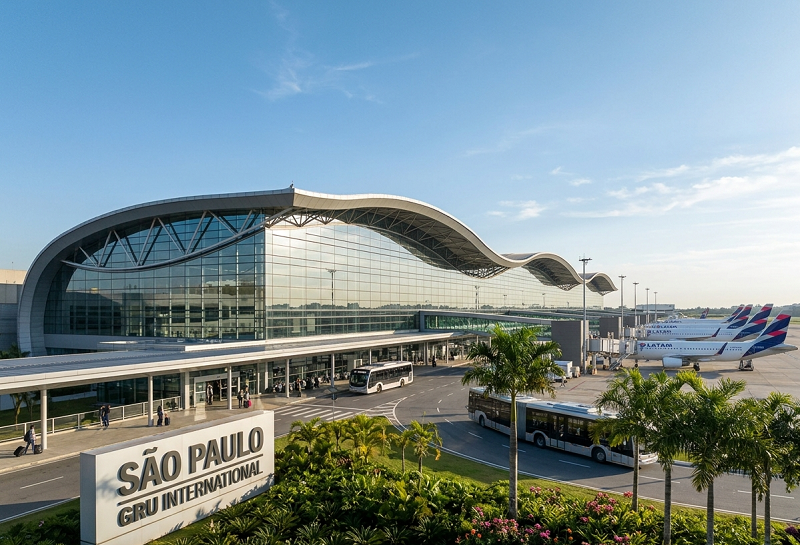
São Paulo–Guarulhos (GRU) is the titan of South American aviation. Handling over 40 million passengers annually, GRU is a city within a city. Its Terminal 3 is a marvel of modern design, dedicated to long-haul international flights with luxury lounges and high-end retail that rival European hubs.
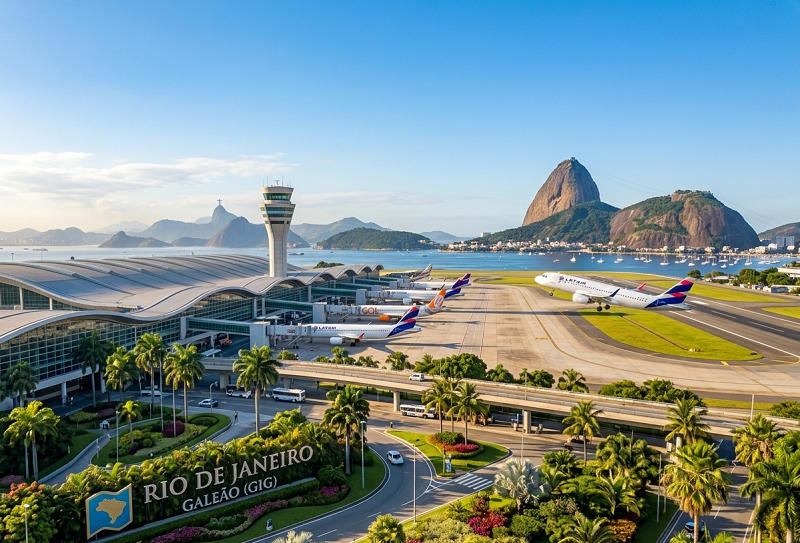
Rio de Janeiro–Galeão (GIG) is named after the legendary musician Tom Jobim. This airport offers one of the most scenic descents in the world. Recent infrastructure upgrades have streamlined its logistics, making it a critical hub for those heading to the Marvellous City or connecting to the deep South.
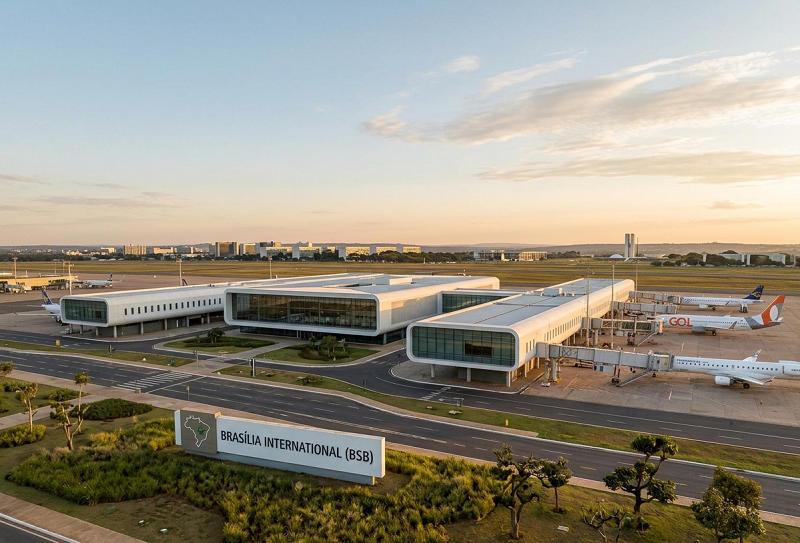
As the federal capital’s hub, Brasília International Airport (BSB) is defined by its distinctive H-shaped architecture — a reflection of the city’s modernist vision. It stands as the country’s premier domestic connection point, linking North and South with remarkable frequency and ease.
The Regional Revolution: Brasil Mais Aeroportos
As of 2026, the Brazilian government has accelerated the "Brasil Mais Aeroportos" initiative. This program focuses on bringing "ICAO Level III" standards to regional hubs. Over R$ 310 million has been earmarked for the Southeast alone to modernise 15 regional airports.
Expect to see automated weather stations (AWOS) and runway resurfacing in feeder hubs like Montes Claros and Campos dos Goytacazes, ensuring that even remote business travel is shielded from weather-related cancellations.
In the North, airports like Manaus (MAO) and Belém (BEL) are undergoing "green" expansions, integrating sustainable cooling systems to handle the equatorial heat while serving as jump-off points for eco-tourism.
Features, what to expect?
In true Magelline fashion, we look beyond the runway to the experience of the traveler.
- Connectivity: High-speed 5G is now standard in all "Top 20" airports.
- Sustainability: Major hubs like Salvador (SSA) are now "Zero Landfill" airports, powered largely by on-site solar farms.
- Gastronomy: Transitioning from fast food to Brasilidade—expect high-end pão de queijo boutiques and local coffee roasters.
Vertiports and eVTOLs
Brazil is not just maintaining, it is innovating. By late 2026, the first vertiports are expected to begin construction in São Paulo. Driven by Embraer’s Eve Air Mobility, these sites will soon host electric vertical take-off and landing vehicles, aiming to bypass the city’s legendary traffic and fly passengers directly from GRU to the corporate heart of Faria Lima.
Travel tip for the Magelline reader
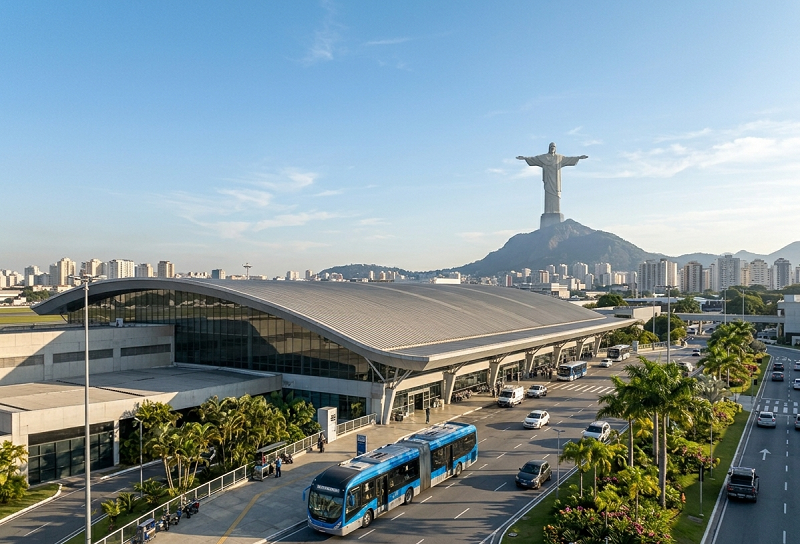
If you are flying between Rio and São Paulo, opt for the Santos Dumont (SDU) to Congonhas (CGH) route. Known as the Ponte Aérea (Air Bridge), it offers a breathtaking view of the Christ the Redeemer statue upon take-off from Rio—a reminder that in Brazil, even the infrastructure is a work of art.