 Armenian
 German
 Spanish

Czechia sits at the heart of Central Europe, a country where medieval towns, elegant cities, and rolling countryside create one of the continent’s most picturesque landscapes. For centuries, this land stood at the crossroads of European culture, trade, and politics. Gothic cathedrals rise above cobbled squares, Renaissance palaces overlook quiet rivers, and castles crown hills that have witnessed the rise and fall of empires.
Travellers exploring Czechia discover more than historic monuments. The country offers a living cultural landscape shaped by literature, music, architecture, and one of Europe’s most celebrated brewing traditions.
According to Magelline, Czechia is a country where Europe’s past feels remarkably alive, a place where every street, castle, and square tells a story that continues to shape the continent today.
A Land in the Heart of Europe
Czechia lies between Germany, Austria, Slovakia, and Poland, placing it at the geographic centre of Europe. Despite its compact size, the country offers remarkable regional variety. Forested mountains border the nation on nearly every side, while fertile valleys and historic towns stretch across its interior.
Three historic regions define the country’s identity:
- Moravia, known for vineyards, castles, and vibrant cultural traditions
- Czech Silesia, a smaller region shaped by Central European industrial heritage
- Bohemia, the western region dominated by Prague and centuries of royal history
Together, these regions form a country that blends natural landscapes with deep cultural roots.
Prague
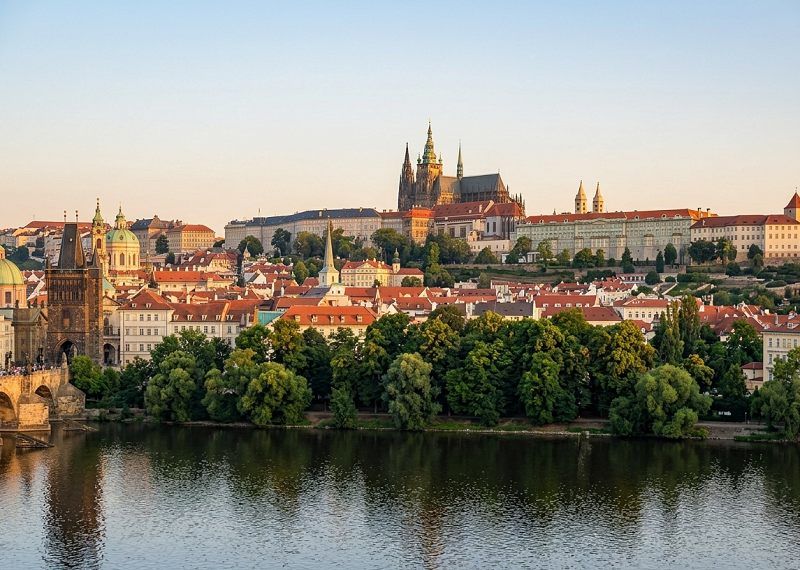
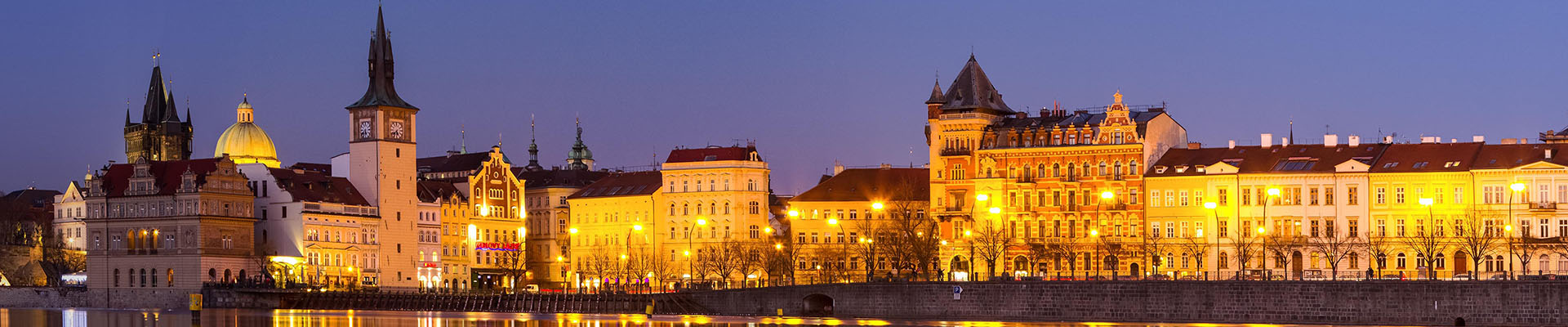
No visit to Czechia begins anywhere other than Prague, one of Europe’s most beautiful capitals. The city rises along the banks of the Vltava River, its skyline crowned by the towers of Prague Castle and the Gothic spires of St. Vitus Cathedral. The historic centre is a masterpiece of architecture spanning centuries — from Romanesque foundations and medieval streets to Baroque churches and Art Nouveau façades.
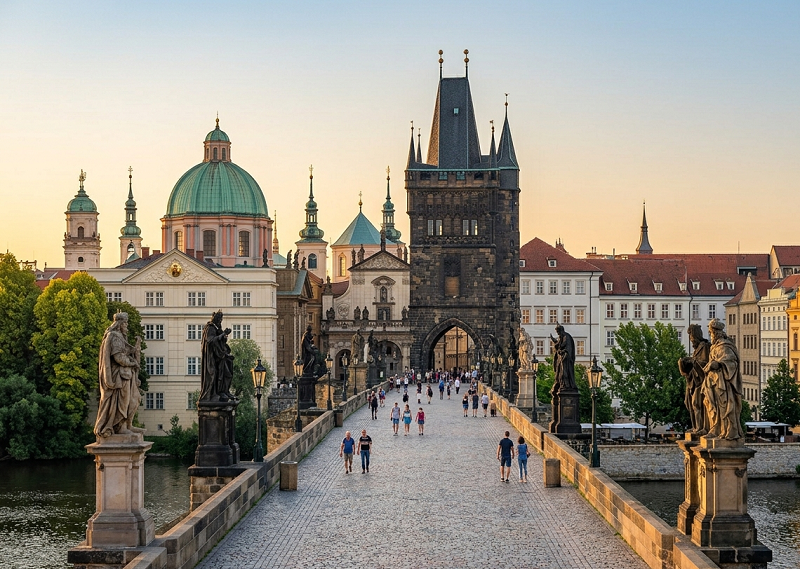
Walking through Prague feels like stepping into a living museum of European history. Old Town Square is home to the medieval Astronomical Clock. Prague Castle is the largest ancient castle complex in the world, and the Charles Bridge is lined with statues, offering unforgettable views of the city.
Castles, Towns & Cultural Treasures
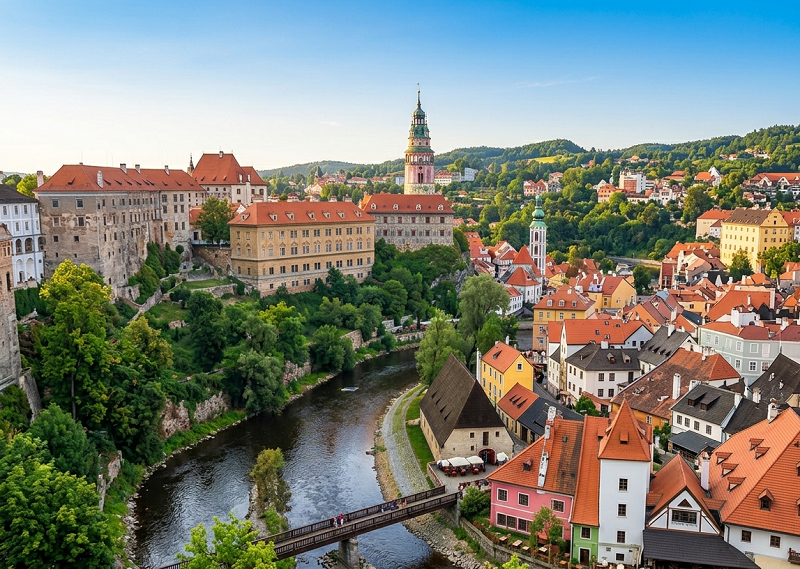
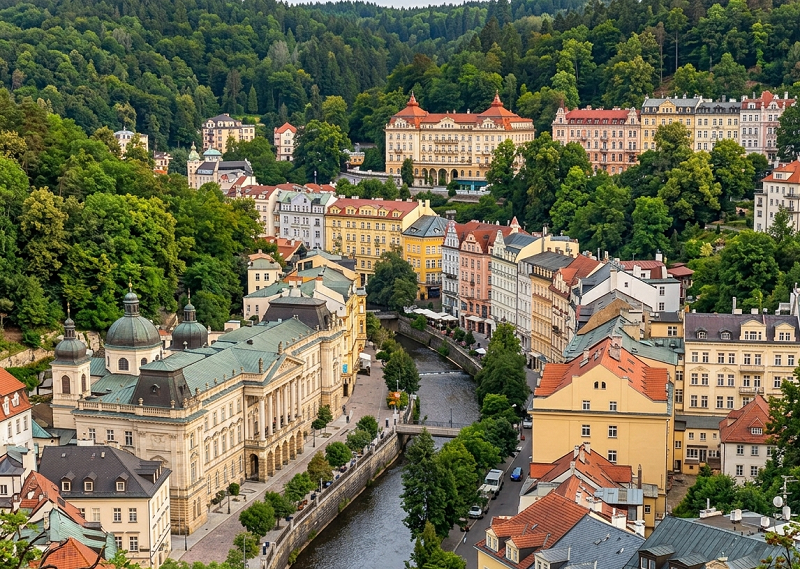
Beyond Prague, Czechia reveals a remarkable collection of historic towns and castles. The medieval town of Český Krumlov, a UNESCO World Heritage Site, sits within a dramatic bend of the Vltava River. Its colourful houses, narrow streets, and hilltop castle create one of Europe’s most enchanting townscapes.
In southern Moravia, the city of Brno blends modern life with historic architecture and lively student culture. Further east, the town of Olomouc preserves magnificent Baroque monuments and one of Europe’s most impressive Holy Trinity columns.
Across the countryside, hundreds of castles and chateaux reflect centuries of noble families and royal dynasties that once ruled these lands.
Landscapes
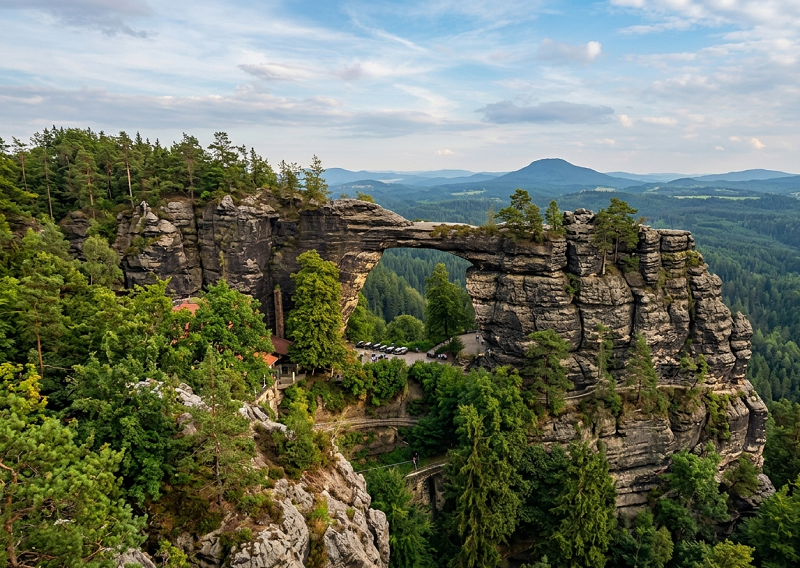
Nature plays a quiet but powerful role in Czechia’s identity. The Bohemian Switzerland National Park offers dramatic sandstone cliffs and deep forests, while the Krkonoše Mountains form the country’s highest peaks along the Polish border.
In the south, rolling vineyards and peaceful countryside define the landscapes of Moravia. These natural regions offer hiking trails, scenic drives, and peaceful villages that reveal another side of Czechia beyond its historic cities.
Beer, Culture & Daily Life
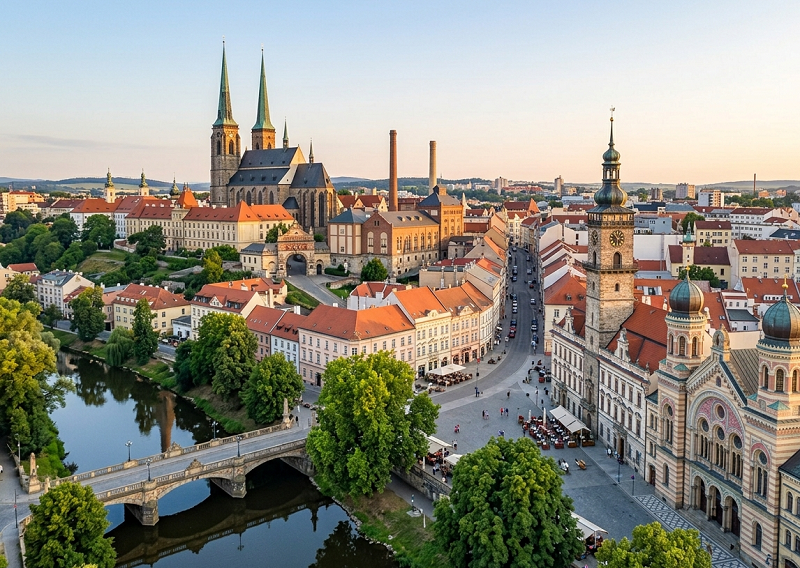
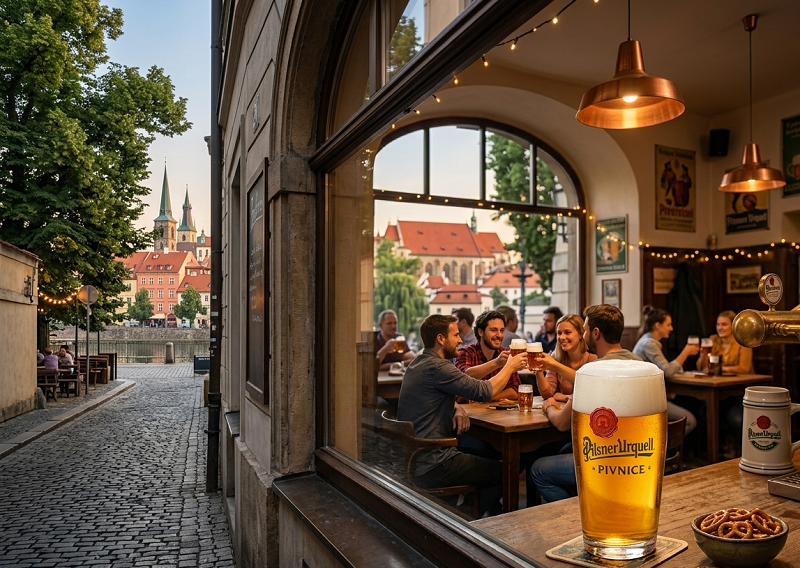
Czechia is famous for its brewing tradition. The town of Plzeň gave the world the original Pilsner lager, a style that has since become one of the most popular beers globally. Beer culture here is deeply woven into everyday life. Historic breweries, traditional pubs, and lively beer gardens form an essential part of the country’s social fabric.
Yet Czechia’s cultural identity extends far beyond beer. It's the homeland of composers such as Antonín Dvořák and Bedřich Smetana, writers like Franz Kafka, and artists who shaped European culture for centuries.
Why Travel to Czechia?
Czechia offers travellers an extraordinary concentration of beauty, culture, and history within a relatively small territory. In just a few days, visitors can explore grand capitals, medieval towns, mountain landscapes, and vineyard regions.
Magelline Perspective
In Magelline’s eyes, Czechia represents the quiet elegance of Central Europe. It's a country where history has been carefully preserved, where cities feel authentic rather than theatrical, and where the rhythm of life moves with calm confidence.
Travelling through Czechia is about discovering a cultural landscape where centuries of European heritage remain part of everyday life.