 Armenian
 German
 Spanish
Travelling through France means experiencing the impeccable balance between the man-made and the natural. Its symbols are defined by their presence: the way a castle anchors a valley, or the way Roman ruins soak up the Mediterranean light. These are not merely sights to be seen, but atmospheres to be inhabited, a collection of moments where history and horizon blur into something profoundly personal.
Eiffel Tower
The Eiffel Tower is undoubtedly 'the' symbol of Paris. Standing above the city, the Eiffel Tower is less a structure and more a celestial clock. Its presence is not merely visual — it shifts with the sun's passage. In the soft haze of morning, it feels ethereal and almost distant. At sunset, it dissolves into the city’s warm, amber glow until night falls, when it transforms into a brilliant beacon of Paris itself. The experience is not found in reaching the summit, but in observing how the entire city gracefully unfolds around its iron lattice.
Mont Saint-Michel
Few sights in France are as arresting as this Benedictine silhouette. More than a monument, Mont Saint-Michel is an architectural feat governed by the moon. As the tides retreat, it reconnects with the mainland, revealing a lunar-like expanse of sand; as they return, it reclaims its status as a sea-bound citadel. It is a masterclass in verticality, where stone and spire reach for the heavens, blurring the line between history and myth.
The Palace of Versailles
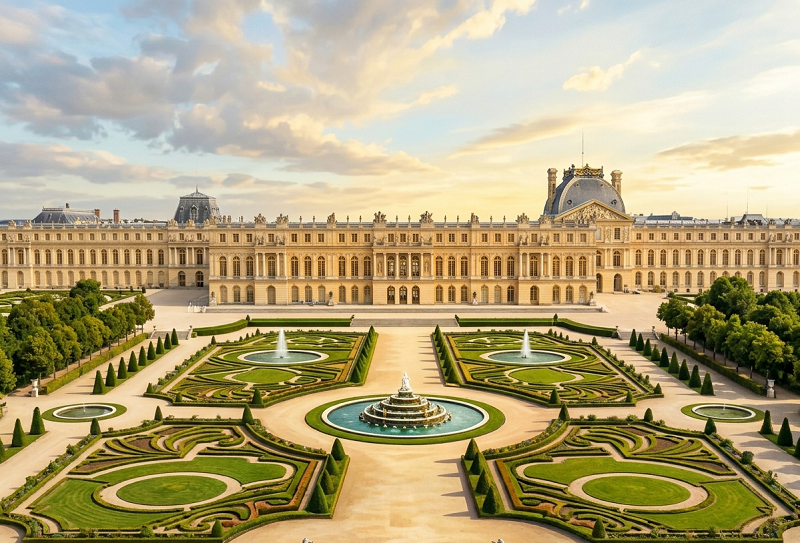
Just beyond the city gates, Versailles represents the pinnacle of royal ambition and artistic precision. Its grand halls and perfectly structured gardens reflect a singular vision of order, where nature itself was curated to display power. The Hall of Mirrors, in particular, captures the palace’s true essence: a symphony of light, reflection, and scale that turns a single room into a timeless testament to French grandeur.
The Louvre
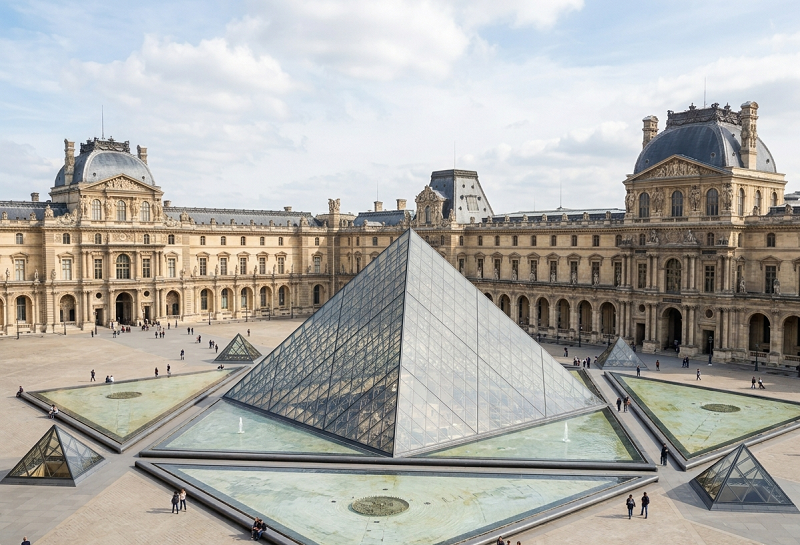
The Louvre is less a museum and more a monumental atlas of the human spirit. Within its limestone walls, the world’s grandest narratives—from the sun-drenched antiquities of the Nile to the chiaroscuro masterworks of the Renaissance — unfold in a labyrinth of silent, storied galleries. At its heart, the daring transparency of I.M. Pei’s glass pyramid serves as a contemporary prism, casting a new light onto the fortress-like grandeur of the Palais. It is a deliberate, brilliant collision: a dialogue between the weight of history and the clarity of the modern era.
The French Riviera
The Riviera offers a masterful contrast to the stone-hued north. It is a world governed by the Mediterranean sun, where the atmosphere exhales a relaxed, sophisticated energy. From the storied coastal towns to the hidden calanques, the Riviera is where France’s natural beauty meets its most celebrated art de vivre, creating an environment that feels both iconic and intimately connected to the rhythm of the sea.
Château de Chambord
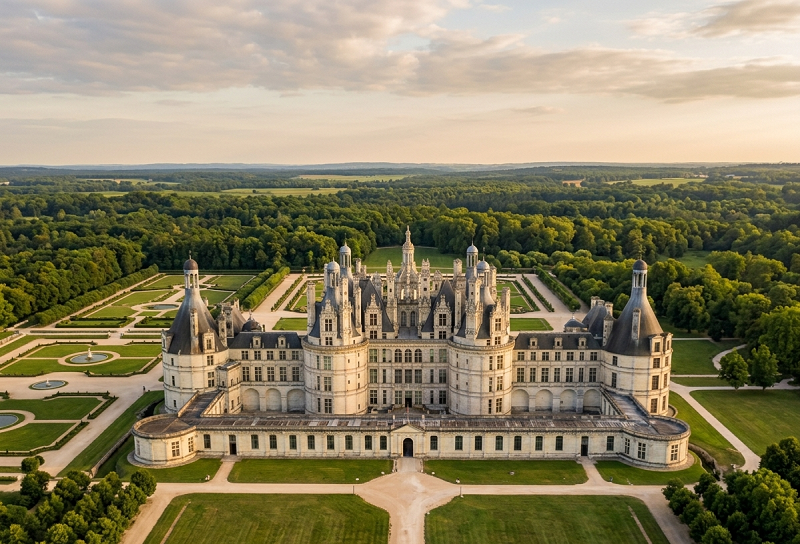
In the heart of the Loire, Chambord rises with an architectural complexity that feels more like a dream than a fortress. Its forest of chimneys, towers, and terraces creates a skyline that is both grand and imaginative — a Renaissance masterpiece of symmetry. Surrounded by ancient woodlands, it reflects a vision of royal life that sought a perfect, regal harmony with the scale of nature.
Gorges du Verdon
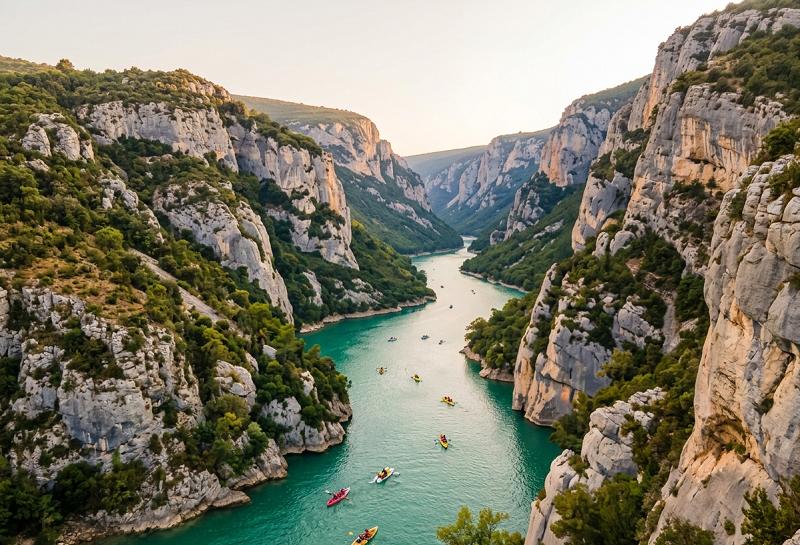
Often described as Europe’s “Grand Canyon,” the Gorges du Verdon reveals a dramatic natural architecture. Here, turquoise waters have carved a path through high limestone cliffs, creating a striking contrast of colour and form. Whether viewed from the heights of the rim or explored from the water’s edge, it offers a perspective of France shaped entirely by the slow, powerful hand of nature.
Magelline Perspective
The landmarks of France are never mere isolated attractions; they are movements within a larger composition, where architecture, landscape, and atmosphere exist in a delicate, intentional balance. Each site tells a singular story, yet together they weave a narrative of a country that is as diverse as it is unified. To explore France is to look beyond the landmarks themselves and witness the threads that connect them—the shifting quality of light, the weight of history, and the quiet, unbroken continuity of place.