 Armenian
 German
 Spanish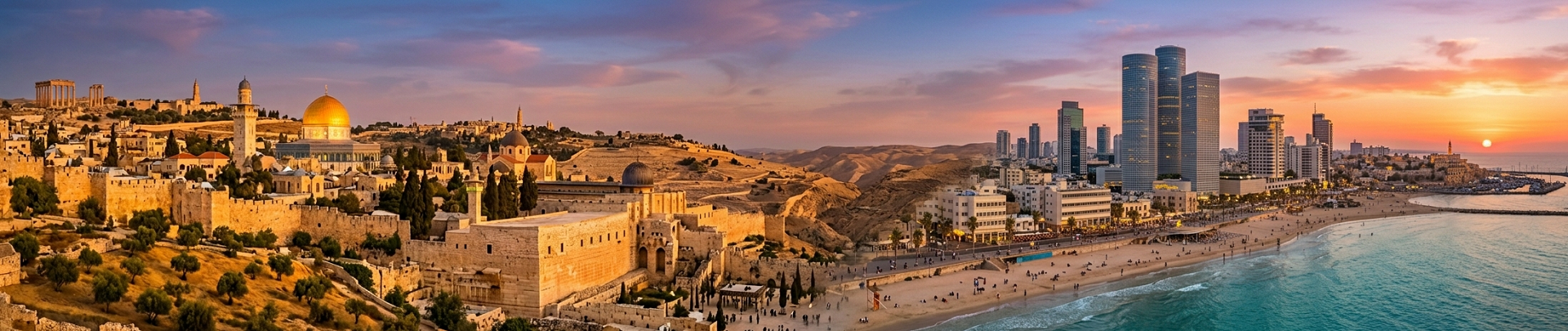
At the crossroads of three continents lies a country where ancient stone and modern skylines share the same horizon. Israel is a destination where history, faith, and contemporary life meet in ways found nowhere else on earth.
From the golden walls of Jerusalem to the buzzing promenades of Tel Aviv, and from desert canyons to Mediterranean shores, Israel offers journeys that move quickly between the sacred and the everyday.
Travellers come here for many reasons: the depth of history, the warmth of its people, a cuisine built on fresh produce and shared plates, and the sense that every street carries centuries of stories.
Israel may be modest in size, but it holds remarkable diversity within its borders.
Cities
Each Israeli city reveals a different personality.
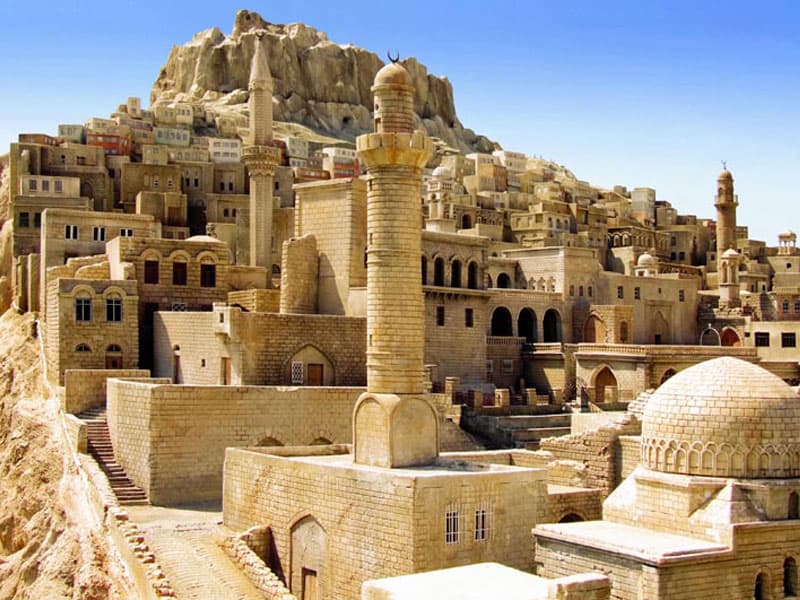
Jerusalem rises across honey colored hills, its Old City divided into quarters that have drawn pilgrims and travelers for thousands of years. Outside the walls, modern neighbourhoods, markets, and a thriving food scene keep the capital firmly rooted in the present.
Tel Aviv stretches along the Mediterranean coast, a city of beaches, rooftop bars, and the largest collection of Bauhaus architecture in the world. Its rhythm is fast, secular, and unmistakably young.
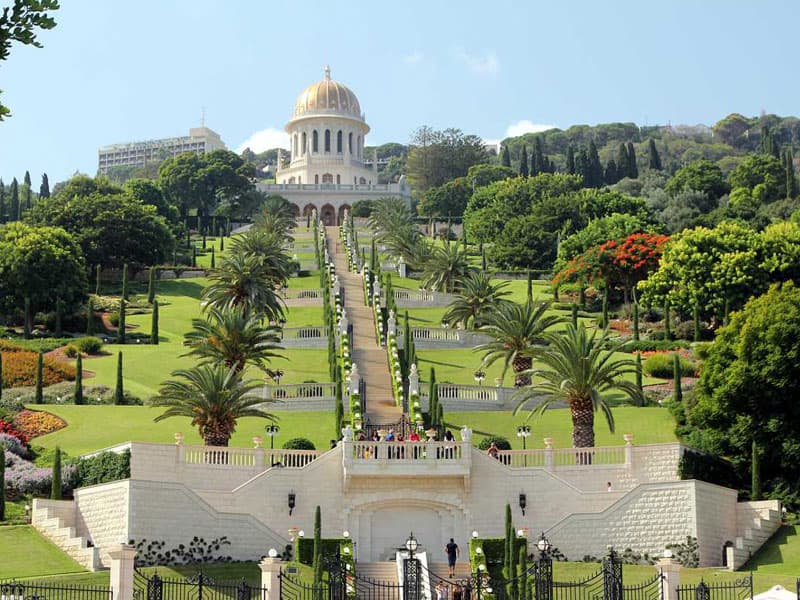
To the north, Haifa climbs the slopes of Mount Carmel, home to the terraced Baha'i Gardens and a port city atmosphere shaped by generations of mixed communities. Further along, Nazareth and the Sea of Galilee region preserve a slower, deeply rural character.
In the south, Eilat opens onto the Red Sea, where coral reefs sit a short swim from the desert.
Culture & People
Israel's culture is layered by design. Jewish, Arab, Druze, Bedouin, Armenian, and Christian communities all shape daily life, and Hebrew and Arabic share the streets alongside English, Russian, and dozens of other languages spoken by an unusually international population.
Hospitality runs deep here. Conversations start easily, opinions are shared freely, and an invitation to a family meal is rarely a formality.
Holidays & Traditions
Jewish holidays set the rhythm of the calendar, and travelers benefit from understanding it. Shabbat runs from Friday afternoon until Saturday evening, when public transport slows and many shops close in religious neighbourhoods, while Tel Aviv largely keeps moving.
Rosh Hashanah and Yom Kippur arrive in early autumn, bringing a particular stillness to the country. Streets grow quieter, the pace slows, and the year seems to pause and take stock of itself. Sukkot follows soon after, filling courtyards and pavements with wooden booths dressed in fruit and greenery. Come December, Hanukkah lights appear in windows across the country, eight evenings of candlelight against the winter dark. Spring belongs to Passover, when menus transform for a full week and family tables stretch long into the night.
For travelers, one date above all others is worth marking: Yom Kippur. The country does not merely observe it. It stops. Shops close, roads empty, and even the airports grow quiet. Arriving without knowing this can be disorienting; arriving prepared turns it into one of the most atmospheric experiences the country offers.
Israeli Gastronomy
Few cuisines reward curiosity as generously as Israel's. Built on Mediterranean produce and shaped by waves of immigration, the food here confidently borrows and improves on what it takes. Travellers quickly discover hummus and falafel, served fresh and never from a packet; shawarma and sabich (fried eggplant and boiled egg) piled into warm pita; and Israeli salad, bright with tomato, cucumber, and herbs. The vineyards of the Golan Heights and Judean Hills produce wines that surprise even seasoned drinkers.
Markets are the best classrooms for understanding what locals actually eat. Jerusalem's Machane Yehuda and Tel Aviv's Carmel Market offer a full education in flavour, texture, and noise. Meals here lean toward generous, shared, and unhurried, with mezze plates passed around the table rather than divided onto individual ones.
Travel Tips
Security checks are routine at airports, bus stations, and major sites, and tend to move quickly once travelers know to expect them. Modest dress, covering shoulders and knees, is appropriate at religious sites regardless of faith. The currency is the New Israeli Shekel, and credit cards are widely accepted, even at small vendors.
Because the regional situation can shift quickly, it is worth checking current travel advisories and airline schedules shortly before departure rather than relying on information gathered weeks in advance.
Magelline Perspective
Israel does not ask travelers to choose between ancient and modern, sacred and secular, desert and sea. It offers all of it within a single afternoon's drive. Walking from a stone alley in Jerusalem's Old City to a beach bar in Tel Aviv is, in many ways, the entire country in miniature: layered, contrasting, and never quite finished telling its story. With Magelline, that story is yours to explore.