
 Armenian
 German
 Spanish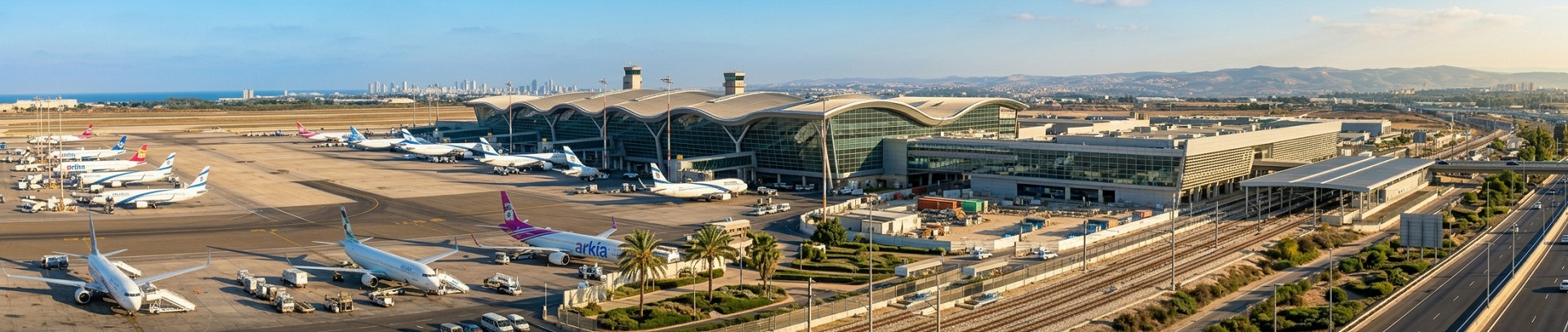
Israel's compact geography means its aviation network concentrates around a handful of key gateways, but that has not slowed investment. With passenger numbers climbing steadily, the country's main airports are in the middle of significant upgrades designed to keep pace with demand.
The Busiest Airports in Israel
By passenger volume, Ben Gurion International Airport remains by far the busiest in the country, followed at a considerable distance by Ramon Airport in Eilat and Haifa Airport in the north. Together, these three form the backbone of Israel's commercial aviation network.
Today's Main Hub
Ben Gurion International Airport (TLV), located between Tel Aviv and Jerusalem, is Israel's primary gateway and handles the overwhelming majority of the country's international arrivals. Its main terminal, Terminal 3, connects travelers to destinations across Europe, North America, Asia, and beyond, and remains the busiest single point of entry in the country by a wide margin.
El Al, Israel's national carrier, operates the largest share of flights out of Ben Gurion, flying to destinations across five continents alongside dozens of international airlines that also call the airport home.
Passenger numbers have grown so steadily that a major expansion is now underway at Terminal 3 to keep the experience smooth for years to come. The project will add new space across four floors, bringing upgraded border control areas, faster security screening, and a larger duty-free dining hall where travelers can relax before boarding. A dedicated new arrivals building, named the Tel Aviv Gate, is being built specifically for passengers arriving by bus, while a separate, already approved project will modernise baggage handling and lay the groundwork for a hotel directly above the terminal.
Regional Gateways
South of the centre, Ramon Airport (ETM) near Eilat serves as the country's southern gateway, connecting the Red Sea resort city to Tel Aviv and a small number of seasonal international routes. Opened in 2019 in the Timna Valley, it is a compact, modern facility built to handle leisure travelers heading to Eilat's beaches and coral reefs without routing through Ben Gurion.
Haifa Airport (HFA), in the north, handles short domestic hops connecting the city to Eilat and serves as a smaller alternative gateway for northern Israel, while a network of smaller regional airfields supports domestic flights to towns across the country.
Future Plans
Beyond Terminal 3's expansion, Israel's aviation authorities continue to invest in technology upgrades, additional check-in capacity, and improved ground transport links between Ben Gurion and Tel Aviv, Jerusalem, and the wider region, aiming to shorten the journey between landing and arrival in the city centre.
In Magelline's view, Israel's airports are compact compared to many countries, but the investment underway at Ben Gurion signals a hub preparing for sustained growth in the years ahead. Because international flight schedules to Israel can shift with regional developments, travelers should always confirm their airline's current operating status shortly before departure. In upcoming articles, Magelline will take a closer look at each of these airports individually, covering terminals, amenities, and practical tips for passing through them smoothly.
