
 Armenian
 German
 Spanish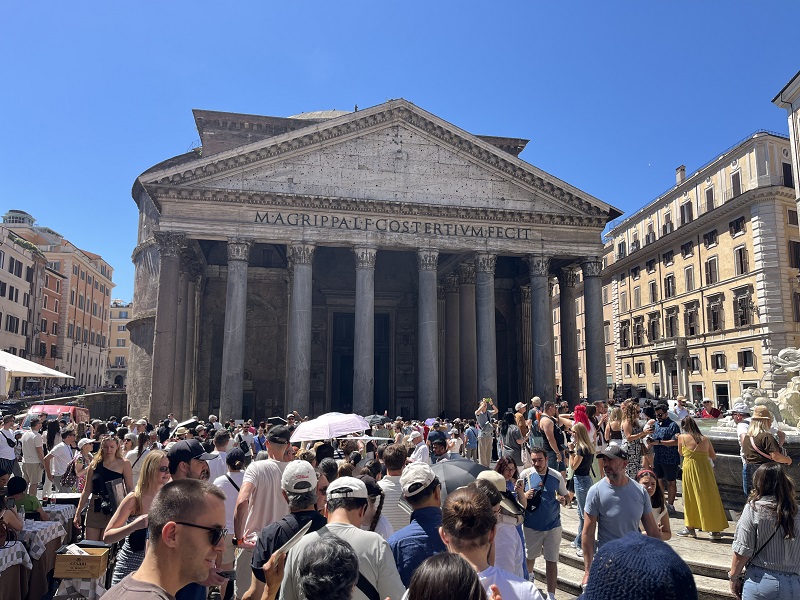

 Pantheon
In the heart of Rome, among lively piazzas and narrow historic streets, stands one of the most remarkable buildings of the ancient world — the Pantheon. For nearly two thousand years, this extraordinary monument has inspired architects, artists, and travelers alike.
Originally commissioned by Marcus Agrippa during the reign of Emperor Augustus and later rebuilt by Emperor Hadrian around A.D. 118–125, the Pantheon was dedicated to all the gods of ancient Rome. Its name itself comes from the Greek words meaning “temple of all gods.”
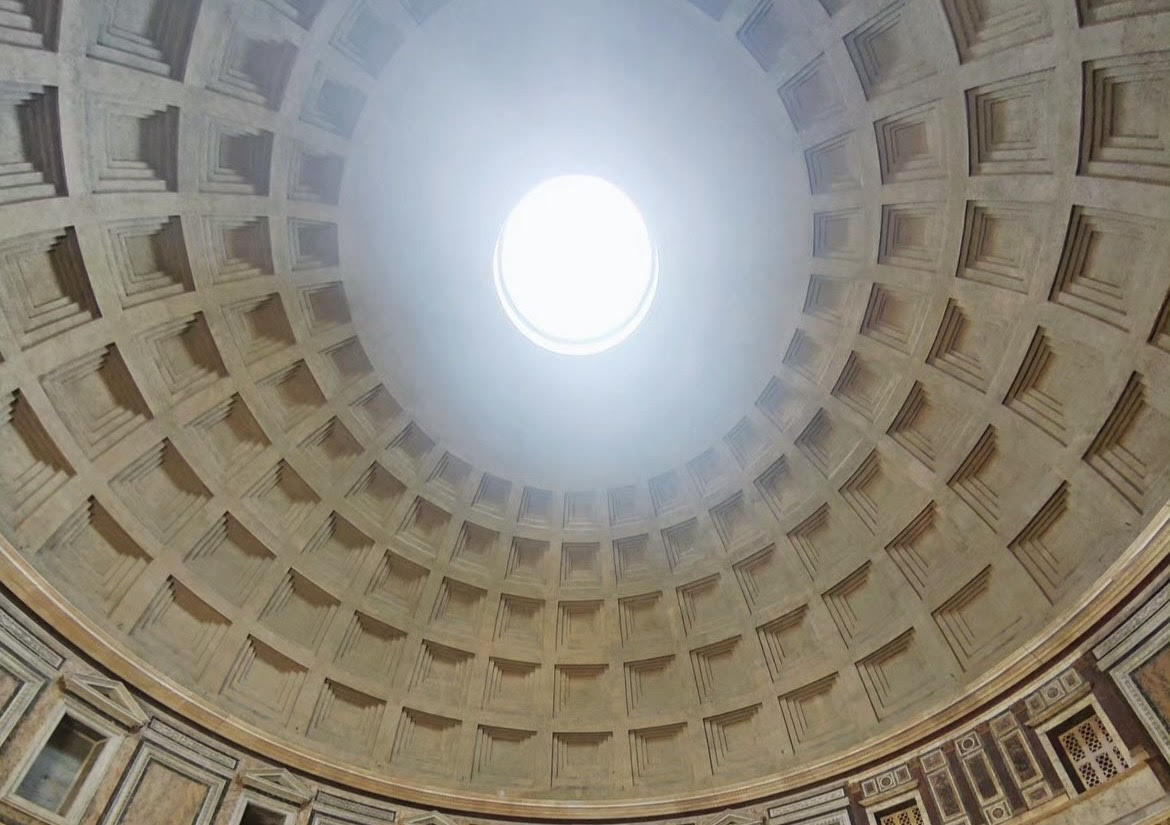
What makes the Pantheon truly extraordinary is its immense dome — still the largest unreinforced concrete dome in the world. At its centre is the famous oculus, a circular opening that allows sunlight to pour into the vast interior. Throughout the day, the light moves slowly across the marble floor and walls, creating an atmosphere that feels both dramatic and peaceful.
Inside, visitors can admire harmonious proportions, colourful marble decorations brought from across the Roman Empire, and the tombs of notable figures, including the great Renaissance artist Raphael and several Italian kings.
In the 7th century, the Pantheon was converted into a Christian church, which helped preserve the structure through the centuries while many other ancient buildings of Rome disappeared.
Today, the Pantheon remains one of the best-preserved monuments of Ancient Rome and one of the city’s most visited landmarks. Standing beneath its vast dome, it is easy to feel the genius of Roman engineering and the timeless spirit of the Eternal City.
In Magelline’s eyes, the Pantheon is more than an ancient monument. It is a place where time, light, and architecture come together in perfect harmony. When sunlight enters through the oculus and spreads across the centuries-old stone, the Pantheon reminds us that great ideas — like great journeys — can truly be timeless.