 Armenian
 German
 Spanish
The Netherlands is a country whose people argued out of the water, a low expanse of polder and canal where almost every horizon was drawn by human hand. Little of it was simply inherited. Fields were pumped dry, coastlines were coaxed into place, and a whole nation learned to live at ease below the level of the sea. That same instinct, to connect, to organise, to turn distance into opportunity, runs straight through the way the Dutch take to the air.
A nation this small has never thought small. For centuries its ships carried Dutch curiosity to the far corners of the earth, and its airports carry the same outward gaze today. Some rise from land reclaimed from a vanished lake. Others serve cities of daring towers and quiet courtrooms, of invention and old border hills. Each speaks for a different part of a country that has always preferred a bridge to a wall.
Amsterdam Airport Schiphol (AMS)
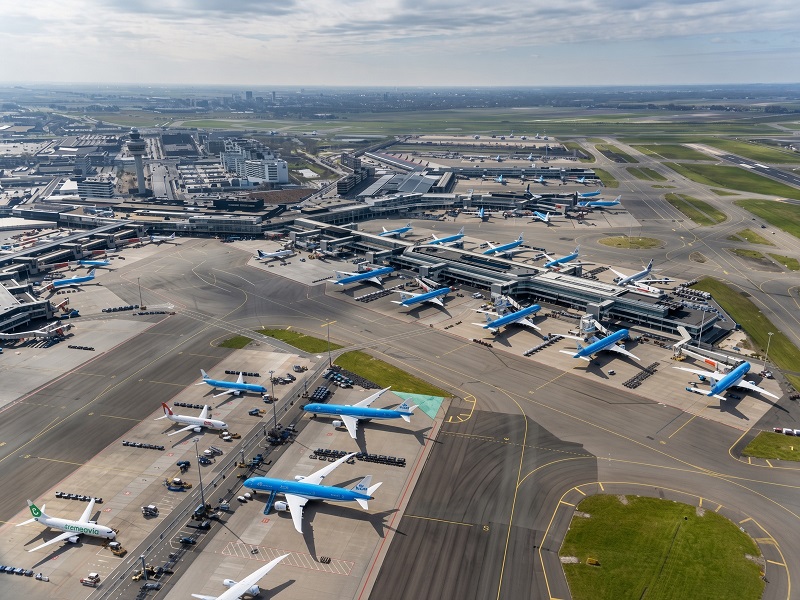
Schiphol occupies the bed of a lake that no longer exists. Where fishing boats once foundered in storms, travellers now change planes beneath a single vast roof, for the Dutch built their great airport as one continuous hall rather than a scatter of terminals. It is among the most restless crossroads in Europe, a place whose entire purpose is the onward connection, yet it still finds room for a branch of a national art collection and the hush of a small library. Just beyond its runways lie the flower fields and auction houses that send Dutch colour to breakfast tables across the world by morning.
Rotterdam The Hague Airport (RTM)
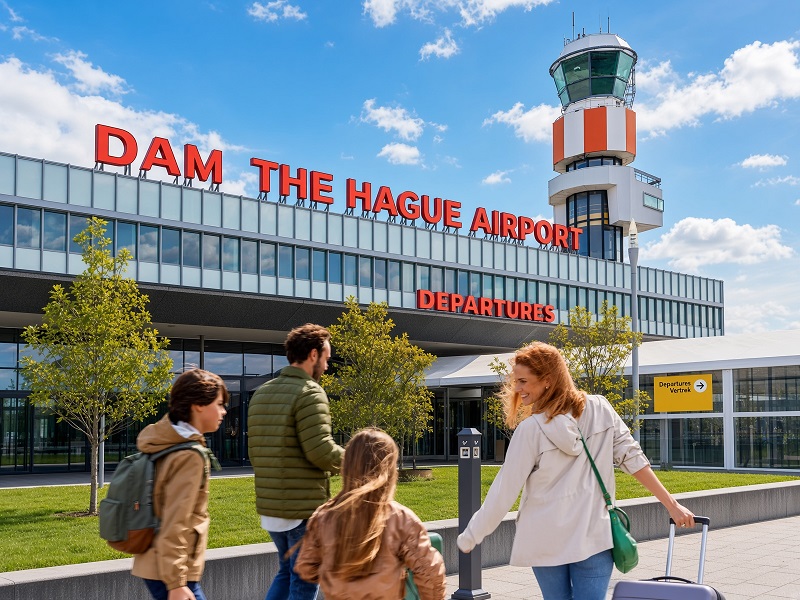
A short hop from two cities that could hardly be less alike, this airport belongs to both. Rotterdam is all nerve and invention, a port city flattened in war and rebuilt as a gallery of fearless modern architecture, forever reaching upward and out to the water. The Hague, close by, keeps a calmer register: the seat of Dutch government, home to royal residences and the world's great courts of justice. To land here is to choose your Netherlands, the audacious or the dignified, and to find both within easy reach.
Eindhoven Airport (EIN)
In the warm southern province of Brabant sits Eindhoven, a city that once made the world's lightbulbs and now trades in ideas instead. Its name carries the memory of a great electronics pioneer, but the place has reinvented itself as a workshop of design and technology, busy with young inventors. The airport is the easy, unpretentious way south, favoured by travellers chasing a good fare, and it opens onto a region that works hard, celebrates its carnival with abandon, and wears its cleverness lightly.
Groningen Airport Eelde (GRQ)
The far north answers to a different rhythm, and Groningen is its capital, a spirited university city where students outnumber worry and the horizon runs on forever. Its airport is the way in to the top of the country, to provinces of black soil and open water, and to the Wadden Sea, that shifting expanse of tidal mud where people walk out at low tide towards islands that seem to float free of the shore. This is the Netherlands at its most elemental, where land and sea trade places twice a day.
Maastricht Aachen Airport (MST)
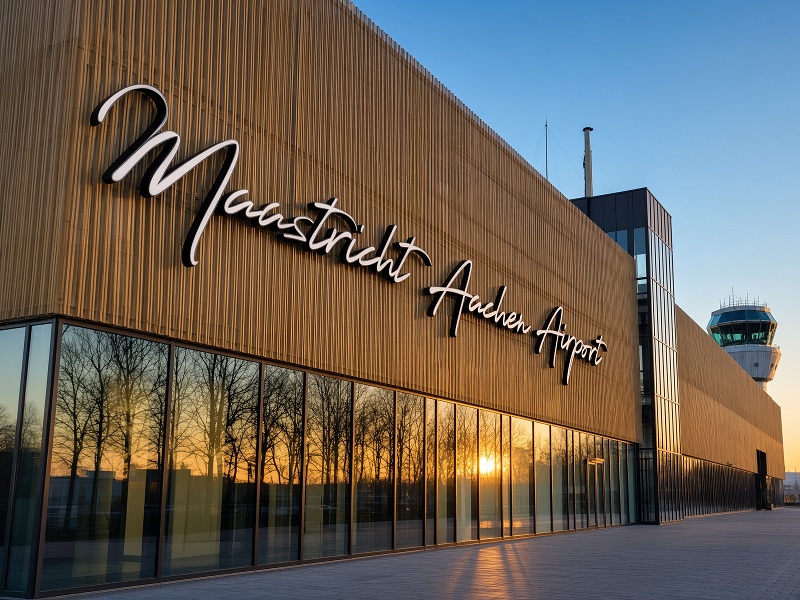
Right at the country's southern tip, where the Netherlands narrows to a sliver between Belgium and Germany, the land does something it does almost nowhere else here: it rises into hills. Maastricht is the reward, an old stone city of Roman roots and Burgundian appetites, where three nations share their squares, their markets and their long lunches. Its airport keeps one foot in commerce, moving freight across the continent, and the other in welcome, receiving those who come for the good living of the deep south.
Magelline Perspective
Taken together, these airports are the beginnings of a Dutch trip: different ways of arriving in a country shaped by water, ingenuity, trade, and an instinctive talent for connecting people and places. From the vast international crossroads of Schiphol to the modern energy of Rotterdam and Eindhoven, the northern openness of Groningen, and the old-world character of Maastricht, each gateway reveals a different side of the Netherlands. Beyond the terminals lie canals and cobbled streets, great ports and quiet villages, university cities and ancient borders, landscapes where land and water have been in conversation for centuries.
The Dutch airports welcome travellers from across the world and send them onward into a landscape where almost every road, river, railway, and runway tells a story of connection.
The journey begins at the runway, but the Netherlands is waiting beyond it.