 Armenian
 German
 Spanish

There are countries where airports are simply places of transit. And then there is Norway where every arrival feels like the beginning of an expedition. From dramatic Arctic landscapes to quiet coastal towns and vibrant Nordic cities, Norway’s geography makes aviation an essential part of everyday life. Flying here is not only convenient; it is often the most beautiful way to experience the country. As aircraft descend between mountains, fjords and islands, travelers quickly realize that Norway’s airport network is more than infrastructure: it is a gateway to some of the most spectacular scenery on Earth.
Because distances can be long and terrain challenging, airports play a crucial role in connecting communities across the country. From the far north above the Arctic Circle to the southern coastline, Norway’s aviation system allows travelers to move comfortably between regions that might otherwise require many hours of travel.
Norwegian Airport Network
Norway has one of the most unique aviation networks in Europe. Due to its geography, domestic flights are extremely common and often the fastest way to travel between cities and regions.
Much of the country’s airport infrastructure is operated by Avinor, the state-owned company responsible for managing the majority of Norway’s airports and air navigation services. The network includes large international hubs, medium-sized regional airports and smaller airfields that connect remote communities.
Modern facilities, efficient transport links and a strong focus on sustainability define Norwegian airports. Many airports are integrated with trains, ferries and buses, making onward travel smooth and convenient for visitors.
Major International Airports in Norway
These are the leading airports in Norway and the main gateways for international and domestic travel across the country.
Oslo Airport, Gardermoen (OSL)
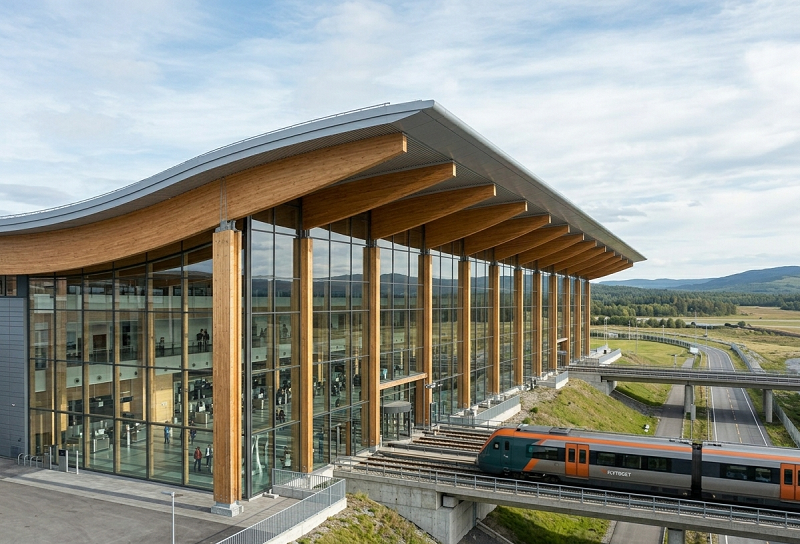
Oslo Airport is the primary international gateway to Norway and the busiest airport in the country. Located about 35 kilometers north of the capital, it connects Norway with major destinations across Europe, North America and the Middle East. The airport serves as a hub for airlines such as SAS and Norwegian and is known for its modern Scandinavian design, efficient layout and strong rail connections to Oslo city centre. For many travelers, it is the first introduction to Norway’s landscapes, culture and northern adventures.
Bergen Airport, Flesland (BGO)
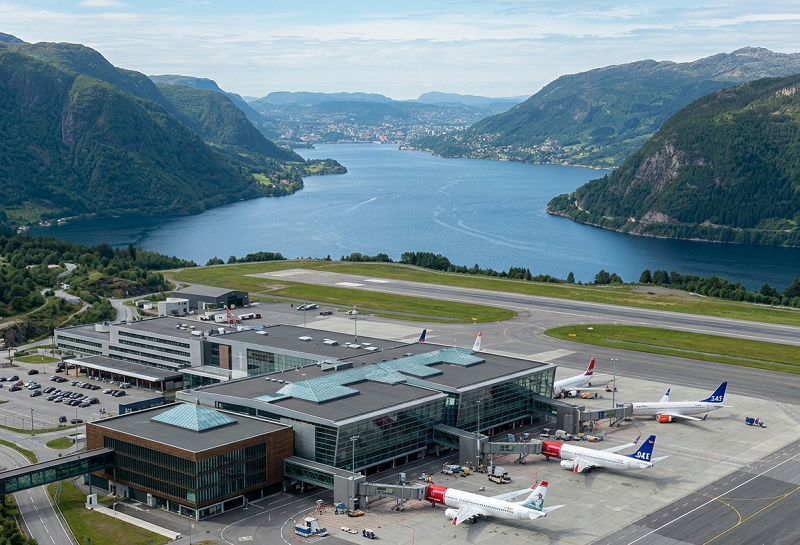
Bergen Airport is the second-largest airport in Norway and the main gateway to the country’s famous fjord region. Situated on the west coast, it connects Bergen with many European cities and numerous domestic destinations. The airport plays an important role in tourism, allowing visitors to easily reach some of Norway’s most spectacular natural scenery, including the fjords, coastal villages and mountain landscapes that define the region.
Stavanger Airport, Sola (SVG)
Stavanger Airport serves southwestern Norway and is one of the country’s most important aviation hubs for both business and leisure travel. The airport is closely linked to Norway’s offshore energy industry, with frequent flights serving international workers and companies operating in the North Sea. At the same time, it provides access to scenic coastal areas, historic towns and the famous Lysefjord region, including attractions such as Preikestolen.
Trondheim Airport, Værnes (TRD)
Trondheim Airport is the main aviation hub for central Norway and an important connection point for domestic routes throughout the country. Located near the historic city of Trondheim, the airport links the region with major Norwegian cities as well as several international destinations. It supports both tourism and business travel and provides access to Norway’s cultural heritage, Viking history and scenic central landscapes.
Tromsø Airport, Langnes (TOS)
Tromsø Airport is the largest airport in northern Norway and the primary gateway to the Arctic region. It plays a crucial role in connecting remote northern communities while also welcoming international travelers searching for unique experiences such as the Northern Lights, midnight sun and Arctic nature. Located on the island of Tromsøya, the airport offers easy access to one of Norway’s most vibrant northern cities and the dramatic landscapes of the far north.
Other Important Airports in Norway
In addition to the major international gateways, Norway has several important regional airports that play a key role in domestic travel and tourism.
- Kristiansand Airport (KRS) links southern Norway with domestic and European destinations.
- Sandefjord Airport Torp (TRF) offers additional international connections for travelers visiting the Oslo region.
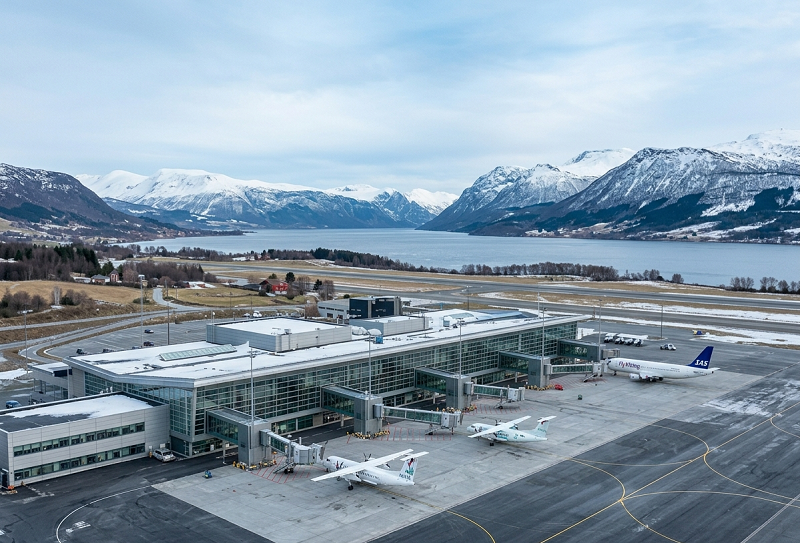
- Ålesund Airport (AES) serves the Sunnmøre region and provides access to famous fjords and coastal scenery.
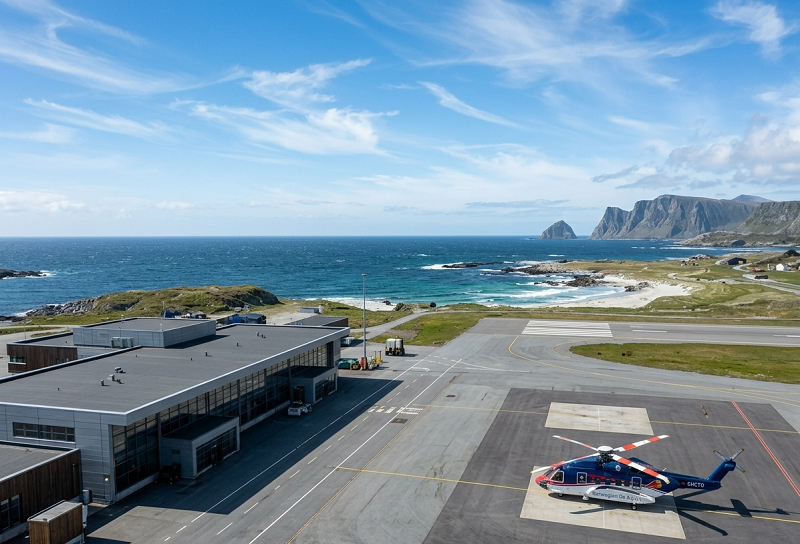
- Harstad/Narvik Airport (EVE) serves the gateway to northern landscapes and the beautiful Vesterålen and Lofoten areas.
- Bodø Airport (BOO) connects travelers with the northern coast and the Lofoten Islands, making it an important hub for Arctic exploration.
These airports help maintain Norway’s strong connectivity and allow visitors to explore the country far beyond the capital.
Sustainability and the Future of Aviation
Norway is among the countries leading the transition toward more sustainable aviation. Airport operator Avinor is actively exploring solutions such as electric aircraft infrastructure, hydrogen technologies and greener airport operations.
With a national commitment to environmental innovation, Norway aims to become one of the first countries where short domestic flights could eventually be operated by zero-emission aircraft. This vision reflects the country’s broader dedication to balancing modern mobility with the protection of its extraordinary natural environment.
Magelline Perspective
According to Magelline, Norway’s airports are gateways to experiences that feel almost cinematic. From the moment a plane approaches Oslo through forests and lakes, or descends toward Tromsø surrounded by Arctic mountains, travelers sense that Norway is a place where nature and movement exist in harmony. Airports here connect fjords, islands, cities and remote northern skies, turning each arrival into the beginning of a new discovery.