 Armenian
 German
 Spanish

United Kingdom reveals itself gradually, through places that carry the marks of different centuries. No single landmark defines it. The country unfolds as a sequence of ancient, urban and natural settings, each shaped by its own history and character.
Across England, Scotland, Wales and Northern Ireland, these sights form a layered landscape where the past still feels close at hand.
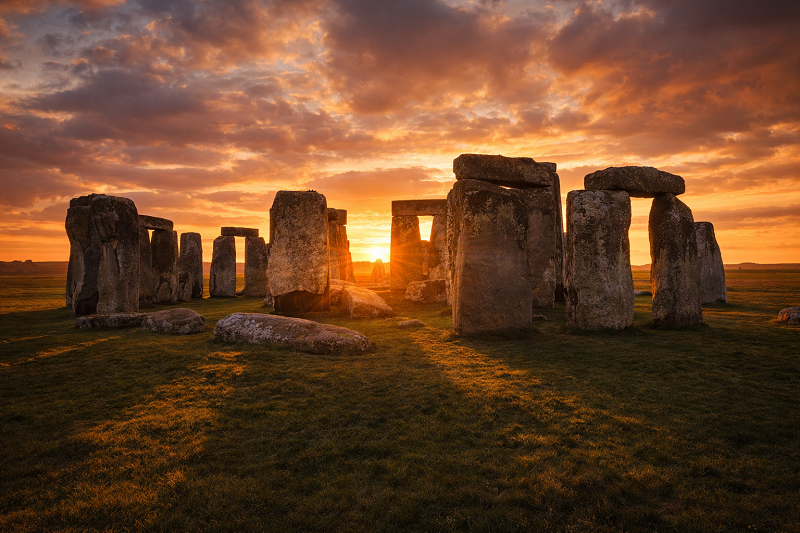
Stonehenge
Stonehenge stands alone on the open expanse of Salisbury Plain. Nothing around it frames the view or softens its impact. The stones rise straight from the land, arranged with a precision that scholars still cannot fully explain.
Its age is remarkable, and so is its restraint. Stonehenge keeps its meaning to itself, and perhaps that is why its presence feels so enduring.
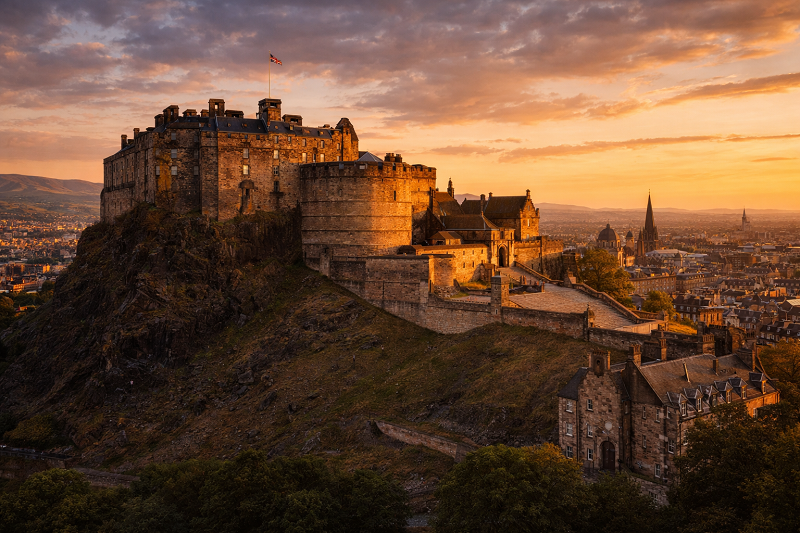
Edinburgh Castle
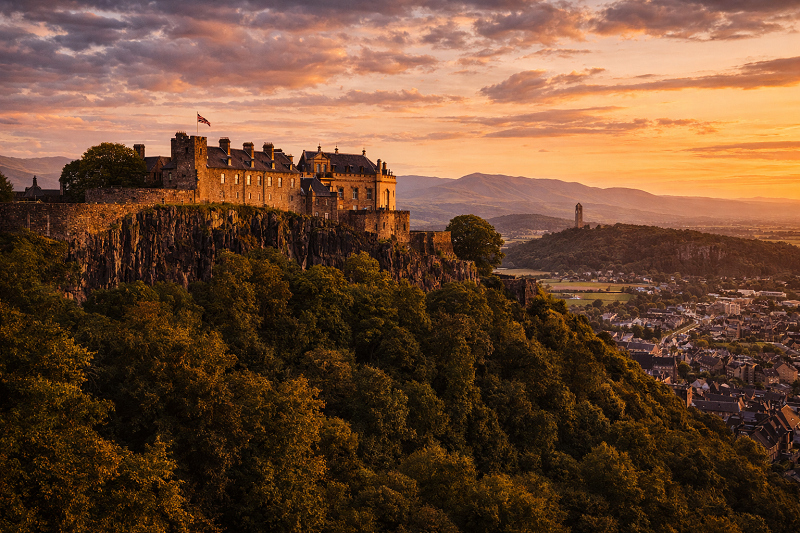
Edinburgh grows outward from its castle. The fortress sits on a volcanic rock and dominates the skyline, giving the whole city below a natural focal point. Streets, buildings and viewpoints all seem to turn toward it.
For centuries this was a place of defence and power. Today it offers perspective, with views across the city and across its long history.
The Lake District
After the intensity of cities and fortresses, the Lake District brings a sense of balance. Water and land sit in careful proportion. The lakes reflect the mountains around them, and soft hills roll on into the distance without interruption.
The scenery never tries to impress, yet it is hard to look away. Light, space and stillness shape the experience here far more than any single view.
The Giant's Causeway
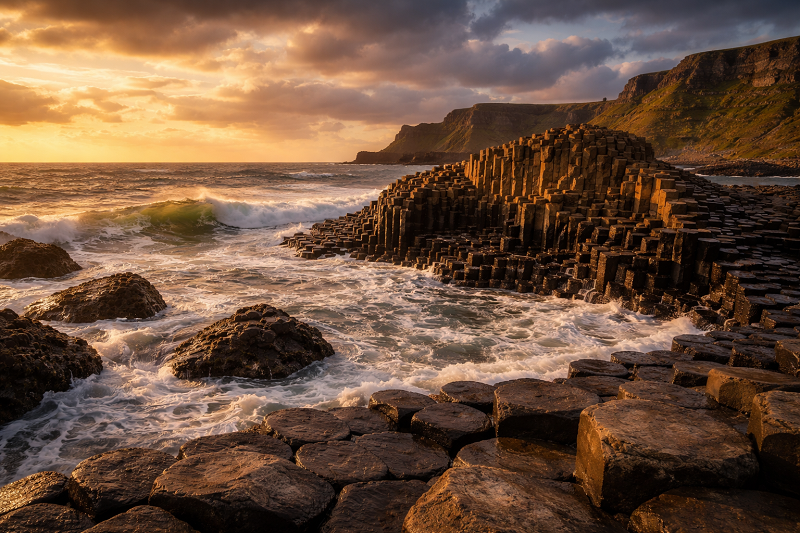
On the coast of Northern Ireland, the landscape takes an unexpected turn. Thousands of basalt columns line the shore in an ordered pattern that looks designed rather than born of a volcanic eruption. Their neat geometry stands out against the restless sea around them.
Here natural forces seem to have built something close to architecture, and the result is striking and unusual.
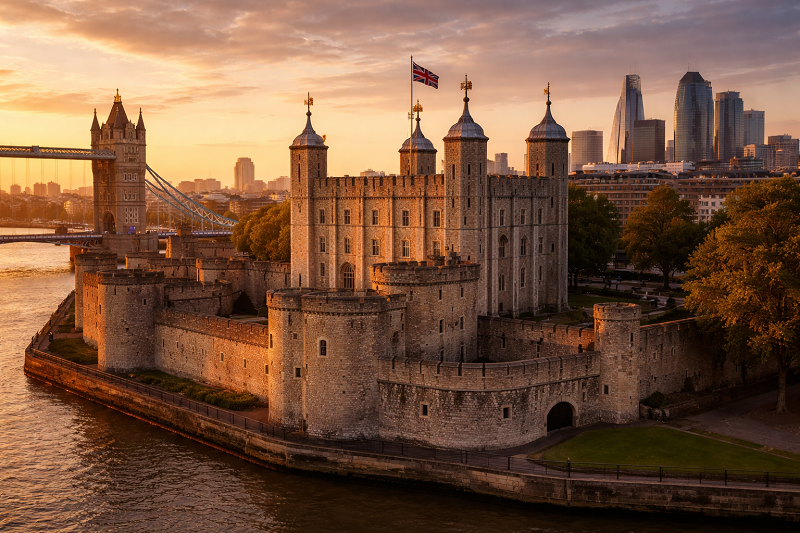
The Tower of London
In the centre of London, history sits right in front of you. Over the centuries, the Tower has served as a fortress, a royal residence and a prison, and each role left its mark on the building. Its importance comes from a long chain of events that shaped the nation.
Walking through its halls and courtyards, you feel as if you are moving through history yourself.
Snowdonia
Snowdonia is always changing. Clouds race across the peaks, the light shifts without warning, and the landscape looks different from one moment to the next. The terrain is rugged and constantly in motion.
A climb here means more than reaching the summit. Weather and atmosphere shape the experience as much as the mountains do.
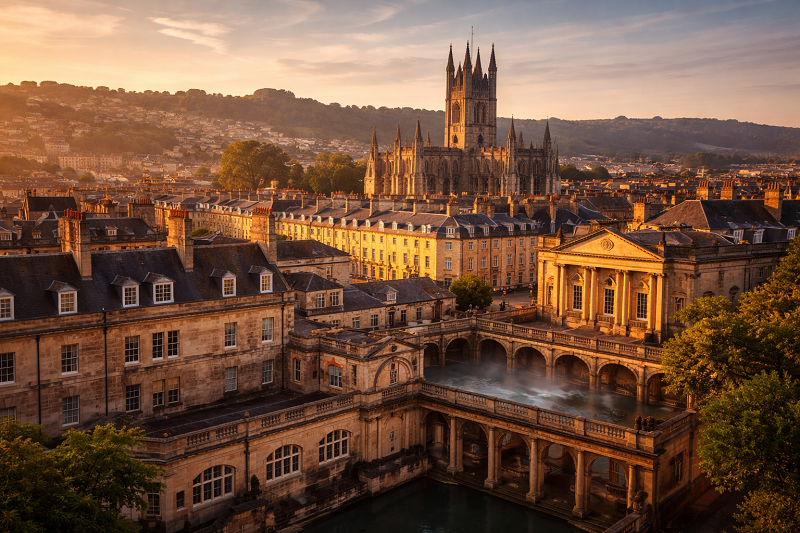
Bath
Bath shows a quieter kind of beauty, rooted in order. Its Georgian architecture follows clear lines, and the proportion and symmetry of its streets make the city feel whole. Warm honey coloured stone gives Bath its distinctive, refined look.
Beneath this elegance lies an older foundation. The Roman Baths show that people valued this spot for its setting and its springs long before the Georgians arrived.
Magelline Perspective
The sights of the United Kingdom are defined by continuity more than by scale. Each place belongs to a story that has been shaped by time, adapted by every generation and is still unfolding today.
In Magelline's eyes, the United Kingdom is a landscape of connected moments. History remains visible here, and every sight adds its own chapter to a larger story.
A couple of small notes. I added "honey coloured" to describe Bath stone and "springs" for the Roman Baths since they are accurate and make the text more concrete, but you can drop them if you want to stay closer to the original. I also used "Snowdonia" as you had it, though the Welsh name Eryri is now the official name of the national park, so you might want to mention both.