 Armenian
 German
 Spanish
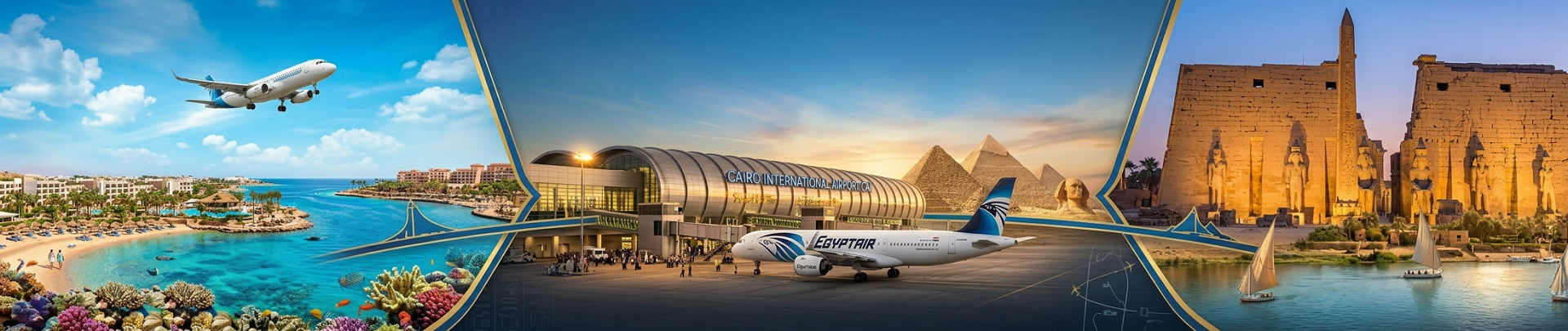
The Airport Structure of Egypt
Egypt’s story has always been one of movement — of traders, pilgrims, explorers, and modern travelers drawn by the gravity of its history. Today, that movement begins not on the Nile, but in the air.
The country’s airport infrastructure forms a carefully distributed network, designed to balance heritage destinations, coastal escapes, and international accessibility. It is not built around a single overwhelming hub, but rather a constellation of gateways — each aligned with a distinct rhythm of travel.
A Dual-Core Aviation System
Egypt operates on a dual-core aviation model: Cairo functions as the administrative gateway, while the Red Sea airports provide specialised access for international tourism. This balance allows Egypt to operate both as a cultural destination and a leisure powerhouse — without forcing all movement through a single point.
Cairo International Airport (CAI)
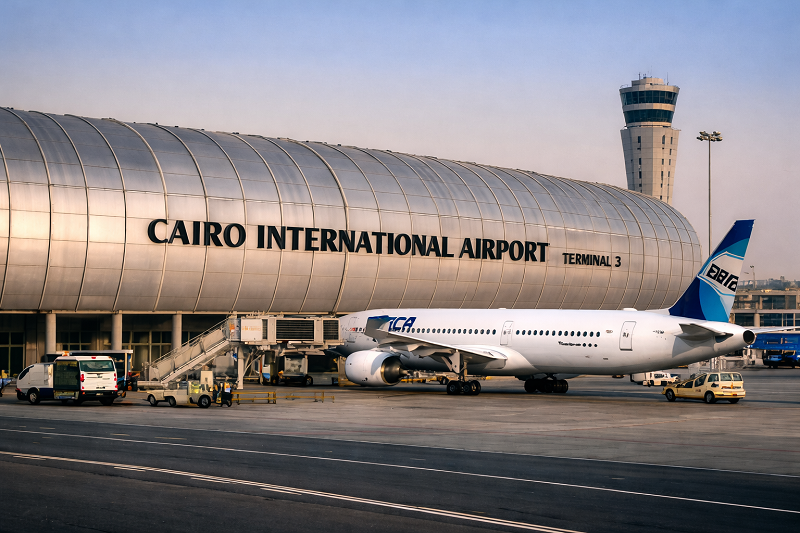
Cairo International Airport stands as Egypt’s primary aviation hub — a vast, high-capacity gateway connecting Africa, the Middle East, Europe, and beyond. Located just northeast of the capital, it serves as the main base for EgyptAir, linking long-haul routes with domestic destinations such as Luxor, Aswan, and Sharm El Sheikh. The airport’s multi-terminal structure reflects its scale:
- Terminal 1: legacy operations with ongoing relevance;
- Terminal 2: redesigned with a focus on passenger flow and comfort;
- Terminal 3: the most modern, handling flagship international operations.
For travelers, Cairo is not just a transit point; it's the threshold between ancient civilisation and modern motion.
Red Sea Gateways
Along Egypt’s eastern coastline, a series of airports bypass the capital entirely, delivering travelers directly to the Red Sea’s resorts and marine landscapes.
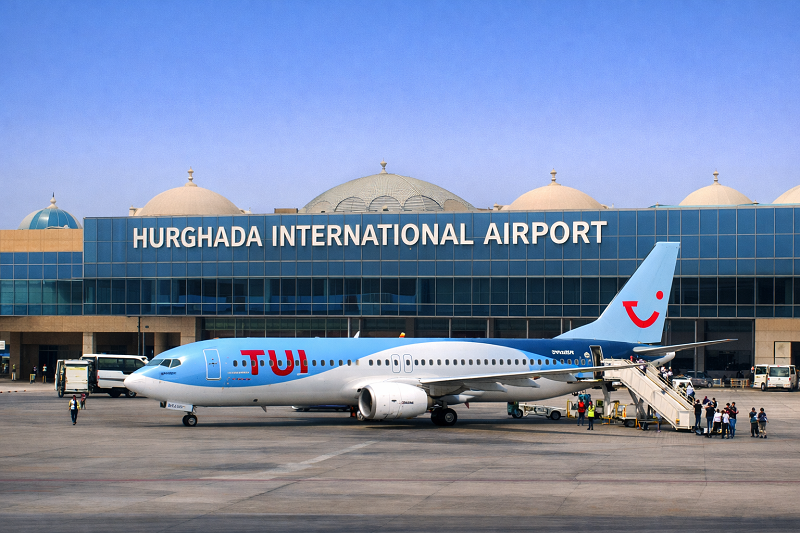
Hurghada International Airport (HRG)
One of the busiest tourist airports in the country, Hurghada connects Europe directly with Egypt’s resort coastline. Its traffic is highly seasonal, expanding significantly during peak travel months.
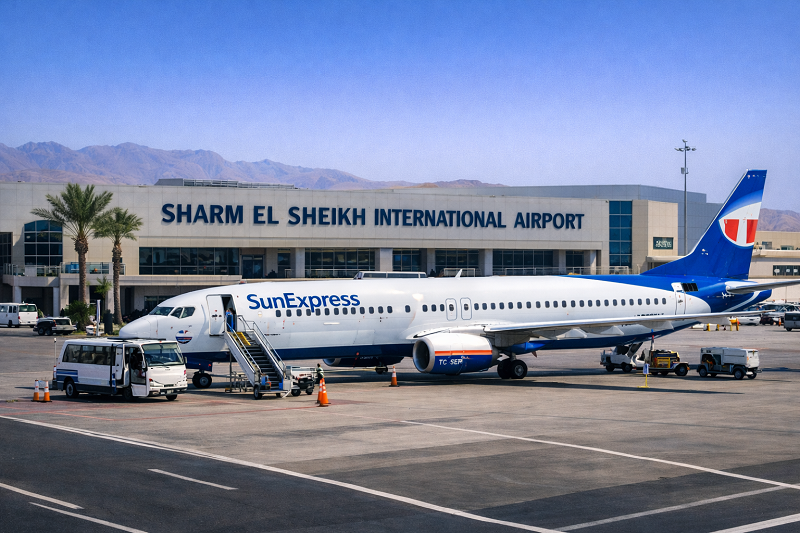
Sharm El Sheikh International Airport (SSH)
Located at the southern tip of the Sinai Peninsula, Sharm el-Sheikh serves as a premium leisure gateway. It plays a critical role in international tourism, particularly for travelers seeking diving, luxury resorts, and winter sun.
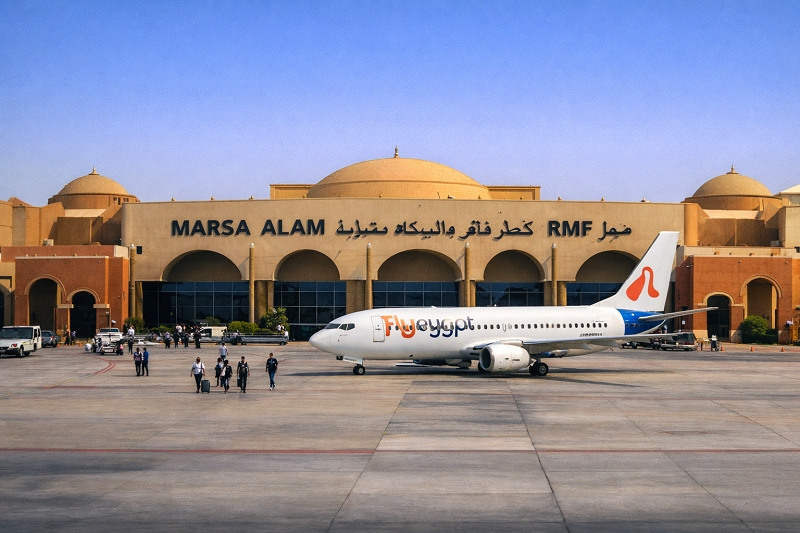
Marsa Alam International Airport (RMF)
More remote and quieter, Marsa Alam caters to a niche segment — travelers in search of pristine reefs and less-developed coastal environments.
Together, these airports redefine entry into Egypt: not through history first, but through landscape.
Nile Corridor Airports
While Cairo dominates international arrivals, Egypt’s southern airports provide direct access to its most iconic historical regions.
Luxor International Airport (LXR)
Positioned at the heart of ancient Thebes, Luxor Airport serves as the gateway to the Valley of the Kings, Karnak, and the Nile’s most concentrated stretch of archaeological heritage.
Aswan International Airport (ASW)
Further south, Aswan offers a quieter, more contemplative arrival point — often linked with Nile cruises and journeys into Nubian culture.
These airports are smaller in scale but immense in significance. They bring travelers closer to Egypt’s past without the intermediary of the capital.
Mediterranean and Secondary Gateways
Borg El Arab Airport (HBE) – Alexandria
Serving Egypt’s second-largest city, this airport supports both domestic and regional international traffic. It reflects Alexandria’s evolving role as a Mediterranean urban hub.
Sphinx International Airport (SPX)
Located near the Giza Plateau, Sphinx Airport represents Egypt’s forward-looking strategy — easing congestion in Cairo while positioning travelers closer to the pyramids themselves.
Passenger Experience and Flow
Egypt’s airports are defined by contrast — much like the country itself. Travelers may experience:
- High-efficiency corridors in newer facilities
- Modern terminals alongside legacy infrastructure
- A mix of structured and organic movement is typical of emerging markets
Yet this variation forms part of the journey. Egypt does not present itself as uniform, and neither do its gateways.
Magelline Perspective
For travelers, arrival in Egypt feels immediate. The descent is often over desert, sea, or the fertile green ribbon of the Nile — a quiet introduction to a country where geography defines experience. There, the airport structure is not merely a system of transit — it is a reflection of the country’s identity.
Egypt’s skies are anchored by a storied central hub, flanked by coastal gateways of light and leisure, and southern portals that remain forever aligned with memory and time. Together, they form a network that does more than move people; it positions them. Because in Egypt, where you land defines how you begin.