
 Armenian
 German
 Spanish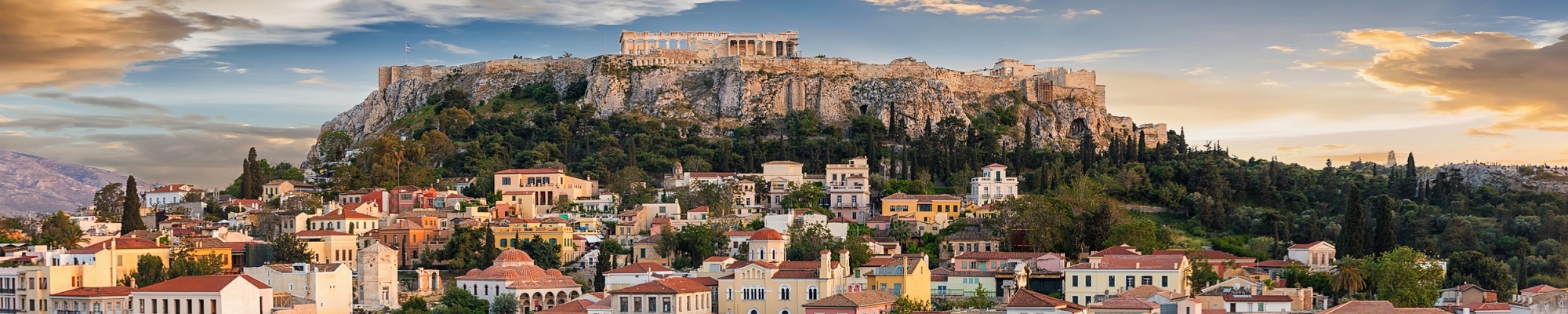
Greece receives its passengers with a warmth that feels less like hospitality and more like homecoming. Whether you are arriving to trace the footsteps of antiquity in Athens, to lose yourself in the labyrinthine lanes of a Cycladic village, to sail between islands that seem to have been placed there for the pure joy of discovery, or simply to sit beside the Aegean as the light turns gold Greece's airports welcome you to one of the world's most enduringly beloved destinations.
From the grand international gateway of Athens to the intimate seasonal terminals of Mykonos and Santorini, Greece's air transport network reflects the country's dual nature: steeped in history yet effortlessly modern, both deeply local and universally cherished. Here, the descent through clear Aegean air is the first gift the country offers.
Greece's airports are distinguished by their remarkable geographic spread, their seasonal energy, and their role as the essential bridge between the wider world and the archipelago of islands that defines so much of what makes Greece extraordinary. The country operates 39 commercial airports across the mainland and its hundreds of inhabited islands, a network that carried multy million passengers each year, a record figure that confirmed Greece's position as one of Europe's most sought-after destinations.
One of Greece's defining characteristics as an aviation destination is the interplay between its single dominant hub and its constellation of island airports. Athens serves as the nerve centre, receiving long-haul flights from the Americas, the Middle East, Asia, and across Europe, before channelling travellers onward to smaller island destinations via domestic connections. This hub-and-spoke character gives Greece its particular rhythm: the mainland capital as a crossroads of continents, and the islands as the destinations that travellers truly dream of reaching. The island airports of Crete, Rhodes, Corfu, Mykonos, Santorini, Kos, Zakynthos, Skiathos, Kefalonia, Samos, and Lesvos offer direct seasonal connections to dozens of European cities, allowing visitors to step almost directly from the northern European winter into the warmth of the Greek summer.
Thanks to its position at the southeastern corner of Europe, at the intersection of European, Middle Eastern, and North African air routes, Greece occupies a uniquely strategic geographic role. Athens in particular serves as a natural connection point for travellers moving between continents, and the airport has invested heavily in expanding its international reach. Athens connectes to more than 150 destinations in 55 countries, served by approximately 70 airlines, a connectivity that rivals far larger European hubs. An ambitious expansion programme, with a total investment of 1.28 billion euros, aims to raise Athens' capacity to serve 40 million passengers annually by 2032.
Greek airports combine the practicality of well-run modern infrastructure with the warmth of a country that genuinely prizes its visitors. English is widely spoken throughout the airport network, signage is clear and accessible, and the major terminals offer a full range of services including duty-free shopping, dining, car hire, and comfortable lounges. Travel to and from the island airports is typically straightforward, with taxi, bus, and car rental services available at all major terminals; pre-booking transfers is advisable during the peak summer months of July and August, when the island airports in particular operate at remarkable intensity.
Below are the principal Greek airports, each serving as a gateway to distinct regions and experiences:
Athens International Airport "Eleftherios Venizelos" (ATH): Greece's largest and most internationally connected hub, handling nearly 32 million passengers in 2024 and ranking among the fastest-growing airports in Europe. Named after a revered statesman who championed Greek aviation in the early twentieth century, the airport serves as the nation’s principal gateway connecting the capital to over 150 destinations across 55 countries, while anchoring both long-haul arrivals and the intricate web of domestic routes to the islands.
Thessaloniki Airport "Makedonia" (SKG): The gateway to northern Greece and the second city of Macedonia, connecting travellers from across Europe to one of the continent's most underrated urban destinations, a city of Byzantine monuments, an extraordinary archaeological museum, a legendary waterfront, and a food culture that rivals Athens at every turn.
Heraklion International Airport "Nikos Kazantzakis" (HER): The gateway to Crete and the second busiest airport in Greece. Named after the author of Zorba the Greek, the airport opens onto the largest and most culturally complex of the Greek islands, where Minoan palaces, Venetian harbour towns, mountain villages, and some of the Mediterranean's finest beaches await within easy reach.
Rhodes International Airport "Diagoras" (RHO): The entry point to the island of the Knights, where medieval fortifications rise above a harbour that has welcomed mariners for three thousand years. The fourth busiest airport in Greece, Rhodes receives visitors drawn equally by its exceptional history and by some of the most reliably sun-drenched beaches in the Aegean.
Corfu International Airport "Ioannis Kapodistrias" (CFU): Named after Greece's first head of state, this compact and characterful airport sits dramatically close to the sea at the southern tip of Corfu town, offering arrivals an unforgettable first glimpse of the island's lush, Venetian-influenced landscape.
Mykonos Island National Airport (JMK): The gateway to Greece's most glamorous island, receiving seasonal flights from across Europe during the summer months. The airport sits just minutes from Mykonos town, placing arrivals almost immediately within reach of its iconic windmills, dazzling white lanes, and celebrated beach clubs. Fraport Greece is currently investing to expand the airport's capacity to meet rapidly growing demand.
Santorini (Thira) National Airport (JTR): Perhaps the most dramatically situated airport in Greece, receiving visitors to the caldera island whose whitewashed villages and volcanic landscapes have come to symbolise the Aegean dream. Seasonal and compact, the airport is at its most intense during the summer peak; arrivals are rewarded with one of the most spectacular natural settings in the world, just minutes away. Expansion plans are in progress here too, as Santorini's popularity continues to grow year on year.
Chania International Airport "Ioannis Daskalogiannis" (CHQ): The western gateway to Crete, offering a quieter and often more atmospheric arrival than Heraklion, with the Venetian harbour town of Chania, the Samaria Gorge, and the beaches of the Kissamos peninsula all within easy reach.
Kos Island International Airport "Hippocrates" (KGS): The entry point to the island that gave the world Hippocrates and the foundation of modern medicine, named fittingly in his honour. Kos offers visitors a rich combination of ancient ruins, Ottoman architecture, and beaches framed by the blue waters of the southeastern Aegean, with easy ferry access to the surrounding Dodecanese islands.
Zakynthos (Zante) International Airport "Dionysios Solomos" (ZTH): Named after the poet who wrote the Greek national anthem, this Ionian island airport receives visitors drawn to Zakynthos's extraordinary natural beauty, above all, to the nesting beaches of the loggerhead sea turtle and the famous sea caves of the Ionian coast.
For international arrivals, it is recommended to allow at least two to three hours before departure, particularly during the peak summer season from June to September, when Greece's island airports operate at full intensity and queues at security and boarding can extend. On the mainland, Athens airport is well connected to the city centre by metro, suburban rail, and bus; on the islands, pre-arranged transfers or car hire will generally offer the most comfortable onward journey.
In Magelline's view, Greece's airports are not simply the logistical prelude to a holiday, they are the first breath of a different kind of time. Step through the arrivals hall, feel the warmth on your skin, and understand that you have arrived somewhere the rest of the world has been trying to reach for three thousand years. The journey, from here, is everything.
