 Armenian
 German
 Spanish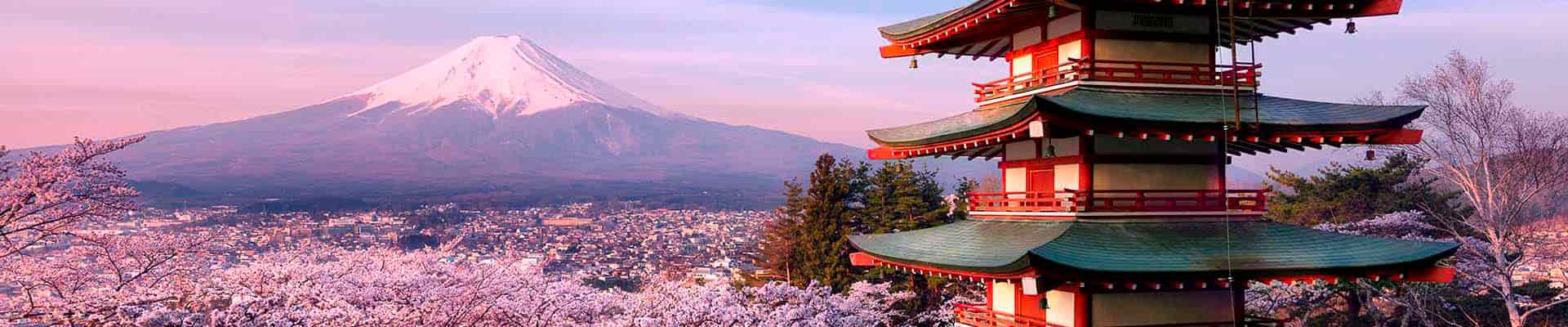

When Albert Einstein visited Japan, he was struck not by spectacle but by sincerity.
“That was the most enthusiastic welcome I have ever received…”
His words reflect something that continues to define the country: a quiet respect, a natural humility, and a way of welcoming that feels deeply genuine.
Japan feels like a place where time does not move in a straight line. Here, centuries-old traditions exist not as memories, but as living rhythms woven into everyday life. Wooden temples stand quietly beside modern skylines, and moments of stillness coexist with the constant motion of one of the world’s most dynamic societies.
From the tranquil streets of Kyoto to the energetic Tokyo, Japan reveals a rare balance, a country that embraces the future without ever letting go of its past.
For travellers, this creates an experience that feels both deeply grounding and endlessly fascinating.
Culture
In Japan, even the smallest details carry intention: a simple gesture, a carefully prepared meal, or the quiet arrangement of a garden reflects a cultural philosophy built on respect, balance, and awareness. Traditions such as tea ceremonies, seasonal festivals, and centuries-old crafts are not preserved for display; they remain part of daily life.
There is a quiet discipline to the way things are done. Movements feel deliberate. Spaces are designed with purpose. Even silence seems to hold meaning. This sense of precision gives Japan a unique atmosphere, one that invites visitors not only to see, but to observe.
Landscapes
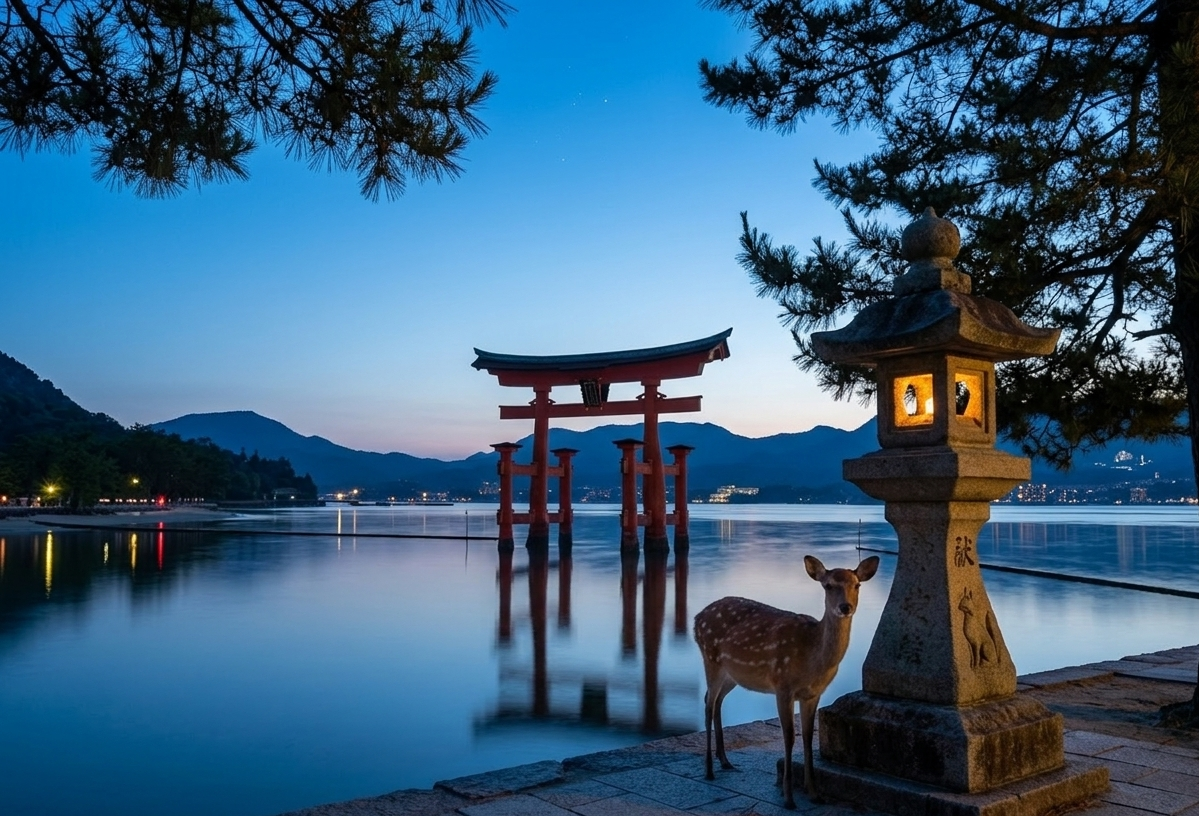
Japan’s landscapes unfold with a sense of quiet drama. Mountain ranges rise across much of the country, creating natural boundaries between regions and shaping distinct local identities. In the distance, the iconic silhouette of Mount Fuji stands as both a natural landmark and a cultural symbol, its presence felt far beyond its physical form.
Elsewhere, bamboo forests filter light into soft green tones, while coastal cliffs meet the open sea with a sense of calm power. In spring, cherry blossoms transform entire cities into fleeting landscapes of pale pink, reminding visitors of the beauty found in impermanence.
These contrasts, mountains and coastlines, forests and cities, exist not in opposition, but in harmony.
Cities
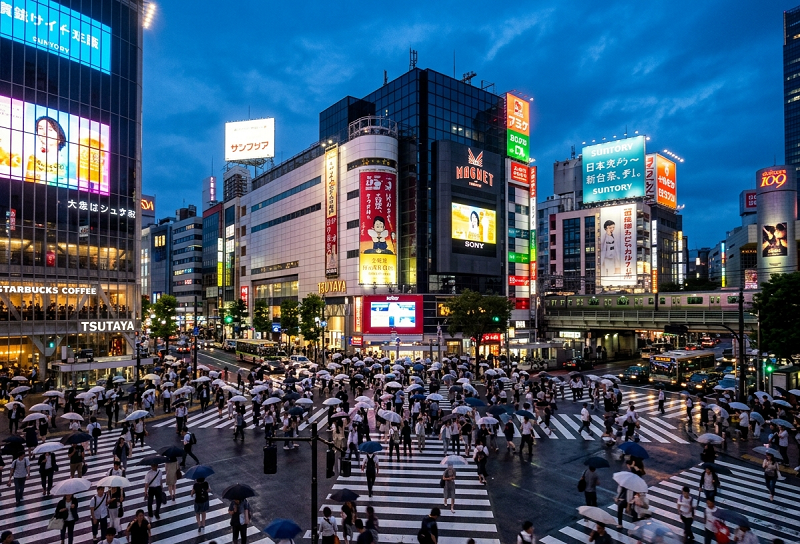
In Tokyo, movement feels constant. Streets glow with neon light, trains arrive with perfect timing, and entire districts pulse with energy late into the night. Yet even here, quiet corners appear as unexpectedly small shrines, narrow alleys, and moments of stillness hidden within the urban flow.
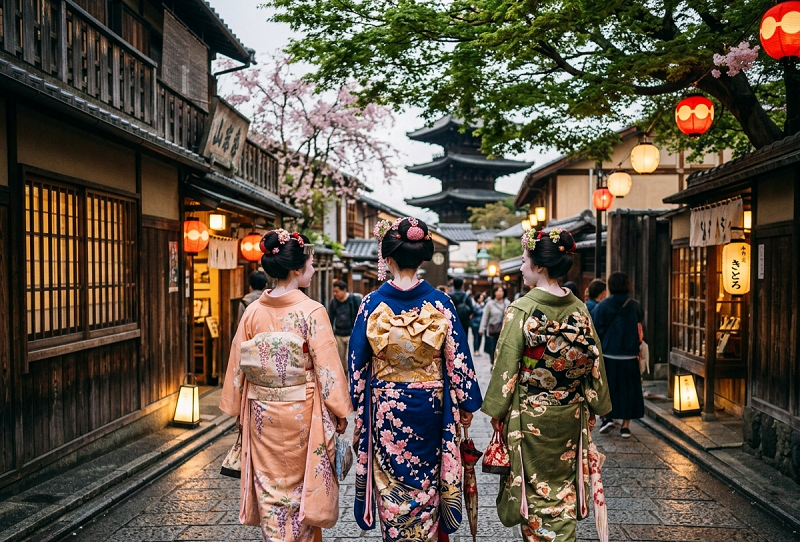
In Kyoto, the rhythm slows. Wooden houses, temple pathways, and traditional districts create an atmosphere that feels reflective and timeless. Every turn seems to reveal a connection to history.
Further west, Osaka introduces a different character, vibrant, expressive, and known for its culinary spirit. It is a city where energy is not only seen, but tasted.
Together, these cities show that Japan is not defined by a single identity, but by the balance between many.
Culinary
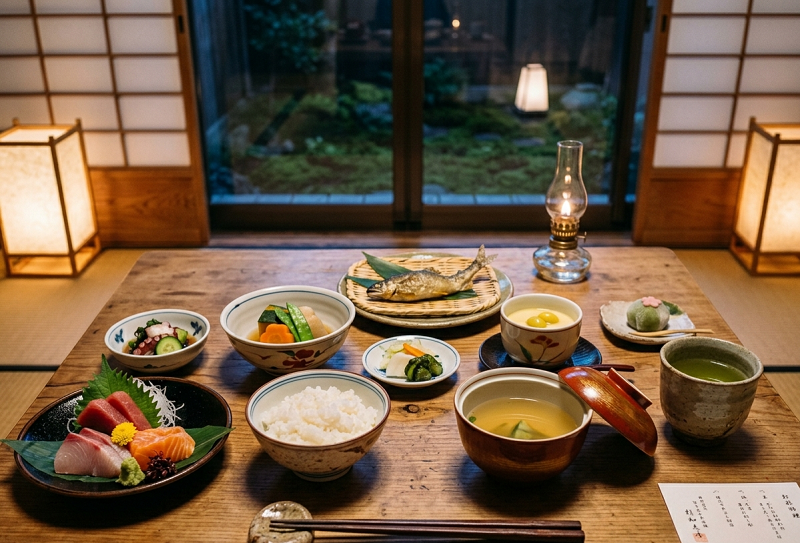
Food in Japan is guided by clarity rather than complexity. Ingredients are treated with respect, and flavours are allowed to stand on their own. Whether it is a carefully prepared bowl of ramen, fresh sushi crafted with precision, or seasonal dishes that reflect the time of year, the experience is always intentional.
Dining often feels less like consumption and more like appreciation of texture, balance, and presentation.
Even the simplest meal can become memorable, not because of extravagance, but because of attention.
Seasons
Time in Japan is deeply connected to the seasons.
Spring brings cherry blossoms, drawing people outdoors to celebrate brief moments of beauty. Summer arrives with festivals and energy, while autumn transforms landscapes into shades of red and gold. In winter, quieter scenes emerge, with snow covering temples and mountain villages.
Each season offers a different perspective, and no two visits feel the same.
Why does Japan feel different?
There is a quiet coherence to Japan that is difficult to define, yet easy to feel. It is found in the balance between movement and stillness, between innovation and tradition, between detail and simplicity. Nothing feels accidental. Everything seems considered.
Travelling through Japan is not only about discovering places, but it is also about noticing how those places make you feel.
Magelline Perspective
In Magelline’s eyes, Japan reveals itself in layers in the sound of footsteps along a temple path, in the rhythm of a passing train, in the quiet moment when cherry blossoms drift through the air.
Here, the journey is not defined by how much you see, but by how deeply you experience. And in that sense, Japan is not simply visited; it is understood slowly, meaningfully, one moment at a time.