 Armenian
 German
 Spanish

 2026-11-14 01:29:00
French Polynesia lies in one of the most remote and beautiful corners of the world, a constellation of islands scattered across the immense South Pacific Ocean. The territory is made up of 118 islands grouped into five archipelagos, spread over an area of ocean that rivals Western Europe in size. Put all the land together, and it would still be smaller than Cyprus. Distance shapes everything here.
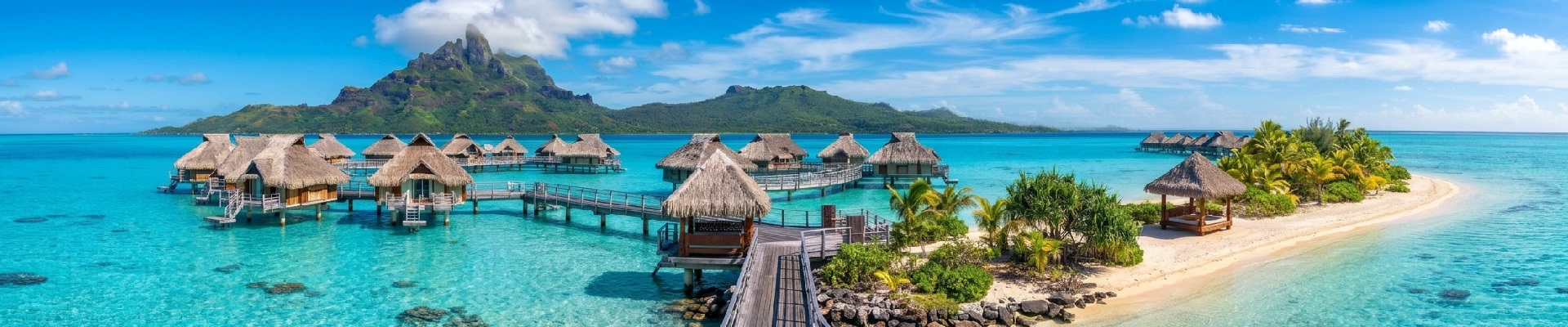
The horizon seems endless, lagoons glow in shades of turquoise and sapphire, and volcanic peaks rise from the sea like green cathedrals above the coral reefs.
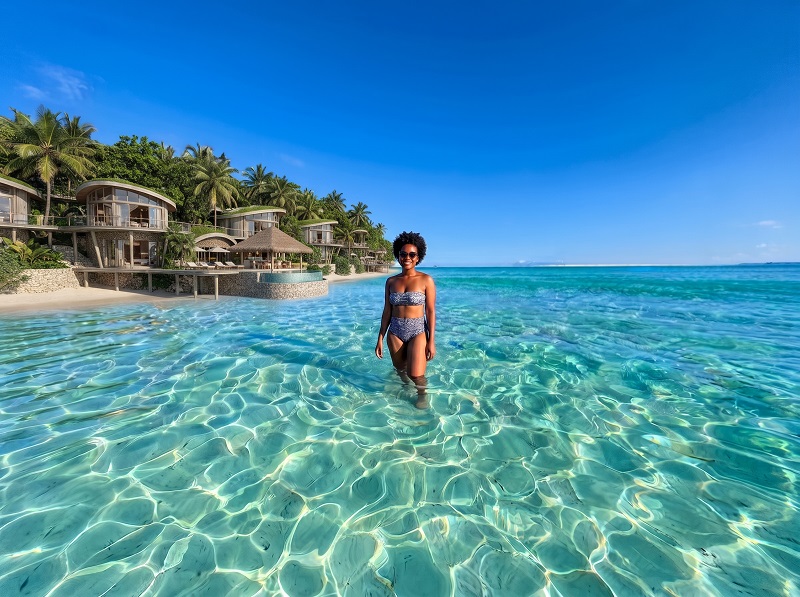
For many travelers, French Polynesia is the very image of a tropical paradise. Its islands are also the living heart of one of the world's great ocean cultures.
Five Archipelagos
The Society Islands are the ones most travelers picture. Tahiti, Moorea and Bora Bora rise from their lagoons as steep green mountains, the remains of old volcanoes now wrapped in coral reefs. To the east lie the Tuamotus, nearly eighty low atolls where the land is a thin ring of sand and palms around a lagoon. Rangiroa's lagoon is so large that the whole island of Tahiti could fit inside it.
The Marquesas, far to the northeast, have almost no reefs at all. Their cliffs drop straight into a dark, restless sea. Paul Gauguin spent his last years on Hiva Oa, and he is buried in the village of Atuona, a short walk from the grave of the Belgian singer Jacques Brel. In the south, the Austral Islands are cooler and quieter, and humpback whales come to Rurutu from July to October to give birth. The Gambier Islands, the most remote of all, are known for the black pearls farmed in the lagoon around Mangareva.
People
The first Polynesians reached these islands in large sailing canoes, reading the stars, the swells and the flight of birds. They crossed thousands of kilometres of open water on purpose, carrying plants, animals and whole families. That knowledge still shapes island life. Canoe racing is the national sport, and the English word "tattoo" comes from the Tahitian "tatau".
French Polynesia is an overseas collectivity of France, so French and Tahitian are heard side by side. In Papeete, the capital, the morning market fills with flowers, fish and fruit, and in the evening food trucks called roulottes park along the waterfront.
Food & Drink
The dish everyone tries first is poisson cru: raw tuna cut into cubes, marinated in lime juice and finished with coconut milk, cucumber and onion. Fish appears at almost every meal, usually tuna, mahi mahi or reef fish, grilled or served raw. For family celebrations, food is still cooked in an ahima'a, an earth oven of hot stones covered with banana leaves.
French bakeries sell fresh baguettes every morning, even on small islands. Taha'a, near Raiatea, grows most of the famous Tahitian vanilla, and the scent of its drying pods hangs over whole villages. For many visitors, a cold Hinano beer at sunset completes the picture.
Festivals
The great event of the year is Heiva i Tahiti, held every July since 1881. Dance troupes rehearse for months, and the drumming at the competitions in Papeete carries far beyond the stage. Alongside the dances come traditional sports: canoe races, stone lifting and the fruit carriers' race, where men run with heavy loads of bananas balanced on a pole. Bastille Day on July 14 falls in the middle of the festival and adds parades and fireworks.
Magellan's Island
In January 1521, Magellan's fleet had been crossing the Pacific for two months. The crew was eating sawdust and leather soaked in seawater, and scurvy was spreading through the ships. Then a small island appeared, the first land in French Polynesia ever seen by Europeans. Most historians identify it as Puka Puka in the Tuamotus. Magellan named it San Pablo, but the sailors could find no place to anchor, and the ships sailed on with empty holds.
Magelline Perspectives
The same ocean that nearly killed Magellan's crew had been home to Polynesian navigators for centuries. They knew where the islands were before they saw them. They read it in the clouds, in the colour of the water and in the way the waves bent around land. Today the journey takes a long flight from Paris, Los Angeles or Auckland, yet the scale of the place is still felt on arrival. You land on one island, see the next one floating on the horizon, and begin to understand why the people here have always looked at the sea as a road. More than 500 years have passed since Magellan’s voyage, and today, following in his footsteps, Magelline is here.