 Armenian
 German
 Spanish
 2026-10-12 00:00:00
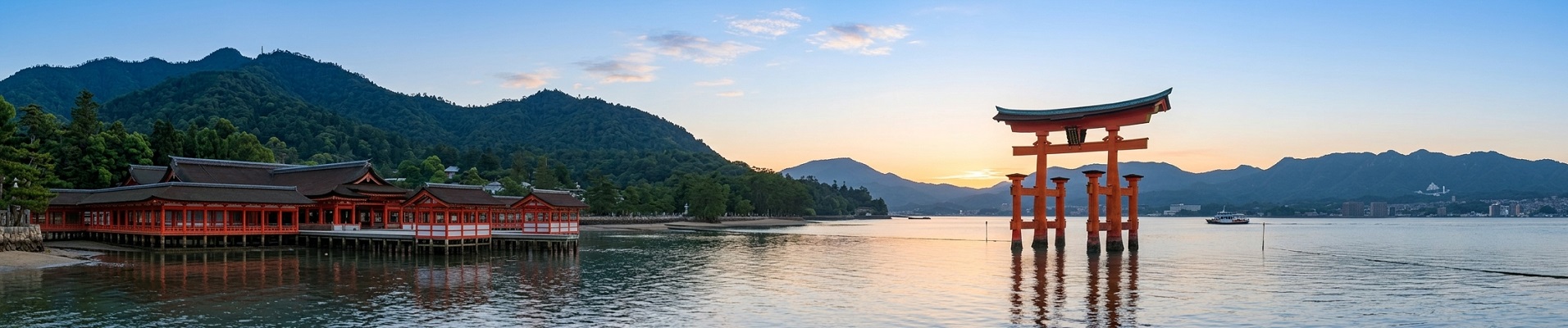
Crossing from Miyajimaguchi over calm water, you watch a huge vermilion gate rise directly out of the sea. Japanese artists have ranked this view among the country's top three scenic spots for generations, though locals officially call the island Itsukushima. Miyajima translates to shrine island, a nickname rooted in ancient reverence. Early worshippers considered every foot of soil sacred. They built Itsukushima Shrine on wooden stilts over the tidal flat so pilgrims could dock and enter without stepping on holy ground.
Itsukushima Shrine & the Great Torii
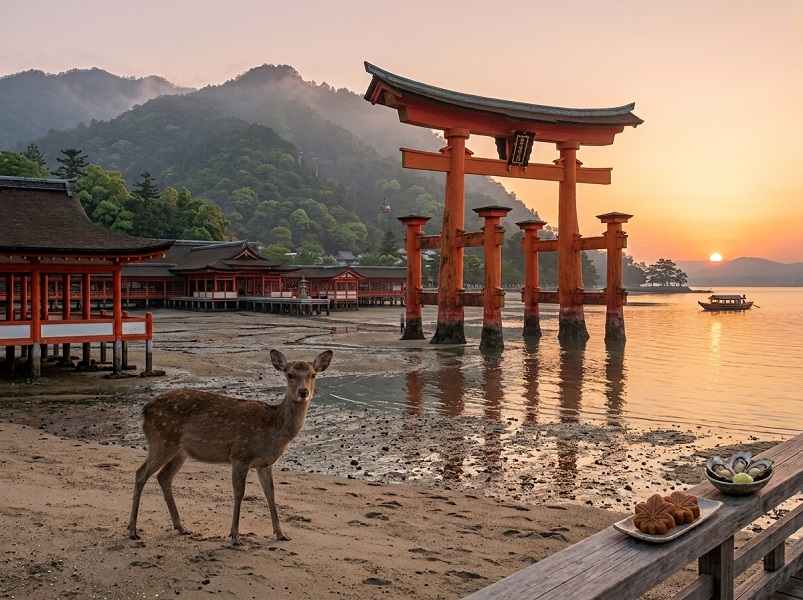
Warlord Taira no Kiyomori gave the shrine its iconic layout in 1168. High tide lifts the entire complex off the mud, turning its long red hallways into a floating wooden village. Low tide pulls the water back to expose tidal pools, tiny crabs, and wet sand. You can walk right out to the Great Torii gate during these dry hours.
The current gate was built in 1875 from heavy camphor wood. It reaches nearly 17 meters tall and rests on the seabed under its own massive weight without underground pillars. UNESCO listed the complex as a World Heritage site in 1996. Checking daily tide charts before you arrive lets you see both dramatic states in a single visit.
Mount Misen
Mount Misen climbs 535 meters behind the buildings. Dense primaeval forest covers the slopes, winding past mossy boulders and mountain streams. Hikers can tackle the two-hour climb or take the ropeway most of the way up. Near the peak, the fire inside Reikado Hall has burned continuously since the monk Kobo Daishi lit it in 806. In 1964 a light from this fire was carried to Hiroshima to kindle the Peace Flame. The summit offers open views across the Seto Inland Sea, where passenger ferries cut white wakes through dark blue water.
Temples & Deer
Daishoin Temple sits near the base of the mountain. Hundreds of small stone statues dressed in hand-knit caps line the grounds, and metal prayer wheels line the stair railings for visitors to spin. Nearby stands Senjokaku, a massive unpainted wooden hall ordered by Toyotomi Hideyoshi in 1587. Construction stopped when he died, leaving an airy, open-sided structure next to a vibrant five-story pagoda built in 1407.
Wild sika deer roam the town streets freely. They are tame enough to walk right up to tourists, though they will gladly chew up paper maps or train tickets left in easy reach.
Tastes of the Island
The best food waits along Omotesando Street. Hiroshima Bay produces world-class oysters, which vendors grill fresh over hot coals right on the sidewalk. You will also find momiji manju, leaf-shaped cakes stuffed with sweet red bean paste, alongside anago meshi, a dish of grilled conger eel served over seasoned rice. Red maples cover Momijidani Park in brilliant colour every autumn.
Notes
Ferries run continuously from Miyajimaguchi, taking about ten minutes. The JR ferry is covered by the Japan Rail Pass and also accepts IC cards like ICOCA, while direct boats connect the island to Hiroshima Peace Memorial Park. Local authorities collect a small 100 yen visitor fee with your ferry ticket. Staying overnight in a local ryokan reveals the island's quiet side. Once the final day boat departs, the daytime crowds vanish, lanterns light up the dark shoreline, and the lit gate glows against the night water.
Magelline’s Perspective
Most visitors give Miyajima a few hours and leave with a photo of the gate. The island deserves more. Arrive at high tide, wait for the sea to pull back, climb Misen while the light is soft, and stay for the evening when the deer settle, and the lanterns come on. Few places in Japan let you feel this close to the old idea of a sacred island, and fewer still let you sleep there.